




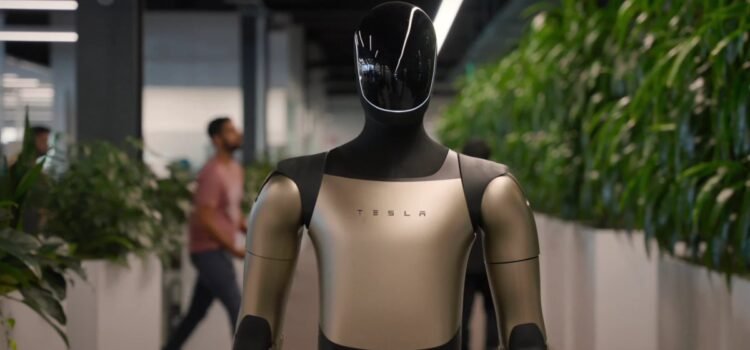
Tesla has begun public data collection and training for its third-generation Optimus humanoid robot. This model now focuses on domestic environments rather than factory settings. This change marks a significant milestone in mapping household layouts and object interactions. Tesla is deploying a specialized fleet of learning units to employee residences. By emphasizing advanced spatial reasoning and haptic sensitivity, Tesla aims to transform the robot from an industrial tool into a capable domestic assistant.
The Engineering of Domestic Dexterity
The Gen 3 hardware includes redesigned hands with 22 degrees of freedom and integrated tactile sensors. These actuators enable the robot to handle delicate items such as glassware or produce without excessive force. Tactile feedback loops allow real-time perception of texture and weight. Such sensory input is fundamental for activities like folding laundry or clearing a table. In these cases, the grip must be continuously adjusted. Significantly improved environmental sensing now benefits from the vision-depth integration suite in the robots’ heads, which uses eight high-definition cameras. The system creates a 3D map of a home. As a result, the robot navigates around furniture and pets instead of relying on pre-mapped paths; it interprets its surroundings dynamically. Thanks to these abilities, the robot operates safely in cluttered spaces such as kitchens or play areas where obstacles frequently change.
Training Via Neural Imitation
A key feature of this release is the human-to-robot imitation training model. Tesla engineers and testers use motion-capture suits to perform common tasks while the robot observes and records movement data. This approach teaches the robot the natural flow of tasks, such as the circular motion required to wipe a counter, by capturing thousands of movement variables. The system builds a generalized understanding of each objective.
The collected data is uploaded to a central behavioral library. It is then refined through millions of simulated repetitions in virtual environments. The robot practices tasks under different lighting and gravitational conditions. This synthetic hardening ensures the robot can adapt to changes in object placement. For example, it identifies a coffee mug whether it is upright on a coaster or lying in a sink.
Safety Procedures And Privacy Architecture
Optimus Gen 3 is designed with safety as its top priority for home use. It features soft-touch joint limiters and a lightweight frame. The robot gives way if it bumps into someone. Its sensors detect people or pets nearby. If this happens, the robot switches to static safe mode immediately and stops any vigorous movements. This approach keeps the robot safe and non-threatening while it learns.
To protect privacy, all visual data is processed internally on the robot. Its cameras do not record or transmit raw data beyond the device. This ensures household privacy. The robot’s processor converts visualized spatial data. Only these distilled data and intent signals are transmitted to the central system, benefiting all robots.
Expanding the Domestic Utility Suite
The first software for Gen 3 focuses on four main jobs: organizing, cleaning, handling packages, and controlling waste in organizing mode. The robot finds misplaced items, such as shoes or remote controls, and returns them to their rightful places for cleaning. It uses regular tones for vacuuming or dusting, maintaining its valence throughout.
For package handling, the robot retrieves deliveries from the porch and brings them inside. This streamlines online shopping. Its wet sensors assess if a box is fragile or requires special handling. For waste management, it sorts recyclables and moves bins to the curb on schedule. These fundamental tasks will enable even more complex chores in future updates.
The Future of the Autonomous Household
As training advances, Tesla will introduce voice-to-action integration. Users will be able to give complex commands, such as “cleanup the kitchen after dinner.” The robot will break these commands into multiple subtasks. It can load the dishwasher and wipe the table in a single workflow. This self-governance requires the system to monitor its power. The robot will return to a docking station when the battery reaches a set level. The goal is a truly set-and-forget appliance that runs effortlessly in daily life.
The Silent Evolution Of The Home
We are entering an era where daily life is quietly transformed by advanced automation. Homes grow more responsive as technology adapts to our needs. Chores shift from human hands to automated machines. Over time, the line between tool and inhabitant may blur. Automation manages routine tasks, creating effortless comfort. We trust that our comfort and well-being are reliably supported. The home evolves into a dynamic, responsive space, always ready to serve.
Source: Blog Optimus Tesla


