
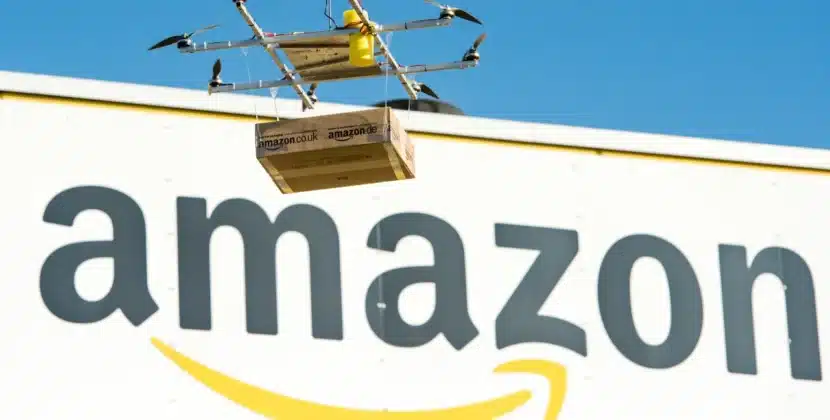





Amazon will move ahead with developing a large-scale drone delivery network for suburban marketplaces in the United States, with expected investments of $5 billion. The establishment of America’s drone network will continue to be based on ongoing research into logistics innovation. The Amazon delivery method will allow for ultra-fast deliveries using autonomous aerial systems. This initiative demonstrates Amazon’s strategy of redefining last-mile deliveries through automation, AI, and advanced logistics infrastructure.
Reimagining Last-Mile Delivery
As opposed to using ground transportation and being forced to take longer routes as a result of any or all of those factors above, drones will provide a direct point-to-point delivery system between two points, thus reducing the amount of time it takes for items to reach their final destination, especially in suburban areas where there are moderate distances and where there is less air congestion.
The vision for this initiative is for Amazon to create a network of drone delivery hubs that can quickly deliver packages to customers after an order is placed. By doing this, Amazon will set a new standard for customers to expect near-instant delivery rather than treating the package as a premium service.
Project-Based Logistics Innovation
Amazon’s expansion has been largely driven by its research into automated logistics systems, which have created a network of drones, fulfilment centres, and AI. The purpose of these initiatives is to optimise efficiency.
In addition, combining AI with logistics technology will enable drones to find the best delivery route, avoid obstacles, and adapt to changing conditions, including weather and airspace restrictions. By leveraging real-time data and predictive analytics, Amazon aims to develop a responsive delivery system that can be deployed at scale across multiple geographic areas.
Infrastructure and Investment Strategy
Establishing a nationwide drone delivery network will require a substantial capital commitment to develop an extensive drone infrastructure. Examples of such investments could include manufacturing drones, establishing charging stations for them, implementing control systems, and creating regulatory compliance frameworks. Amazon’s anticipated $5 billion investment reflects the scope of its logistical transformation and its commitment to the long haul.
Drones will require an infrastructure consisting of local fulfilment centres, launch pads, and sophisticated monitoring systems to ensure they operate safely and efficiently. This type of infrastructure allows for quicker delivery times whilst reducing dependence on large, centralised hubs. This type of distributed infrastructure supports Amazon’s goal of placing inventory closer to its customers.
Speed and Customer Experience
The primary advantage of drone delivery systems lies in their ability to deliver packages within much shorter timeframes. Amazon aims to establish 15-minute delivery, marking a major advancement beyond its existing same-day and next-day delivery options.
The ability to deliver products more quickly results in greater customer satisfaction and creates new opportunities for e-commerce businesses to offer immediate delivery of essential items, groceries, and small consumer products. The ability to receive products within a few minutes of ordering will transform shopping patterns by driving consumers to buy lower-priced items more frequently, thereby increasing use of the shopping platform.
Navigating Regulatory and Safety Challenges
Though the promise of drone delivery exists, many complex regulatory and safety issues remain challenges for large-scale operations. To ensure a successful, larger-scale deployment, airspace management, collision avoidance, and compliance with aviation regulations must be given critical consideration. Amazon must partner with regulatory authorities and work closely to develop systems that meet safety standards while also ensuring compatibility with the air traffic control systems currently in place.
For these reasons, they have begun investing in technologies that enable obstacle detection and avoidance, maintain safe separation distances from persons and buildings, and operate reliably under various environmental conditions. Addressing all of these issues is necessary to build public confidence and ultimately achieve widespread use of their services.
Environmental and Efficiency Benefits
Drones can be a great way to reduce logistics-related pollution by using less fuel during delivery when they are electrically powered. Drones produce fewer emissions and perform well over shorter distances, especially in less densely populated suburban areas.
Creating better drone delivery routes and reducing road-based trips by delivery vehicles can make Amazon’s drone delivery network more sustainable. For the company to scale the technology effectively, it needs to carefully assess energy consumption, battery life, and the equipment’s lifecycle to make the best environmental decisions.
Competitive Landscape in Delivery Innovation
Amazon is expanding its drone deliveries amid heightened AI, which has become a major focus for tech retail companies trying to become more efficient in delivering products to the end customers.
To maintain its dominant position in online shopping & influence other commentators to adopt new technologies, Amazon is spending heavily on developing and deploying drone technology to deliver packages directly from its distribution centers to consumers. If the drone program is successful, it could lead to large numbers of these companies adopting similar technologies, accelerating innovation in last-mile delivery.
Economic and Workforce Implications
The growth of drone deliveries means there are many additional economic impacts on the logistics labour force. Automation provides efficiency and cost reductions, but employment in this area will continue to change as drones are used for delivery.
As a result, potential new jobs may arise in fields related to drone upkeep, drone network management, and artificial intelligence; conversely, delivery positions could either develop or be significantly diminished. Amazon will try to address both the automation of logistics and provide opportunities for a workforce to adapt by developing sustainable, long-term economic benefits from the technology.
Future of Urban and Suburban Logistics
Drone delivery networks are likely to change the logistics environment, whether in city or suburban areas. Drone deliveries will initially be deployed in areas with lower population density; however, as navigation, safety, and regulatory advancements continue to develop, more cities will adopt them.
Drones, when used in conjunction with other delivery technologies such as self-driving vehicles and smart warehouses, will create a 100% automated logistics ecosystem. This interconnected logistics system will provide more efficient, timely delivery for consumers and meet the high demands of online shopping.
Looking Ahead: A New Delivery Paradigm
With an investment totalling $5 billion into developing drone delivery systems, Amazon is clearly committed to changing how products are delivered to consumers around the world. By using new technologies such as artificial intelligence (AI), automation, and advanced logistics infrastructure to deliver packages, Amazon is paving the way for a new era in which fast, efficient deliveries will no longer be rare but expected by many consumers.
As drone technology improves and regulations for safe flying continue to develop, drone delivery could become a regular practice that revolutionises the consumer experience and sets new industry standards.
A Faster Future for E-Commerce
The Amazon drone delivery programme is an innovative way to change the face of e-commerce logistics. The company’s goal is to provide very short delivery times and an expandable infrastructure. By doing so, Amazon is making strides in remaining at the cutting edge of the logistics industry.
If the programme is successful, the network will enable consumers to get their goods even faster than before, fundamentally changing the way they shop. As drone delivery continues to attract investment and improve through technological advances, it may soon become a defining characteristic of how we conduct commerce today.
Source: https://www.amazon.science/blog


