




Santa Clara, California
A warehouse forklift that can spot a misplaced pallet, avoid workers, and keep unloading cargo on its own used to seem like science fiction. Now, it is quickly becoming real. This change is why Nvidia Physical AI is one of the company’s fastest-growing priorities, taking Nvidia beyond data centers and into places like factories, ports, warehouses, and construction sites where self-driving machines can work all day and night.
The latest development, Nvidia expands heavy equipment automation partnership with Doosan, signals that Nvidia is no longer focused solely on powering AI models. The company now wants to become the intelligence layer behind self-driving industrial machines that can detect their surroundings, make real-time decisions, and perform physically demanding work with minimal human intervention.
NVIDIA Physical AI Moves Beyond the Data Center
NVIDIA first became known for making graphics processors for gaming and later for AI training. Now, the company’s goals go far beyond that.
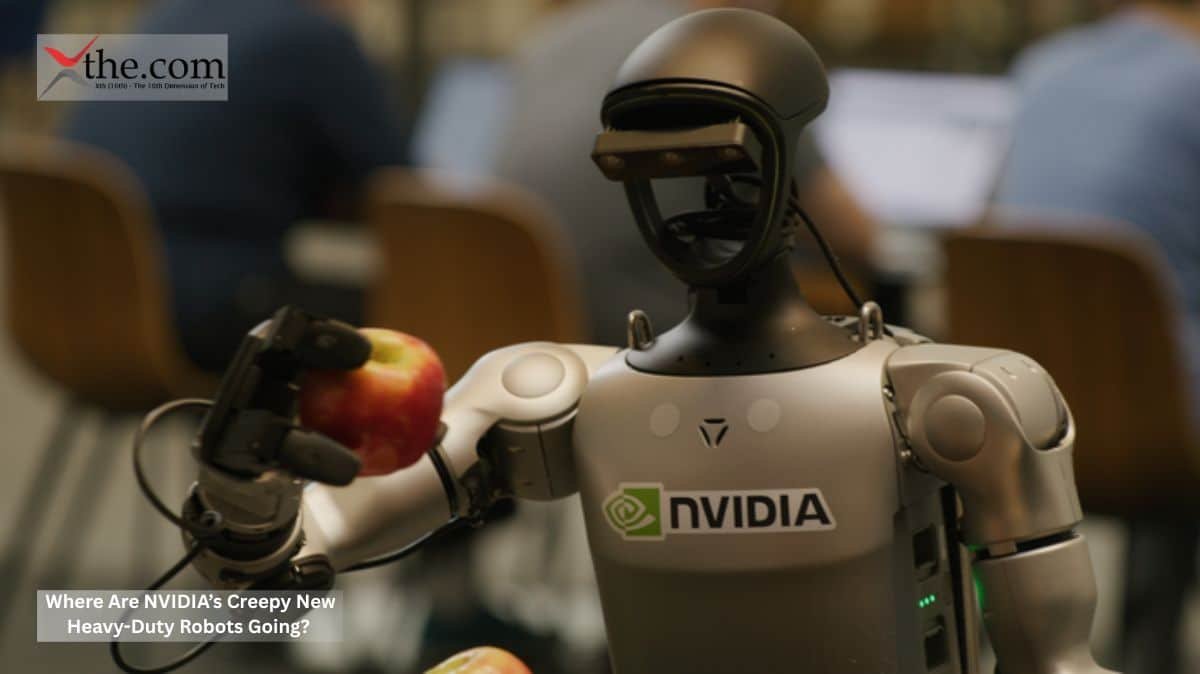
NVIDIA is investing heavily in Physical AI, which brings together fast computing, robotics software, digital twins, computer vision, and edge AI on a single platform for autonomous machines.
Physical AI is different from AI that just creates text or images. It has to deal with unstable environments. For example, a warehouse robot needs to determine weight, avoid workers, reroute around obstacles, and complete tasks safely without someone always watching.
These abilities need more than just strong processors. They require constant sensor input, instant decisions, and software that can adjust as things change.
NVIDIA sees this mix as its next big chance to grow.
Why Doosan Group Matters
The announcement that Nvidia is expanding its heavy equipment automation partnership with Doosan drew attention because Doosan Group brings decades of industrial manufacturing expertise rather than consumer technology experience.
Doosan is known worldwide for its construction equipment, heavy machinery, energy systems, and industrial engineering. The company knows how automation may lead to real financial results.
Factories and logistics centers are rarely perfect places to work. Dust, vibrations, changing lighting, moving equipment, and unpredictable workflows all pose challenges that autonomous machines must constantly handle.
By bringing together Nvidia’s AI and Doosan’s industrial equipment, the two companies aim to build machines that can operate safely in harsh environments and rely less on manual labor.
For manufacturers struggling to find enough workers, this combination helps address a growing business problem.
The Next Phase of Industrial Robotics
Traditional automation used to follow set routines.
Industrial robots could repeat the same movements thousands of times with great accuracy, but they had trouble when something unforeseen occurred. If a package was out of place or a path was blocked, people usually had to step in.
Now, industrial robotics is heading in a new direction.
Instead of just following pre-set instructions, today’s AI-powered machines constantly read visual information, understand their surroundings, and change what they do as conditions change.
Picture a busy warehouse getting hundreds of shipments every hour. An autonomous loader with Nvidia’s systems can spot damaged pallets, spot obstacles, adjust how it lifts, and move safely through crowded docks without waiting for help from operators.
Such flexibility makes AI-powered industrial robotics much more valuable than traditional automation, especially in environments where conditions are constantly changing.
Building the Future Through AI Factory Infrastructure
Every smart robot depends on an important layer of technology.
That layer is AI factory infrastructure, a combination of accelerated computing systems. This layer is called AI factory infrastructure. It combines fast computing, networking hardware, simulation tools, data pipelines, and edge computing so autonomous machines can keep learning and simulating.
Digital twins replicate warehouse layouts, conveyor systems, shelving, and traffic patterns with high accuracy. Robots can practice thousands of scenarios virtually before doing the same tasks in real warehouses.
This greatly lowers the risks of deploying robots and makes things safer.
As companies adopt more automation, AI factory infrastructure becomes as important as the robots themselves. It enables updates, monitoring, predictive maintenance, and ongoing improvements across all machines.
Why Warehouses Are Becoming Nvidia’s Testing Ground
Warehouses are among the best places to use physical AI in business.
Distribution centers are always busy. Forklifts move inventory, workers pick products, trucks keep arriving, and customers want faster deliveries.
Any delay raises operating costs.
Autonomous machines with Nvidia Physical AI can help move pallets, check inventory, handle packages, and transport materials, all while adjusting to changing warehouse conditions.
Unlike manufacturing lines that do the same thing over and over, warehouses need machines that can adapt every few seconds.
This need matches Nvidia’s strengths in computer vision, AI, and fast edge computing.
If these systems continue to demonstrate improved productivity and safety, warehouses could become the first major test sites for physical AI.
A Tactical Expansion Beyond Chips
This partnership shows how Nvidia’s strategy is evolving.
NVIDIA is no longer only a semiconductor company. It is becoming a provider of software, hardware, and computing platforms for autonomous industries.
The announcement that Nvidia is expanding its heavy equipment automation partnership with Doosan reflects this broader vision.
NVIDIA now offers more than just GPUs. It provides complete systems with AI models, robotics software, simulation tools, networking, and deployment platforms for large-scale automation.
For industrial customers, buying an all-in-one platform is often simpler than assembling multiple technologies from many vendors.
This ecosystem approach is now one of Nvidia’s biggest advantages.
The Business Case for Autonomous Heavy Equipment
Heavy industrial equipment is one of the best markets for automation.
Industries such as construction, logistics, mining, manufacturing, and shipping face higher labor costs and stricter safety rules.
Autonomous machines help solve both problems.
Machines that can run continuously help companies use their equipment more effectively and keep people out of dangerous situations. Human workers are still important, but their jobs are shifting toward supervision, maintenance, and handling special cases rather than performing repetitive physical tasks.
Companies looking at automation no longer wonder if AI is possible.
Now, they ask if the productivity gains are worth the investment.
As AI hardware gets better and software becomes more powerful, automation keeps making more economic sense.
This trend is why partnerships with Doosan Group, industrial robotics, and AI factory infrastructure are receiving more attention from manufacturers worldwide.
Physical AI is the next big area for enterprise technology. As Nvidia Physical AI moves into warehouses, logistics centers, and heavy industry, the company is putting itself at the crossroads of AI and physical infrastructure. If the partnership with Doosan leads to real improvements, autonomous industrial machines could soon be as common in warehouses as cloud computing is in today’s data centers.
Source: Nvidia Newsroom