






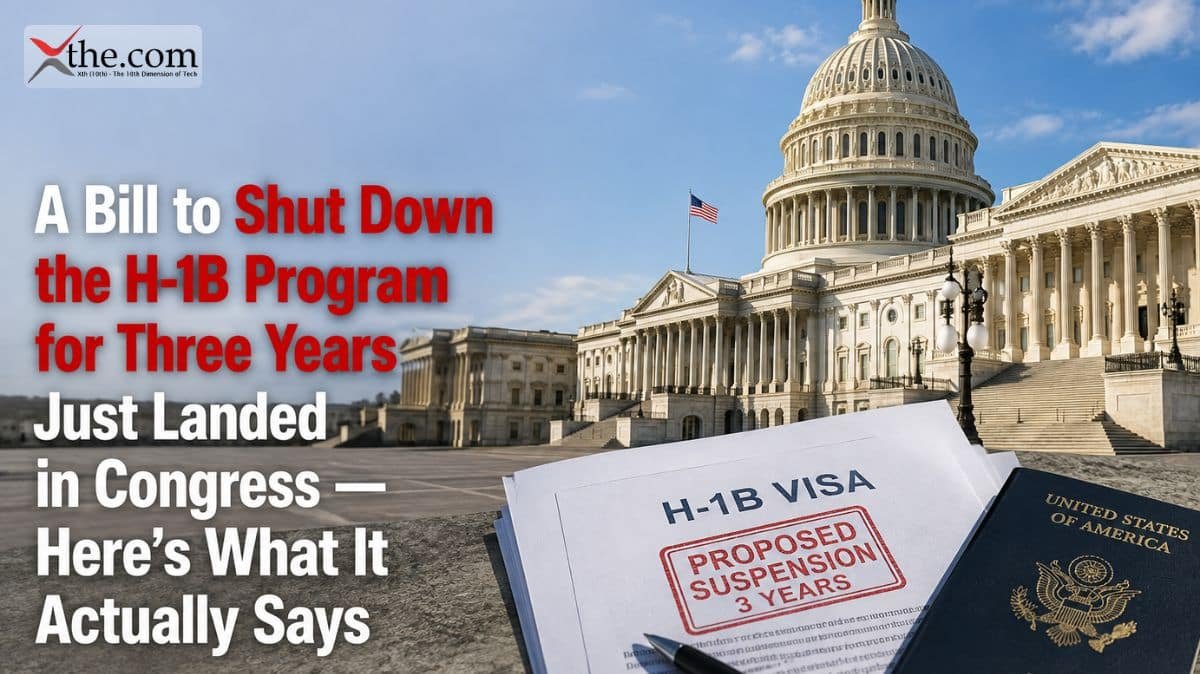
Few pieces of paper cause more anxiety in America than a visa notice. For nearly a million skilled workers — most of them in tech, most of them from India — the H-1B visa is the thread their entire American life hangs from: the job, the mortgage, the kids in school, the green card application filed years ago and still pending.
That thread is now at the center of one of the most aggressive immigration fights in years.
The Bill That Would Hit Pause
Representative Eli Crane of Arizona has introduced the End H-1B Visa Abuse Act of 2026, a bill that would stop issuing new H-1B visas entirely for three years and then restart the program on radically different terms. Seven Republican co-sponsors have signed on, and the proposal has electrified an argument that has simmered in Washington for decades.
The reform list is long and sweeping. The annual cap would drop from 65,000 visas to 25,000, with existing exemptions eliminated. The lottery system — the random drawing that currently decides who gets to stay — would be replaced by wage-based selection, favoring the highest-paid applicants. Employers would have to certify they couldn’t find a qualified American worker and haven’t conducted layoffs. The minimum H-1B salary would be set at $200,000 a year — a figure that would price out the vast majority of current roles.
But the bill goes further, into territory that stunned even longtime watchers of this debate. It would bar H-1B workers from holding multiple jobs, prohibit third-party staffing agencies from employing them, stop visa holders from bringing dependents to the United States, forbid federal agencies from sponsoring foreign workers, end the Optional Practical Training program that lets international graduates work after college, and — most dramatically — prohibit H-1B holders from ever adjusting to permanent residency, requiring them to leave the country to change status at all.
Crane’s argument is populist and direct: “The federal government should work for hardworking citizens, not the profit margins of massive corporations,” he said, framing the bill as a reset for a system that boxes qualified Americans out of jobs.
The Case For and the Case Against
Supporters point to real abuses. The IT staffing industry — middlemen firms that snap up huge blocks of H-1B slots and contract the workers out — has been criticized for years by both parties. Investigations have repeatedly found companies laying off American staff while importing visa holders, sometimes forcing outgoing workers to train their own replacements. The lottery, critics say, rewards volume applications from outsourcing firms rather than genuinely exceptional talent.
Opponents — which include much of the technology industry — argue the bill treats the cure as an amputation. A $200,000 wage floor wouldn’t just block abusers; it would block hospitals hiring foreign doctors for rural towns, universities hiring researchers, and startups hiring engineers. Ending the path to a green card, they warn, would tell the world’s most sought-after talent to build the future in Toronto or London instead. And cutting off OPT would effectively tell hundreds of thousands of international students — who pay full tuition and prop up American universities — to take their degrees home.
Economists have long found that skilled immigration grows the overall pie, creating more jobs for native-born workers than it displaces. Restrictionists counter that the pie’s slices aren’t shared evenly, and that displaced workers in specific industries don’t care about aggregate statistics. Both things can be true at once, which is exactly why this fight never ends.
The Quiet Tightening Already Happening
Whatever happens to the bill — and its odds in a divided Congress are uncertain — the system is already getting stricter from the inside. The Trump administration has tightened H-1B adjudications, with approvals increasingly skewing toward highly skilled, high-wage applicants and a sharp crackdown on low-wage hiring. A new USCIS policy may require some green card applicants to complete processing from their home countries rather than adjusting status inside the United States.
The burden falls hardest on one community: Indian nationals, who make up the largest group of H-1B holders by far and already face green card backlogs measured in decades, thanks to per-country caps that no one in either party has managed to remove. For a worker from India approved today, the theoretical wait for a green card can stretch past a working lifetime. The new policies layer fresh uncertainty on top of that endless queue.
What This Means If You’re Living It
For the hundreds of thousands of families in the H-1B pipeline, the practical advice from immigration attorneys is steady: this is a bill, not a law, and sweeping proposals often serve as negotiating openers rather than finished products. Nothing changes overnight. But the direction of travel is unmistakable — toward fewer visas, higher wages, and more scrutiny at every step.
Workers should keep documentation immaculate, maintain valid status without gaps, and consult a qualified immigration attorney before making any job change. Employers depending on foreign talent should model what a $200,000 wage floor or a shrunken cap would do to their hiring plans. And international students weighing American degrees should watch the OPT fight closely — that program is the bridge between a US diploma and a US career, and it’s now explicitly in the crosshairs.
The Bigger Question
Underneath the legislative detail sits a genuinely hard question that America has never settled: what is the immigration system for? Is it a labor-market tool to be dialed up and down with the economy? A talent magnet central to technological leadership? A doorway to the American dream, or a privilege to be rationed?
The H-1B fight is all of those arguments compressed into one visa category. Congress has failed to modernize the program for more than three decades, and into that vacuum have stepped abuses, workarounds, lawsuits, and now a bill proposing to simply turn the whole thing off.
Whether the End H-1B Visa Abuse Act passes or stalls, it has already moved the center of the debate. The question is no longer whether the system will change. It’s how much, how fast — and who gets caught in between.
Prepared for xthe.com — August 2026. Meta titles kept near 40 characters; meta descriptions near 140 characters. All articles written in original, human-voiced US English for an American readership.








