




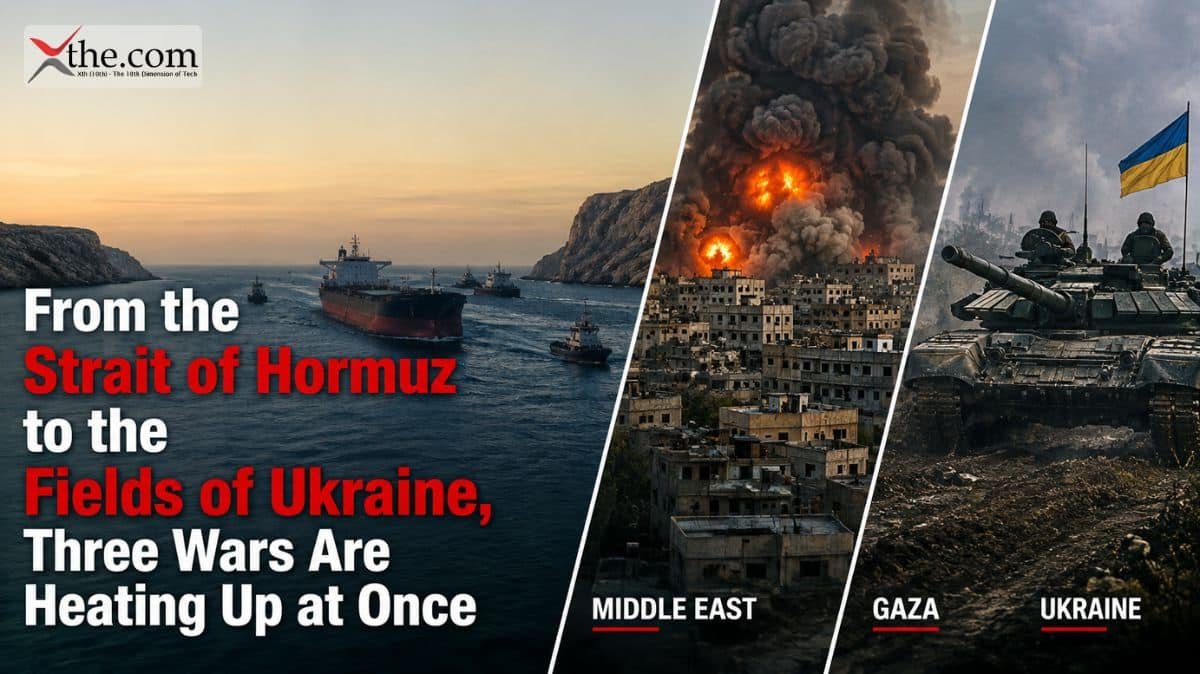
Americans checking their phones this weekend are watching something rare: three separate conflict zones, thousands of miles apart, all escalating at the same time. In the Gulf, Iran is flexing over the world’s most important oil chokepoint. On Israel’s northern border, an old enemy is back in the fight with a terrifying new weapon. And in Eastern Europe, Ukraine is signaling that the war’s next phase has begun.
Here’s what happened — and why it matters to your gas tank, your grocery bill, and America’s military footprint.
Iran Makes Its Move on Hormuz
Tehran is now claiming control over the Strait of Hormuz, the narrow waterway between Iran and Oman through which roughly a fifth of the world’s oil supply passes every single day. When Iran talks about Hormuz, global markets listen — because this isn’t abstract geopolitics, it’s the tap connected to the world’s fuel supply.
Analysts tracking the region warn that Iran may be preparing to fire on Israeli targets, raising the specter of a direct confrontation that previous rounds of shadow war managed to avoid. The Institute for the Study of War and the Critical Threats Project have been publishing daily updates on the crisis, and the tempo of their reporting tells its own story: this is not cooling down.
For the United States, the immediate stakes are economic as much as military. Any serious disruption in Hormuz sends oil prices jumping within hours, and Americans feel it at the pump within days. The longer-term stakes involve freedom of navigation — the principle that keeps global trade moving — and the question of whether the US Navy will once again be asked to escort tankers through contested water, as it has in Gulf crises past.
Israel Strikes Hezbollah — and the Drone War Evolves
Israel has launched fresh strikes on Hezbollah targets, and buried in the operational details is a development that military analysts find genuinely alarming: Hezbollah is pivoting to FPV drones.
FPV — first-person view — drones are the defining weapon of the Ukraine war: cheap, fast, piloted through goggles, and capable of turning a few hundred dollars of parts into a precision strike on a tank, a radar, or a soldier in a trench. The Institute for the Study of War warns that Hezbollah’s adoption of the tactic “requires Israeli overmatch” — meaning Israel’s current defenses, built for rockets and missiles, now face a threat that flies low, slow, and small enough to slip through.
This is how modern warfare actually spreads: not through treaties or arms sales, but through YouTube and Telegram. Tactics perfected in the trenches of Donbas are showing up in Lebanon within months, carried by drones assembled from commercial components anyone can buy. Every conflict now teaches every other conflict, in near-real time.
Ukraine Opens a New Phase
Ukraine, meanwhile, isn’t waiting to be studied — it’s still writing the playbook. Analysts describe Ukraine’s new intermediate-range strike campaign, combined with fresh mechanized attacks, as heralding the start of a new phase of the war with Russia.
The strike campaign matters because it changes the economics of the battlefield. Deep strikes on Russian logistics, fuel depots, and command nodes force Moscow to pull its supporting infrastructure ever further back, thinning out everything at the front. The renewed mechanized attacks suggest Kyiv believes it has built enough of that cushion to maneuver again — something that has been brutally difficult since the early months of the invasion.
On the other side, the Kremlin is fighting a different kind of war: researchers report it is cultivating an “AI-trained global media cadre” — networks of influencers and outlets shaped to carry Russian narratives to foreign audiences with lasting effect. The battlefield, in other words, includes the feed you’re scrolling right now.
Why Americans Should Care
It’s easy to file all of this under “far away.” It isn’t.
Energy first: the United States is a major producer, but oil is priced globally, and a Hormuz crisis hits American pump prices regardless of where the crude is pumped. Inflation follows fuel, and grocery prices follow inflation. Every American household has a stake in that strait staying open.
Military second: the United States maintains forces across the Middle East, and escalation between Iran and Israel historically pulls American assets — carriers, air defense batteries, and the troops who operate them — toward the flashpoint. Each escalation raises the odds of the thing Washington says it wants least: direct US involvement in another regional war.
And finally, the lesson hiding inside all three stories: warfare is getting cheaper, faster, and more democratic. A militia can now field precision weapons that once required an air force. A state can run influence operations that once required embassies and broadcast towers. The barriers that used to separate superpower capabilities from everyone else’s are dissolving, and America’s defense establishment is racing to adapt.
What to Watch in the Coming Weeks
Three signposts. Whether Iran’s Hormuz claims turn into actual interference with shipping — that single fact will dominate oil markets. Whether Hezbollah’s FPV units score a high-profile success against Israeli armor or air defense — that would accelerate drone proliferation across every militia in the region. And whether Ukraine’s new campaign sustains momentum into the fall, which will shape every negotiation table and every aid debate in Western capitals, Washington most of all.
The map of the world’s conflicts hasn’t been redrawn — yet. But the pens are out, and the ink is wet.