






Beijing, China | July 9, 2026
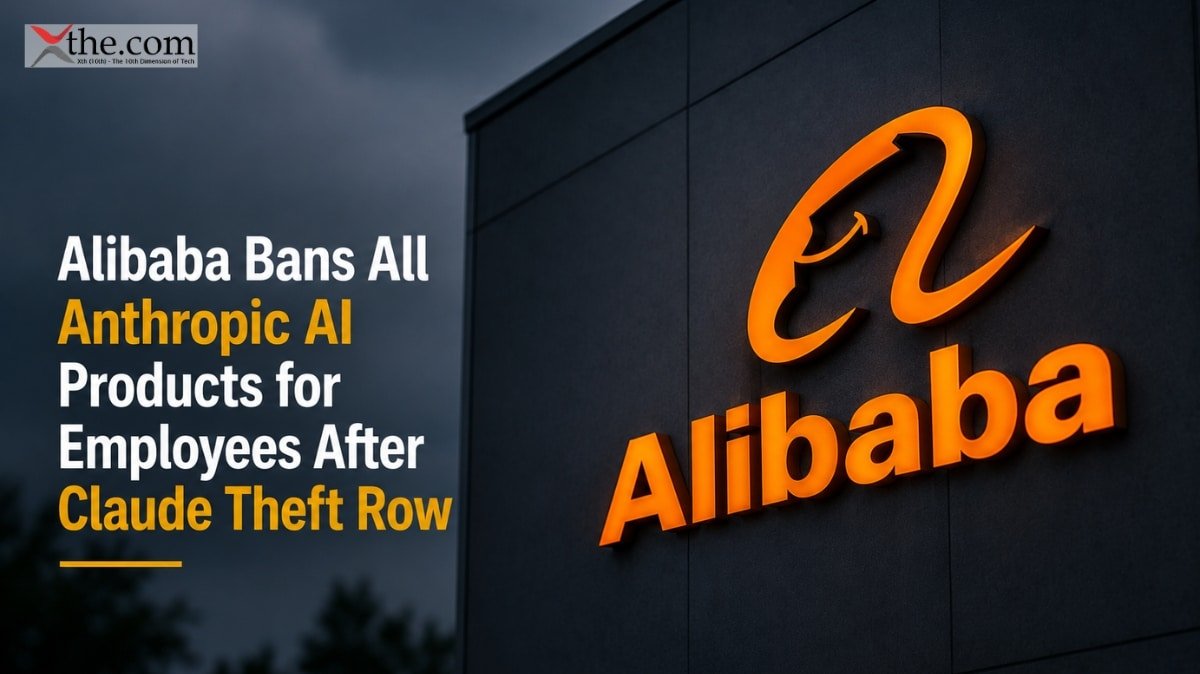
Twenty-nine million fake queries. Twenty-five thousand fraudulent accounts. One angry American AI lab. These numbers are now at the heart of a corporate split that few in the industry saw coming a year ago. Alibaba bans Anthropic AI products from all internal systems, ending a relationship that once made the Chinese e-commerce giant one of Anthropic’s biggest customers in Asia-Pacific. Internal notices and reports from outlets like the South China Morning Post and Reuters confirm the move, which is the most dramatic escalation so far in the deepening Alibaba Anthropic distillation row.
The Alibaba Claude ban employees are presently navigating covers far more than just one coding tool. Employees have been told to remove all Anthropic products, including the Sonnet, Opus, and Fable models, and switch to Qoder, Alibaba’s own AI coding platform. Until recently, Claude Code was widely used across Alibaba’s engineering teams, so this change is both sudden and expensive.
The Distillation Accusation That Started It
Alibaba’s decision was triggered by a security researcher’s post on Reddit on June 30. The researcher found that versions of Claude Code released since April 2 could check a user’s time zone and proxy settings against a hidden list of Chinese domains and AI labs. If there was a match, the software would quietly add identifying markers to data sent back to Anthropic. Alibaba called this a back-door risk and, after what it described as a thorough internal review, added Claude Code to its list of high-risk software.
Anthropic tells a different story. Thariq Shihipar, an engineer on the Claude Code team, wrote on X that the feature was “an experiment we launched in March that was meant to prevent account abuse from unauthorized resellers and protect against distillation.” He said stronger protections were already in place and that the problematic code was set to be removed. In fact, a pull request to delete it was merged on July 1, just one day after the Reddit post appeared.
That explanation has not eased the dispute, which actually started weeks before the code was found. On June 10, Anthropic sent a letter to the U.S. Senate Banking Committee, accusing people linked to Alibaba’s Qwen AI lab of carrying out the largest known distillation attack on Claude so far. The letter said these operators used about 25,000 fake accounts to make nearly 28.8 million requests to Anthropic’s models between April 22 and June 5. In this case, distillation means training a weaker in-house model on the outputs of a stronger one, allowing companies to replicate years of research without making the same investment. Anthropic told lawmakers that this practice targeted Claude’s advanced reasoning, coding skills, and capacity to handle long tasks—key features that set leading AI labs apart.
Why the Numbers Matter
Anthropic has publicly stated that distillation attacks turn huge investments in American research and development into benefits for foreign competitors. The company has urged Washington to tighten semiconductor export rules and punish AI developers who run distillation campaigns. This is not the first time Anthropic has made such claims. In February, it accused three other Chinese labs—DeepSeek, MiniMax, and Moonshot AI—of making over 16 million requests to Claude using about 24,000 fake accounts to improve their own models. The Alibaba case stands out for its size, its direct connection to a Qwen-linked group, and the fact that Alibaba was a paying customer at the time.
Alibaba Claude Distillation Attack Response
Alibaba’s Alibaba Claude distillation attack response has so far been narrow and procedural rather than a full-throated public rebuttal. The company has not released a detailed statement on the distillation claims, and sources say Alibaba denies any wrongdoing but has not provided further details. Publicly, Alibaba says the ban is about the alleged back-door code, not the distillation issue, which allows the company to present its decision as a security measure instead of retaliation. However, many industry watchers are skeptical, especially since the ban came only three weeks after Anthropic’s Senate letter was made public.
The Alibaba Qwen Anthropic Conflict Widens
The Alibaba Qwen Anthropic conflict now touches nearly every layer of the two companies’ relationship. Alibaba’s shares fell following the initial distillation accusation in June, reflecting how seriously investors are treating the reputational risk. Engineers who once relied on Claude Code for agentic programming tasks are being pushed toward Qoder, a platform still working to match the polish of its American counterpart. Whether that transition damages near-term productivity is an open question, but Alibaba appears to have judged the compliance and legal exposure of continued Claude use as the greater risk.
A Broader US-China AI Corporate War 2026
This dispute is part of a bigger trend. Anthropic has the strictest access policy in the industry for China, blocking Chinese-owned companies from using its models even if they operate through foreign subsidiaries. This rule has already caused problems elsewhere. For example, Ant Group reportedly granted employees access to Claude through its Singapore branch, while ByteDance, which owns TikTok, does not officially offer access to Claude but reimburses engineers who use personal VPN subscriptions. According to the Financial Times, Anthropic is now working to close these loopholes, which will likely cause more tension before it leads to full compliance.
Seen together, these episodes describe something larger than a single corporate feud: a US-China AI corporate war 2026playing out through terms-of-service enforcement, Senate testimony, and internal software bans rather than tariffs or sanctions alone. Anthropic has argued in its own research that curbing distillation, paired with tighter chip export controls, could extend America’s frontier AI lead by twelve to twenty-four months. Chinese firms, for their part, have leaned harder into domestic alternatives Qwen, DeepSeek, Moonshot, and Zhipu among them partly out of necessity and partly as a hedge against exactly this kind of access rupture.
What Comes Next for Anthropic’s International Business
The key issue for Anthropic now is how much of its Asia-Pacific business is at risk due to this ban, and whether other Chinese tech companies will follow Alibaba’s example. Alibaba employees Claude being banned from daily workflows is one thing; a wider industry pattern of Chinese firms formally blacklisting American frontier models is another, carrying implications for Anthropic’s growth outside the United States. Analysts tracking the situation will be watching for independent evidence of the alleged Claude Code back door, similar actions by companies like Tencent or Baidu, and whether Anthropic’s Senate letter leads to new laws on distillation.
For now, the headline captures the moment precisely: “Alibaba bans all Anthropic Claude AI products employees after 29 million fake query distillation row.” Whether that framing holds up as more facts emerge, or whether it eventually reads as the opening chapter of a longer “Alibaba Claude ban internal employees Anthropic distillation accusation US China AI corporate conflict,” will depend less on this week’s headlines than on what Washington and Beijing decide to do about an AI rivalry that has moved decisively from the lab into the boardroom.








