






Washington D.C. | July 26, 2026
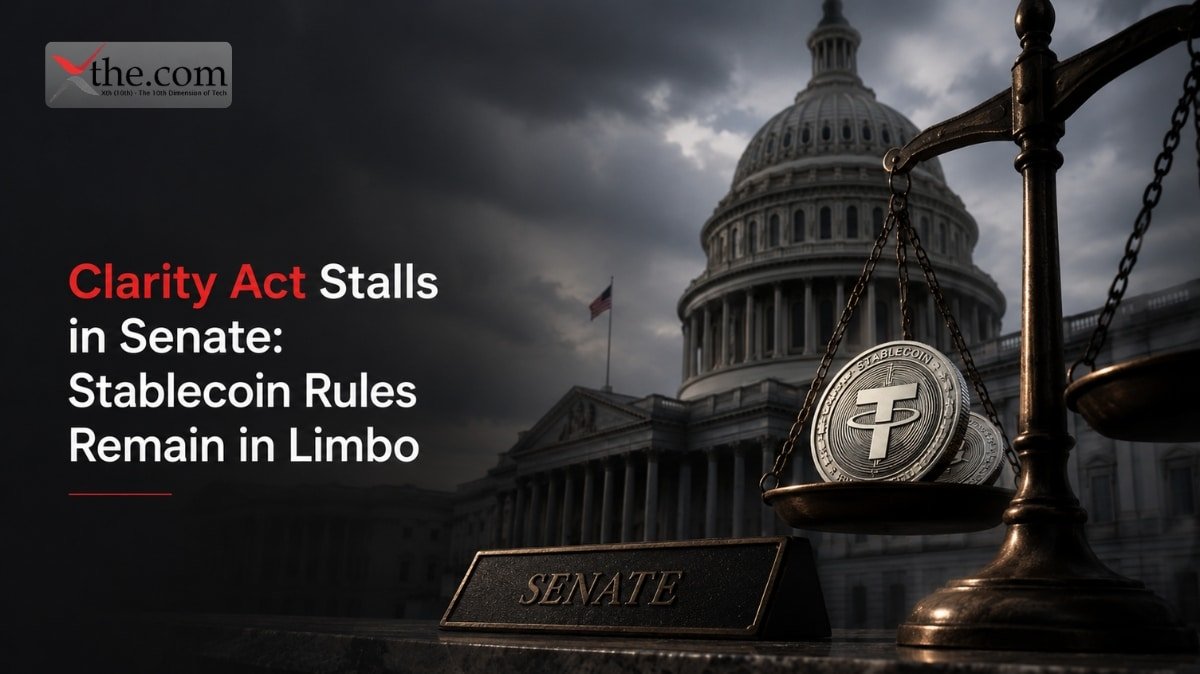
Coinbase earns about $1.35 billion each year from USD Coin rewards, and that figure is now at the heart of a legislative standoff that no one in Washington wants to claim. A year after lawmakers marked “Crypto Week” by passing the GENIUS Act into law, the follow-on bill meant to finish the job is going nowhere. The CLARITY Act Senate stalled status is no longer a talking point; it is the defining fact of digital asset policy as we move into the second half of 2026.
The Digital Asset Market Clarity Act, or CLARITY Act, passed the House easily with a 294–134 vote on July 17, 2025. It also passed the Senate Banking Committee by a 15–9 vote in May. Since then, it has remained stuck at Calendar No. 423, with no floor vote or cloture motion, even after Independence Day and a mid-July hearing. For an industry that has spent ten years asking Congress for clear rules, this long wait is starting to feel like an answer in itself.
Why the Crypto Framework Legislation Keeps Missing Its Deadline
Three main disputes explain the stablecoin regulation delay, and each exposes a different divide in this year’s push for crypto framework legislation. The first issue is Section 604, which would protect non-custodial software developers from being treated as money transmitters. Senator Ron Wyden believes that programmers who do not handle customer funds should not have to meet the same compliance requirements as licensed financial firms. The National District Attorneys Association disagrees and has warned Senate leaders that this exception could make it harder to investigate financial crimes. Senators Mark Warner and Catherine Cortez Masto have said they will only support the bill if law enforcement approves it, but that approval has not yet come.
The second dispute focuses on money, especially stablecoin yields. Banks strongly opposed interest-bearing stablecoins during the GENIUS Act debate, and they are pushing back again. The American Bankers Association argues that rewards programs like those generating Coinbase’s USDC revenue are a loophole around the GENIUS Act’s ban on issuer-paid interest. A draft from January sought middle ground by banning interest on idle balances while allowing rewards for actual use. It is still unclear if this compromise will remain in the final version.
The third obstacle is ethics, arguably the most politically combustible of the three. Senator Elizabeth Warren has pressed Senate leadership on public officials’ requirements for crypto disclosure, citing unresolved conflict-of-interest questions regarding executive-branch crypto holdings. That fight has given several undecided senators a convenient, low-risk reason to withhold their votes without having to explain a position on stablecoins at all.
What a Digital Asset Framework Bill Actually Changes
The stakes are real. The CLARITY Act would classify every digital token as either a digital commodity, an investment contract asset, or a payment stablecoin. This change would prevent the SEC from suing exchanges and issuers without warning, replacing lawsuits with more transparent rules. JPMorgan analysts have called the bill a “positive catalyst” for the whole asset class, and the reasoning is clear. Institutional allocators, the pension funds and insurance portfolios that move markets at scale, do not deploy meaningful capital into assets with an undefined regulator. A digital asset framework bill removes that ambiguity, at least on paper.
Consider USD Coin, XRP, and Solana regulation specifically. USD Coin’s issuer, Circle, already operates under the GENIUS Act’s stablecoin rules, but the outcome of the yield debate will decide if Coinbase’s rewards program can continue as it is. XRP and Solana have a different challenge: both are stuck in a gray area because the SEC’s authority over secondary-market trading has never been clearly defined. Standard Chartered estimates that spot XRP products could see $4 billion to $8 billion in new investments if the bill passes and removes this uncertainty. The case for Solana is similar. Custody banks, ETF issuers, and corporate treasuries have told exchanges they are waiting for clear laws, not just interest, before investing significant amounts.
The Math Nobody Can Solve Before Midterms
Passing the bill needs 60 votes, so seven to nine Democrats would have to break with their party during an election year, even though the White House has made the bill a priority. Only two Democrats crossed over during the committee stage. The challenge now is to find five to seven more, while the recess takes up most of the remaining floor time. Prediction markets have noticed: Polymarket’s odds of passage in 2026 dropped from about 59% in late May to around 34% by mid-July, a twenty-five-point drop that equals the halted progress.
Timing is especially important because of Senator Cynthia Lummis’s warning. She has said that if the bill does not pass Congress before the November midterms, it probably will not get another real chance until 2030. A shift in Senate control, a new committee chair, or just the slow pace of a new Congress could keep the framework on hold for years. This is the situation that compliance officers, exchange lawyers, and institutional investors are dealing with now.
Checking the CLARITY Act Stablecoin Regulation Status
For those following the “CLARITY Act stablecoin regulation status,” here is the summary: the House passed it, the committee passed it, but it is stalled on the Senate floor. The GENIUS Act’s rulemaking deadline is July 18, 2026, which is also when the Senate returns to work, adding pressure but not guaranteeing progress. The White House has already missed two informal signing deadlines—first July 4, then the period around the July 17 hearing. Neither led to a vote.
This pattern is becoming the main story of crypto legislation Senate delay 2026 more broadly. It is not that Congress lacks the votes to kill the bill outright; opponents have not even tried. The real problem is that the coalition needed to pass it keeps falling apart at the crucial moment, with three different disputes fighting for limited floor time and the attention of a few undecided senators.
What Comes Next for Digital Asset Markets
Companies are not waiting for Washington to decide. Compliance teams are preparing for both possible outcomes, which is expensive and shows the cost of delay. If the Senate finds enough votes before the midterm campaign takes over, bank analysts say the benefits will come quickly: money that has been waiting on the sidelines for years will move once the rules are clear. If not, the industry faces more years of uncertainty, with even more institutional money waiting to see if Congress will act.
Source: The CLARITY Act Could Be in Trouble. This is the Only Crypto I’m Buying Right Now.








