






Menlo Park, California — July 20, 2026
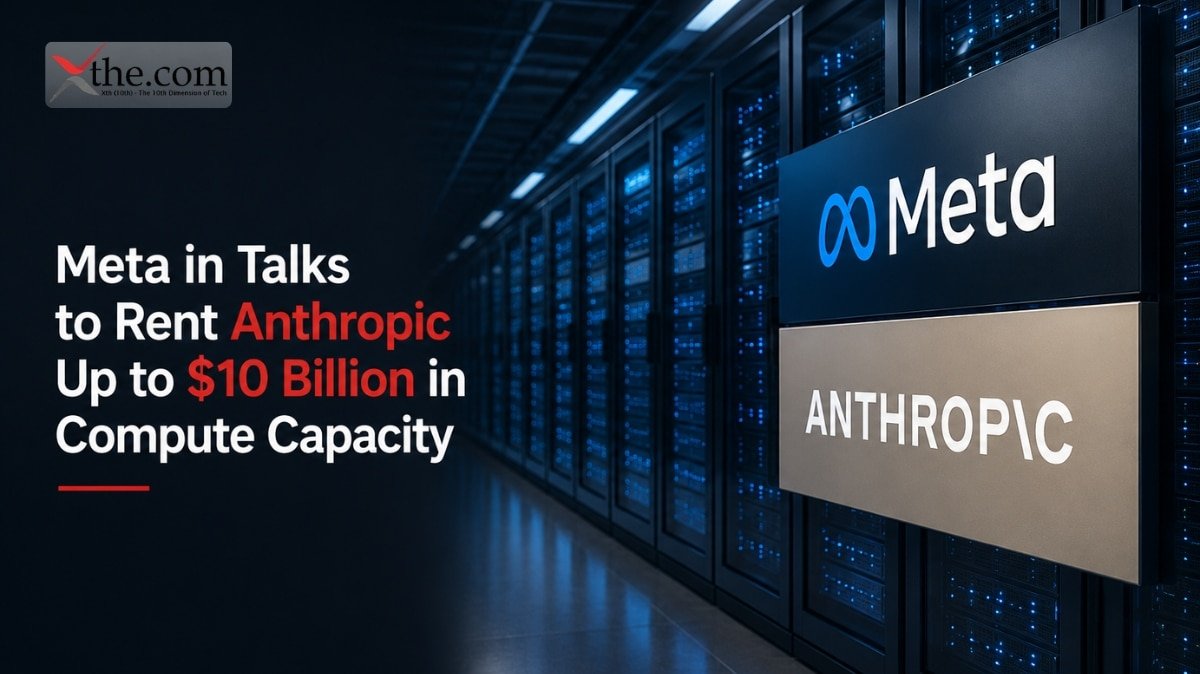
Three sources point to one big number: a deal that might change how the world’s largest social media company earns money from its data centers. Meta is in talks to rent computing capacity to Anthropic in a deal that could reach $10 billion over two years, according to a New York Times report published Friday and independently confirmed by CNBC. The Meta-Anthropic compute deal would be Meta’s first major move toward selling AI infrastructure rather than just using it. The timing is notable, as every leading AI lab is currently competing for the same limited resource: Nvidia chips.
Anthropic suggested the deal in June, and Meta is still considering it. Nothing has been signed yet, and sources say the talks are still early and could fall apart before any contract is drafted. Still, the mere possibility that Meta rents AI compute Anthropic needs to train and serve its Claude models has already affected the markets and changed how investor’s view Meta’s finances.
The Shape of the Deal
The deal would work more like a lease than a partnership. According to sources, Anthropic would pay Meta each month over two years to use Meta’s data center capacity. Either company could end the agreement early. The details are still being worked out, so the final price and the exact hardware involved could change before anything is signed.
Put the number in context. The prospective $10 billion cloud deal is roughly a third in the size of the $45 billion, three-year agreement of Anthropic made with Elon Musk’s SpaceX in May. That deal gave Anthropic full access to SpaceX’s Colossus 1 data center in Memphis, Tennessee, and costs about $1.25 billion per month. The possible Meta deal would be smaller each month, but the goal is the same: Anthropic wants guaranteed access to hardware, not just promises.
Why Anthropic Is Shopping Around
Anthropic’s share of web traffic almost doubled from March to June, according to the report. This growth has increased the gap between Anthropic and smaller AI competitors, but it has also stretched Anthropic’s computing budget. The company has already limited the use of some of its top models because it cannot obtain enough Nvidia hardware to meet demand. Securing capacity at SpaceX and possibly at Meta is more about ensuring resources are available when needed than about saving money. When a model needs to run, the chips must be ready.
Why Meta Wants a Cloud Business
Meta has spent years building data centers mainly for its own advertising and AI projects. In May, Mark Zuckerberg said that moving into cloud computing was “definitely on the table,” and he has publicly noted that companies approach Meta “almost every week” to buy access to spare computing power. Meta already sells capacity through other deals, including a $21 billion agreement with CoreWeave and a $27 billion deal with Nebius. A Meta cloud business Anthropic customer relationship would be the most prominent name yet on that list, and arguably the most reputationally loaded one, since Meta’s Llama models compete directly with Anthropic’s Claude.
This kind of tension is now common in the industry. SpaceX sells GPU capacity to both Anthropic and Google. Google licenses its Gemini models to Meta but also limits Meta’s access to them. Competitors are now also suppliers and customers because no single company can build enough infrastructure on its own. The wider hyperscaler compute rental 2026 pattern, in which chip-rich firms rent out idle capacity to chip-starved rivals, has quietly become one of the defining financial dynamics of this AI cycle.
The Zuckerberg Math
Meta’s large spending plans make the reasoning behind this move clearer. Zuckerberg has told investors that capital spending could reach $145 billion in 2026, more than twice the $72 billion spent in 2025. Such big investments make shareholders want to see returns beyond just more advertising revenue. Renting out extra capacity to a company like Anthropic turns unused servers into income and gives Meta a solid answer when asked if the huge spending will pay off. Meta has also reportedly hired Dave Brown, a former senior executive from Amazon Web Services, showing it is serious about building a real cloud business, not just making a one-time deal.
Meta Stock Reaction: What the Market Told Us
The Meta stock reaction talks produced was immediate and instructive. Shares pared losses after the New York Times report broke Friday afternoon, climbing off their session lows even as the stock still closed down more than 2% amid the broader technology sector’s selloff. That pattern, a stock falling on macro pressure but rebounding on company-specific news, tells its own account. Investors did not treat the prospective deal as a distraction from Meta’s core business. They treated it as validation that Meta’s infrastructure spending has a second use case beyond powering its own apps.
Wall Street has spent much of 2026 questioning whether hyperscalers are overbuilding data centers relative to realistic AI revenue. A confirmed Meta Anthropic compute rental deal would give Meta a concrete answer: excess capacity is not a sunk cost; it is inventory. Skeptics will note that early-stage talks are not contracts, and that the same investors cheering Friday’s news could just as easily punish Meta if the arrangement falls apart or the terms compress. Still, the reaction suggests a market hungry for evidence that AI capital spending eventually converts into revenue rather than depreciation.
The Compute Scarcity Problem Driving Everything
None of this would be happening without the ongoing chip shortage. Nvidia’s newest Blackwell chips are sold out months ahead, and big cloud providers like Microsoft Azure, Amazon Web Services, and Google Cloud have secured long-term supply deals, leaving less for independent labs. For Anthropic, which relies entirely on Nvidia hardware to train and run its models, this shortage is a serious challenge, unlike for companies with more diversified revenue. By working with partners like SpaceX and possibly Meta, Anthropic is betting that having access to computing power is more important than owning the hardware itself.
That bet also explains why Meta finds itself in an unusual position: a company that spent a decade avoiding the cloud business is now positioned to become one of the more attractive Meta cloud business AI customers could choose, precisely because it built so much capacity for itself that it now has room to spare.
What Comes Next
The deal is still not finalized. Both companies have refused to comment, and sources say the talks are complicated because Meta has never run a commercial computing business at this scale before. At the same time, Anthropic is preparing to go public and wants to secure computing agreements now while it still has a strong negotiating position.
If the deal goes through at around $10 billion, it will do more than just boost Meta’s revenue. It will create a new kind of business for one of the world’s biggest technology companies and show a strategy that other large firms might follow. If the deal falls apart, it will still show investors that Meta’s extra capacity has real value and that Anthropic is willing to work with a direct competitor to get it. Either way, the market is moving toward a place where the distinction between rivals and suppliers is less clear, and where having access to scarce resources, not just user data, will decide who comes out on top.
Source: Meta Reportedly In Talks With Anthropic Over a $10 Billion AI Deal








