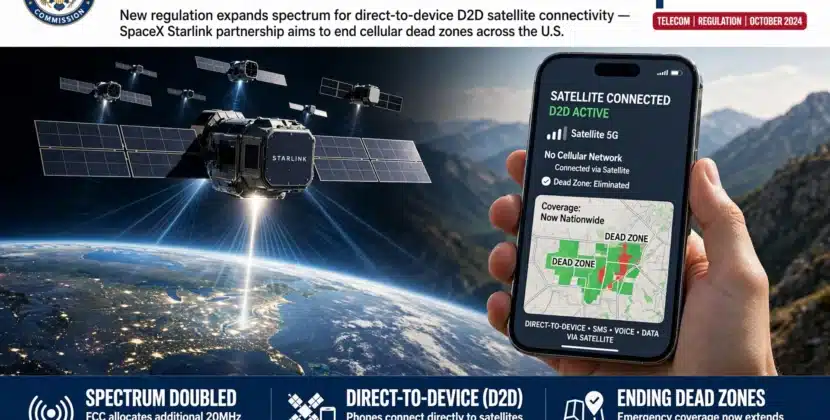




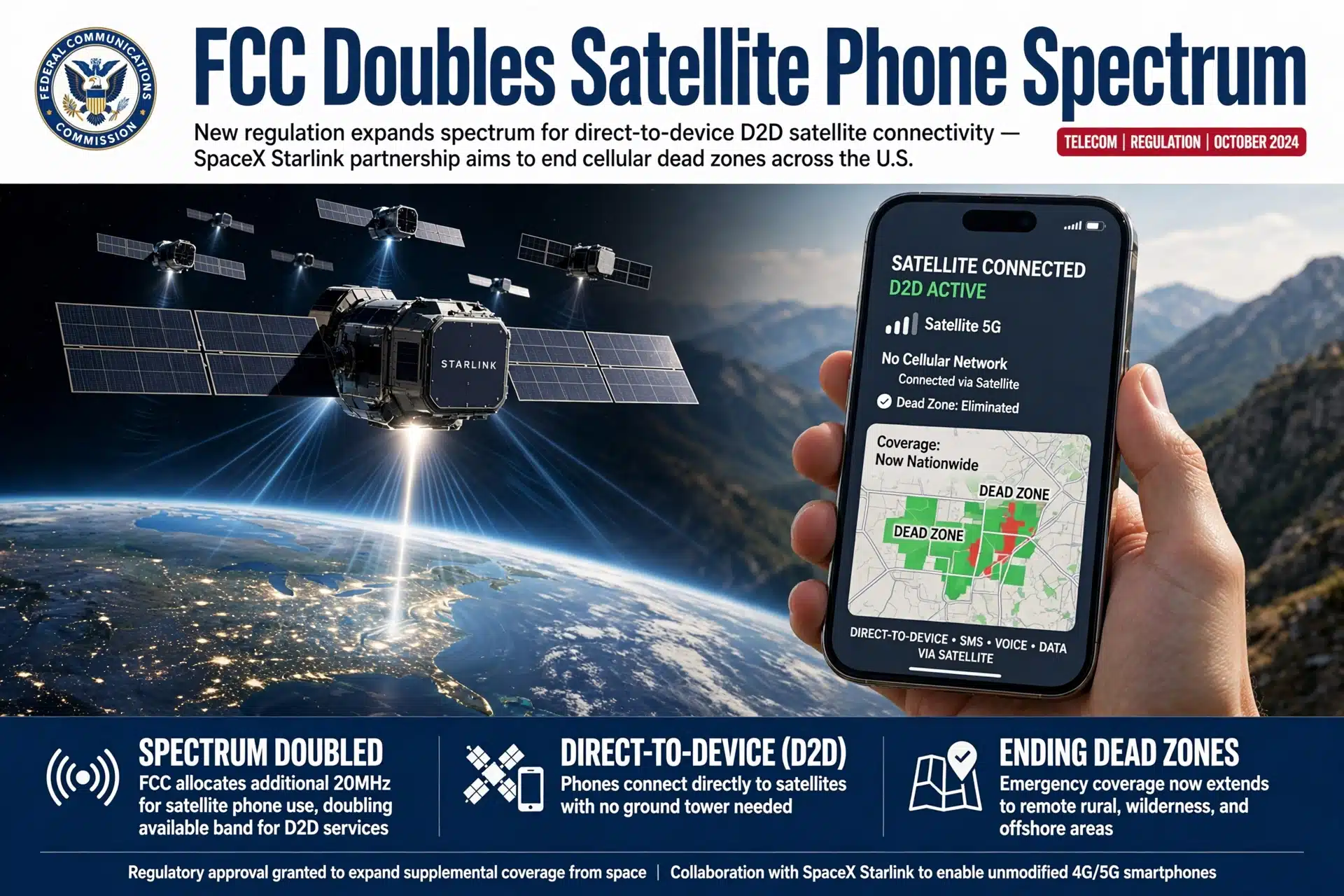
FCC Proposes to More Than Double the Spectrum Available for Satellite-to-Phone Service
The FCC has taken its clearest step yet toward making satellite texting, calling and data a normal feature of American phones rather than an emergency backup. On October 8 the agency released a draft Notice of Proposed Rulemaking, due for a vote at its October 29 open meeting, that would more than double the FCC satellite rules available spectrum for Supplemental Coverage from Space, expanding it from five bands to thirteen and totaling more than 482 megahertz. If adopted, the change would let wireless carriers and satellite operators cover dead zones across the United States with far less red tape, which is why the FCC satellite rules matter to anyone who has ever lost bars between towns.
Key Takeaways:
- – A draft FCC proposal would make more than 482 MHz of spectrum available by rule for satellite-to-phone service, up from the narrow framework adopted in 2024.
- – The number of eligible frequency bands would grow from five to thirteen, codifying spectrum previously identified as candidates for the service.
- – The draft would relax leasing requirements and waive the need for ad hoc approvals where a satellite operator holds the underlying terrestrial spectrum itself.
- – The item is scheduled for a vote at the FCC’s October 29, 2026 open meeting, and remains subject to change before then.
What Supplemental Coverage from Space Actually Is
Supplemental Coverage from Space, usually shortened to SCS, is the regulatory term for the arrangement pioneered by T-Mobile and SpaceX’s Starlink, in which a satellite operator transmits on terrestrial wireless spectrum that belongs to a mobile carrier, so an ordinary unmodified phone connects to a satellite overhead when it loses its ground signal. The FCC first adopted rules permitting this in 2024. In practice every deployment approved to date has required a waiver, because the original rules were written narrowly for a technology that barely existed commercially at the time.
The draft notice proposes to move away from a rigid framework that routinely requires waivers, in the FCC’s own words. Codifying more bands and loosening the leasing rules replaces bespoke case-by-case clearance with standing permission, which is the difference between each pair of carriers and satellite companies negotiating one-off federal clearance and simply launching under published rules.
The Numbers That Matter
The headline figure is more than 482 megahertz of spectrum made available by rule for the service, more than double what the current framework supports. The draft also expands the count of eligible bands from five to thirteen, many of which had already been identified in earlier FCC work as possible candidates, and would now be formally codified. For comparison, when the agency approved the first SpaceX and T-Mobile arrangement, it did so under waivers on a single set of frequencies, a process that took roughly two years from application to approval.
The leasing changes matter as much as the megahertz. Under the current rules a terrestrial licensee and a satellite operator generally needed to align rights across a geographically independent area, essentially the continental United States, which penalized any company whose spectrum position was strong in one market and thin in another. The draft creates pathways to use spectrum for the service even where the terrestrial partner does not hold all relevant licenses across the whole area, and eliminates the waiver need entirely where the satellite licensee holds the SCS-eligible spectrum itself rather than leasing it.
Why the Timing Matters
The draft was circulated for the FCC’s October 29 open meeting, which means the agency intends to move on it this month rather than let it drift. If adopted, comments would be due sixty days after the rules publish in the Federal Register, so the practical effect on networks would arrive over months, not weeks. The FCC has also said it will seek comment on satellite performance requirements and new technical rules to manage interference risk, which carriers and satellite operators will both contest in detail.
Planning context matters for readers following U.S. spectrum policy: the agency is simultaneously advancing a separate proposal to auction 25 MHz of prime mid-band spectrum for direct-to-device use, which was reported in early October. Taken together, the two items show a commission treating satellite connectivity as a mainstream wireless input, not a novelty requiring special exceptions.
What It Means for Rural America and Emergency Coverage
The most concrete consumers benefit is dead-zone coverage. Satellite-to-phone service today delivers text messaging and emergency SOS in areas with no tower, and operators have been expanding to data with limited capacity. Expanding the eligible bands from five to thirteen matters because no single band suits every satellite orbit and handset design; more bands mean more operators can participate without spectrum conflicts, and more participating operators means coverage across more of the 62 counties and mountain, desert and coastal regions where terrestrial towers are uneconomic.
Emergency use is the other policy driver. After hurricanes, wildfires and floods knock out towers, SCS-based texting has already functioned as a lifeline, and the FCC’s 2024 framework was built partly on that record. Codifying the spectrum removes the legal doubt that currently attaches to each waiver-based expansion, which should make it easier for carriers to promise coverage as a standard feature rather than a marketing footnote tied to one handset generation.
Who Wins and Who Will Fight It
Winners include satellite operators with direct-to-device ambitions, notably SpaceX’s Starlink direct-to-cell service and rivals building constellations for it, plus national carriers looking to fill rural gaps without capital spending on new towers. Device makers benefit from having more bands usable for the service, which reduces the case for special hardware variants. The likely friction is traditional: incumbent terrestrial licensees in the newly codified bands will scrutinize interference modeling, and any spectrum that becomes easier to use from space becomes more valuable, drawing contest over entry terms. The FCC’s own interference-analysis request, covering performance requirements for both SCS and broader mobile-satellite operators, signals the agency knows the technical fights are the real fight.
What to Watch Next
Three dates structure the story. The October 29 open meeting vote determines whether the draft becomes a live proposal or heads back for redraft. Comment cycles after Federal Register publication will surface the carrier and satellite-operator positions in detail. And any final order would open a wave of SCS filings under the codified bands, the first real test of whether the streamlined rules produce faster launches than the waiver era did. Consumers should expect incremental expansion of satellite texting and SOS in 2027 rather than a sudden national launch, because satellite capacity, not regulation, is the binding constraint on service quality.
Frequently Asked Questions
What is the FCC’s direct-to-device proposal?
A draft rulemaking released October 8, 2026, that would more than double the spectrum available for satellite-to-phone service, expanding eligible bands from five to thirteen, with a vote scheduled for the FCC’s October 29 meeting.
How much spectrum is proposed for satellite phone coverage?
More than 482 megahertz would be available by rule for Supplemental Coverage from Space, roughly double what the 2024 framework supports.
When would the rules take effect?
If adopted October 29, comments would be due 60 days after Federal Register publication, with final rules and network rollouts following over subsequent months.
Do I need a new phone for satellite service?
Current satellite texting works on recent mainstream smartphones using existing carrier spectrum rebroadcast from space, so most compatible devices will benefit without new hardware as coverage expands.
Sources: