






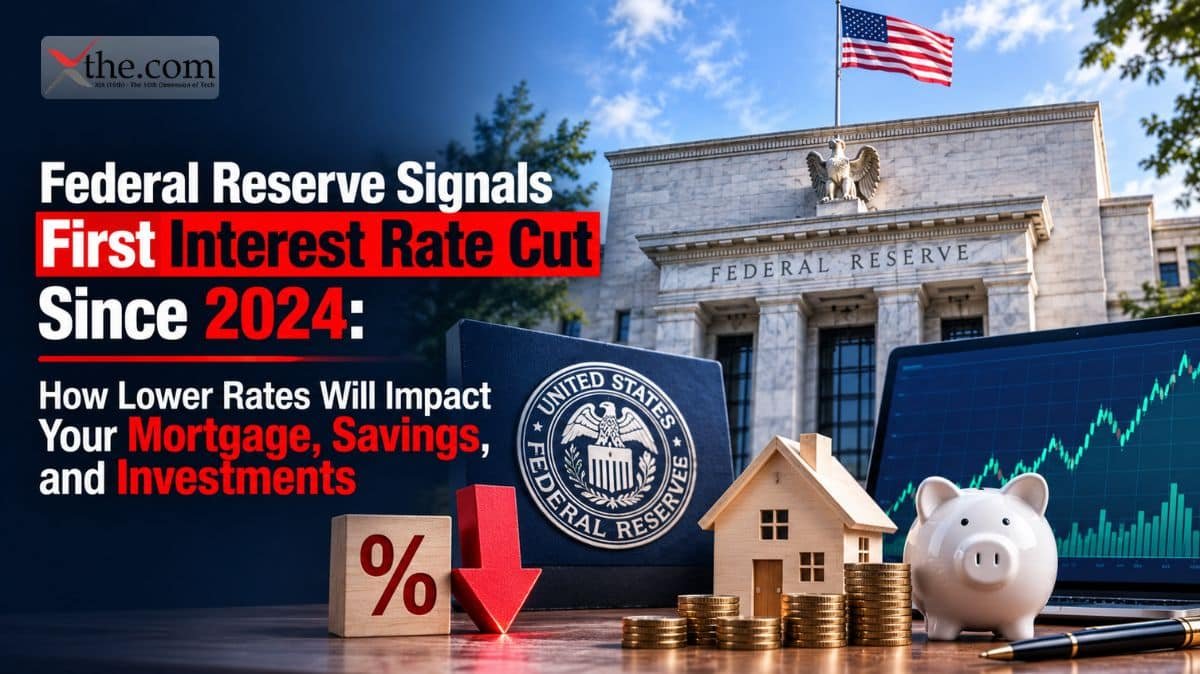
Federal Reserve Chair Jerome Powell strongly hinted at the Jackson Hole Economic Symposium that the central bank will begin cutting rates at the September 17-18, 2026 FOMC meeting. Markets immediately priced in aggressive easing, with the CME FedWatch Tool showing a 72% probability of a 50-basis-point cut.
Why the Fed Is Cutting Now
The unemployment rate has climbed from 3.4% in early 2025 to 4.6% in July 2026 — approaching the Sahm Rule threshold that historically signals recession. Core PCE inflation dropped to 2.3%, tantalizingly close to the 2% target. Forward-looking indicators suggest economic momentum is decelerating faster than anticipated.
“The balance of risks has shifted,” Powell stated. “We are now equally concerned about achieving maximum employment and price stability.”
Impact on Mortgage Rates
The average 30-year fixed mortgage rate fell from 7.2% in June to 6.4% in early August. If the Fed delivers the expected 50-basis-point cut, mortgage rates could drop below 6% by October — the lowest since early 2025. On a $400,000 home with 20% down, the monthly payment drops from $2,175 at 7.2% to $1,919 at 6.0% — saving $256 per month or over $92,000 in total interest.
However, lower rates may re-ignite home price inflation. The National Association of Realtors warns that demand could overwhelm limited housing inventory, pushing median prices up 5-8% in hot markets.
Savings Accounts and CDs
High-yield savings accounts that paid 5.0% APY in early 2025 have already fallen to 4.2%, with projections of 3.5% by year-end. One-year CDs now average 4.1% nationally, down from 5.5% last year. Financial advisors recommend locking in current rates by purchasing brokered CDs or Treasury bills before the September meeting.
Stock Market Reaction
The S&P 500 gained 8.3% in July and August on rate-cut expectations. Rate-sensitive sectors are surging:
- REITs: Vanguard Real Estate ETF (VNQ) has risen 14% since June as lower discount rates increase future cash flow values.
- Utilities: NextEra Energy and Duke Energy are up double digits as stable dividends become more attractive.
- Growth Stocks: The ARK Innovation ETF has surged 22% as unprofitable tech companies see valuations expand.
Credit Cards and Auto Loans
Credit card APRs averaging 22.8% won’t fall immediately — banks typically lag by 1-2 billing cycles. However, variable-rate cards should see relief by November. Auto loan rates have declined from 7.3% to 6.8% for new vehicles and could push below 6.5%, reviving a car market that saw sales drop 12% year-over-year.
What You Should Do Now
Homeowners with adjustable-rate mortgages should consider refinancing to fixed rates before demand drives rates back up. Savers should lock in current CD and Treasury yields immediately. Investors should rebalance portfolios toward bonds and dividend stocks. Debt holders should avoid new variable-rate debt and shop aggressively for better rates.








