





Washington, D.C.
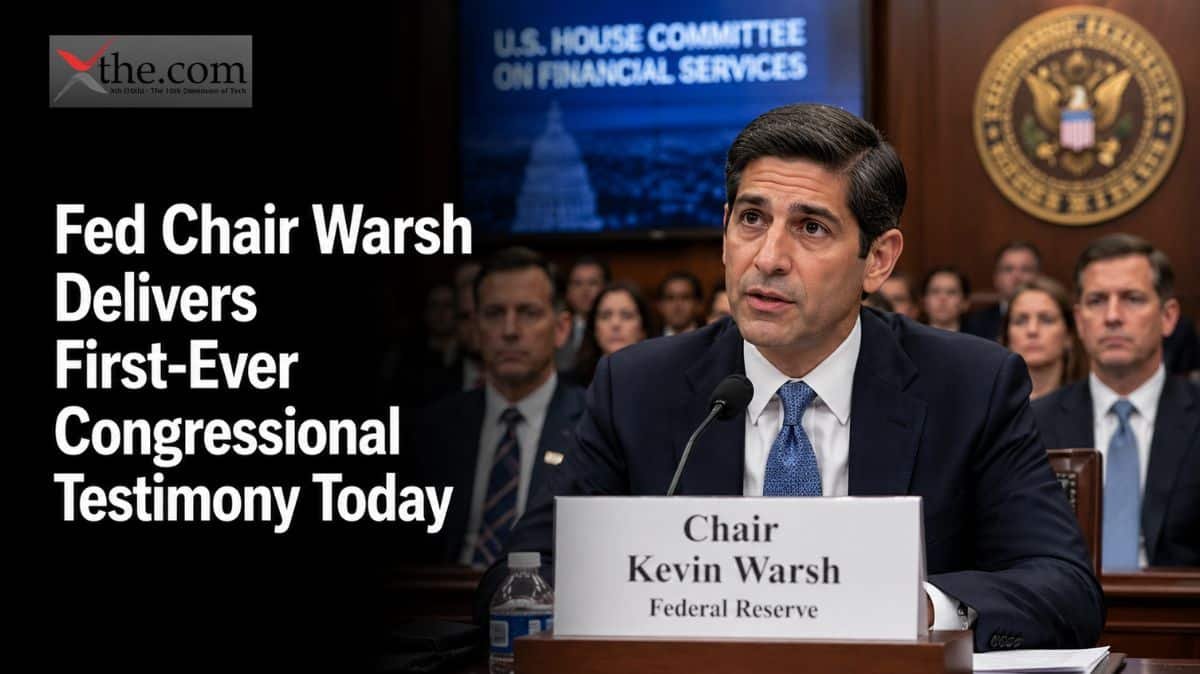
Bond traders were up early today. At 10:00 a.m. Eastern, Fed Chair Warsh first testimony before the House Financial Services Committee. It happens on the same day as the June Consumer Price Index release and right after second-quarter bank earnings. Three catalysts, one morning, zero precedent. This is Warsh’s congressional testimony on July 14, and it is the first extended, on-the-record look by lawmakers and markets to see how the new Fed chair thinks.
Kevin Warsh became Fed chair on May 22, taking over from Jerome Powell after a mostly party-line confirmation. He led the June Fed meeting, kept rates steady, and said little except that he would fight inflation. That caution is why today is important. The law requires the Fed chair to testify before Congress twice a year, so this is the first time Warsh’s monetary policy for 2026 will be discussed in detail, not just in a short press conference but through hours of direct questions.
Why the House Comes Before the Senate
Here is where the record needs a correction. Some early previews of today’s hearing described Warsh appearing before the Senate Banking Committee. That is not accurate. Today’s session, July 14, is on the House Financial Services Committee. The companion’s appearance, Warsh’s semi-annual testimony before the Senate Banking Committee, follows on July 15 at 10:00 a.m., completing the twice-a-year cycle Congress requires every Fed chair. Readers tracking both hearings should expect two distinct transcripts, two different committee rosters, and potentially two different lines of questioning, even if the underlying Monetary Policy Report is identical.
This difference is important for anyone who is watching the market. House members usually focus more on housing costs and how tariffs affect consumer prices. Senate Banking members often ask about financial soundness and the Fed’s balance sheet. If a trader pays attention to the wrong committee’s questions, they could misread the market signals.
A Governor Who Already Knows the Room
Warsh is familiar with this setting. He served as a Fed governor from 2006 to 2011 and often testified before Congress during the financial crisis. People who worked with him say he is careful with his words, preferring expressions such as “price stability” and “credibility” instead of giving forward guidance. Just 12 days ago, he told an audience in Portugal that he would not provide forward guidance, since the Fed meets again in 4 weeks. Expect him to focus on the big picture today and avoid giving particular details.
Inflation, Iran, and the Data Landing on His Desk
This is an unusual situation. The June CPI data, released this morning, is expected to show headline inflation dropping to about 3.8% year over year, down from 4.2% in May. Core inflation should stay near 2.8%. Economists say this improvement is mostly due to lower energy prices, which are linked to easing tensions in the Middle East. This explains the connection between Warsh, inflation, and Iran rate hikes. Lower oil prices bring down headline inflation, reducing pressure on the Fed to raise rates soon.
Markets are not fully convinced that a hike is off the table. Futures pricing has hovered around a one-in-four chance of a rate increase at the Fed’s next meeting, with the balance of expectations favoring a hold. That sets up the Fed’s July 28 29 rate decision with Warsh as the next hard deadline. Nothing announced today binds the committee’s hand at that meeting, but Warsh’s tone in front of the House this morning, and again before the Senate tomorrow, will shape how aggressively traders reprice the odds heading into the final week of July.
What Changes with a New Chair
It is worth pausing on how unusual this moment is structurally. This is the first Warsh testimony for Powell replacement territory in the truest sense: Congress has not heard a semi-annual monetary policy report from anyone other than Powell in years. Committee staff on both sides have devoted weeks preparing questions specifically intended to probe whether Warsh’s framework diverges meaningfully from his predecessor’s, particularly on the pace of any future easing and on how the Fed weighs newer variables, including the inflationary effect of surging AI infrastructure investment, a topic that entered FOMC discussions for the first time at the June meeting.
Corporate disclosures have made things more interesting. Warsh owns digital assets, including Bitcoin, which he has called an important asset class. During his confirmation hearing, he told senators that digital assets are becoming a key part of the financial system. At least one lawmaker is likely to ask how his personal holdings relate to his role in regulating these assets, even if the discussion is short.
Reading the Transcript in Real Time
For anyone trying to parse “Warsh first congressional testimony July 14, 2026, Fed Chair monetary policy Iran” as it happens, the useful signal is not any single soundbite but the cumulative weight of word choice across both days. Does Warsh repeat “price stability” more often than “maximum employment”? Does he characterize the Iran-driven energy relief as durable or temporary? Those small tells tend to move front-end Treasury yields faster than any explicit rate of guidance should, precisely because Warsh has made clear he intends to give none.
Anyone assembling a research note before the 10:00 a.m. start should treat “What to expect Warsh testimony rate hike signals inflation Iran July 2026” as a live document. The Monetary Policy Report, released before the hearing, sets the official record. But today’s real value comes from the unscripted questions and answers after the prepared remarks. One unplanned comment from a chair with five years of experience in this role can move markets more than the report itself.
The next two days will not settle the debate about what happens to rates after July 29. But they will show Congress and the markets whether the new Fed chair will communicate like Powell did, or if he plans to set up his own style as someone who has been both a witness and now the chair in these hearings.
Source: Fed Chairman Kevin Warsh on tap to make his first appearance before Congress