






Washington, D.C. | July 9, 2026
Consumer borrowing did something it has not done since 2024: it shrank. Households pulled back by $0.2 billion in May, a sharp reversal from the $16.6 billion increase economists had penciled in, and that single data point landed one day after the FOMC minutes divided the Fed’s July 2026 narrative and seized hold of Wall Street. The Federal Reserve released the minutes from its June 16–17 meeting on Wednesday at 2:00 p.m. ET. The 14-page document confirmed what traders had suspected: the central bank is split in the direction of interest rates, and the disagreement is now a real issue.
The committee voted unanimously, 12–0, to hold the federal funds rate steady at 3.50%-3.75%. That vote masked a much messier internal conversation. Some officials argued that the case for further tightening remained alive, citing inflation stubbornly above the Fed’s 2% target. Others countered that a softening labor market argued in favor of patience, if not an eventual cut. The result is a Federal Reserve inflation conflict that now defines the second half of 2026 for anyone trading rates, equities, or the dollar.
A Fed That Cannot Agree on the Next Move.
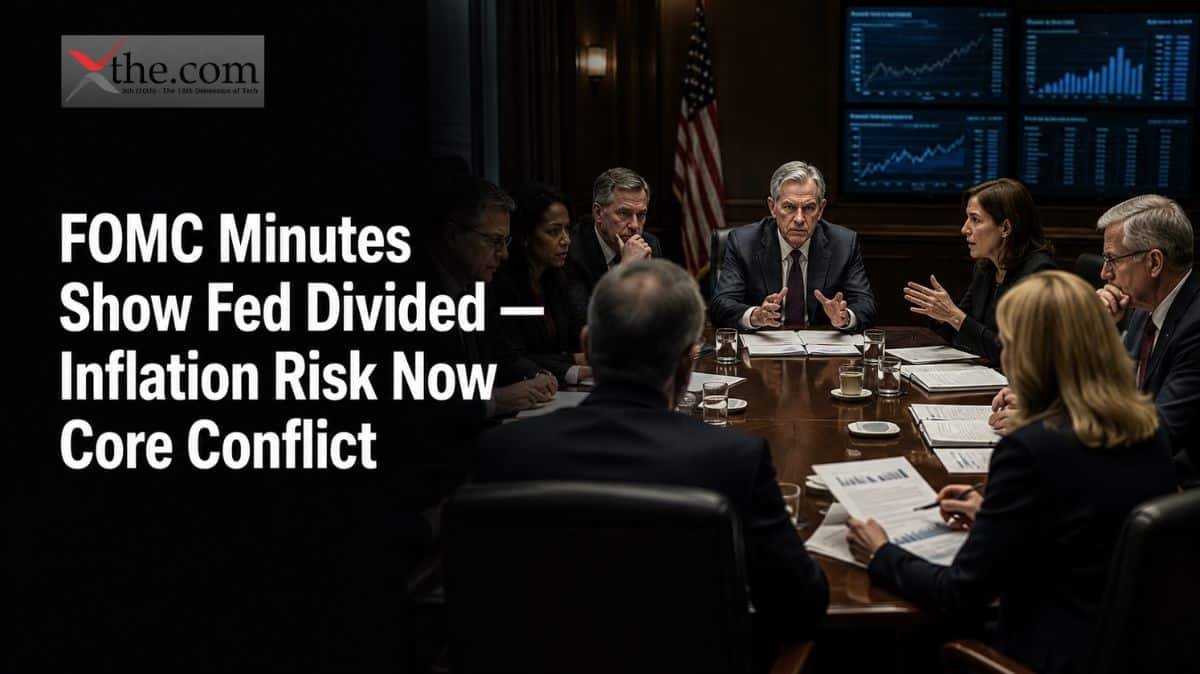
The minutes describe a committee split almost down the middle. A handful of participants said conditions justified raising rates at the June meeting itself, citing sticky core inflation and pass-through from tariffs and energy costs. They ultimately stood down and backed the hold. Others took the opposite view, warning that job growth has barely kept pace with the workforce and that further tightening risked tipping a cooling economy into contraction. Neither camp carried the room. The committee remains Fed rate hike divided heading into September, with no clear majority in either direction.
Kevin Warsh, chairing his first FOMC gathering as Fed chairman, described the session afterward as a “family fight” that nonetheless produced a unanimous vote. Warsh’s first FOMC meeting minutes release also represented a shift in the Fed’s communication style. The post-meeting statement was cut to roughly a third of its usual length, and the minutes noted that most participants saw advantages in a shorter, less predictive public message. Investors accustomed to parsing every adjective in a Fed statement will need to adjust; forward guidance, for now, has been deliberately dialed back.
The Neutral, Wait-and-See Posture
Strip away the drama, and the document reveals something closer to institutional caution than institutional conviction. The FOMC minutes neutral wait-and-see Fed posture was evident throughout, with officials repeatedly framing their outlook in conditional terms rather than committing to a path. Participants generally agreed that economic activity remains solid, that productivity growth and capital investment are strong, and that unemployment has changed little. Where they diverged was what happens next, and that divergence is precisely why markets reacted the way they did.
After the release, bond yields rose slightly while stock futures fell, showing real uncertainty rather than a clear bet by traders. Jeffrey Roach, chief economist at LPL Financial, pointed out that the minutes showed real ambiguity between the different groups. This is unusual for a central bank that usually aims for explicit communication.
Inflation Risk Becomes the Core Contradiction
The most consequential passage in the minutes concerns inflation expectations. Officials judged that price pressures would likely remain elevated in the near term before easing as the effects of tariffs, energy costs, and disruptions tied to the closure of the Strait of Hormuz gradually faded. Critically, the committee concluded that Fed upside inflation risks still outweigh the risks of undershooting the target. That single judgment is doing enormous work in the document, because it is the link connecting every hawkish argument inside the room.
Spending on artificial intelligence infrastructure added a new complication. Participants noted that continuing demand for AI data centers will likely keep technology prices and electricity costs high. Warsh has said publicly that AI will eventually lower inflation as productivity improves, but this puts him at odds with colleagues who are more concerned about short-term price increases from energy-hungry data centers.
FOMC June minutes: Fed divided on inflation risk; core conflict; some officials see rate hike needed in 2026
This phrase sums up the main tension in the release. Some officials clearly said there was a case for raising rates in June, even though they ultimately supported a pause. They argued that if inflation is not addressed, it will become harder to control over time. Others were just as clear in warning that raising rates too soon, especially with a weakening job market, could cause lasting harm. Both sides looked at the same data but reached different conclusions, which is why the debate over a Fed rate hike versus cut in 2026 is now the key monetary policy question of the year.
What the Data Since the Meeting Adds to the Picture
Two new data points this week make things more complicated. Wholesale inventories rose by 0.1% in May, a small but positive sign that businesses are not rapidly reducing their stock ahead of a slowdown. Consumer credit, however, was more concerning. It fell by $0.2 billion in May, even though growth of about $16.6 billion was expected. This suggests households are borrowing less just as the Fed is debating if the economy can handle higher rates. Credit card balances fell at an annual rate of about 4.7%, while car and student loans kept growing.
Adding geopolitics to economic data makes things even more uncertain. Oil prices jumped sharply on Thursday after new tensions in the Iran conflict cast doubt on the recent ceasefire that had calmed energy markets. For a Fed already concerned about rising inflation from energy costs, a new spike in oil prices is not a minor issue. It directly affects the same inflation debate that divided the committee in June.
What FOMC minutes July 8, 2026, hawkish neutral Fed shift means for stock bond investors
For investors trying to decide how to position themselves, the reality is that the Fed has removed one source of certainty without providing another. The shorter statements mean there is less advance guidance before each meeting. The divided minutes mean that every new inflation number, jobs report, and oil price change now have a bigger impact on the committee’s decisions. Stock markets, which expected a calm summer, may need to adjust to a Fed whose next moves are truly uncertain.
The Road to September
None of these has a simple solution. The Fed’s changes to communication suggest officials want more flexibility and less need to share their thinking in advance. This may help the committee work better internally, but it means markets have to do more of their own forecasting with less guidance than before. Every data release between now and September, from the July 14 CPI report to any new developments in the Strait of Hormuz, will show which side inside the Fed is gaining influence. The minutes did not resolve the debate; they just made it official.








