






The Seven Demands
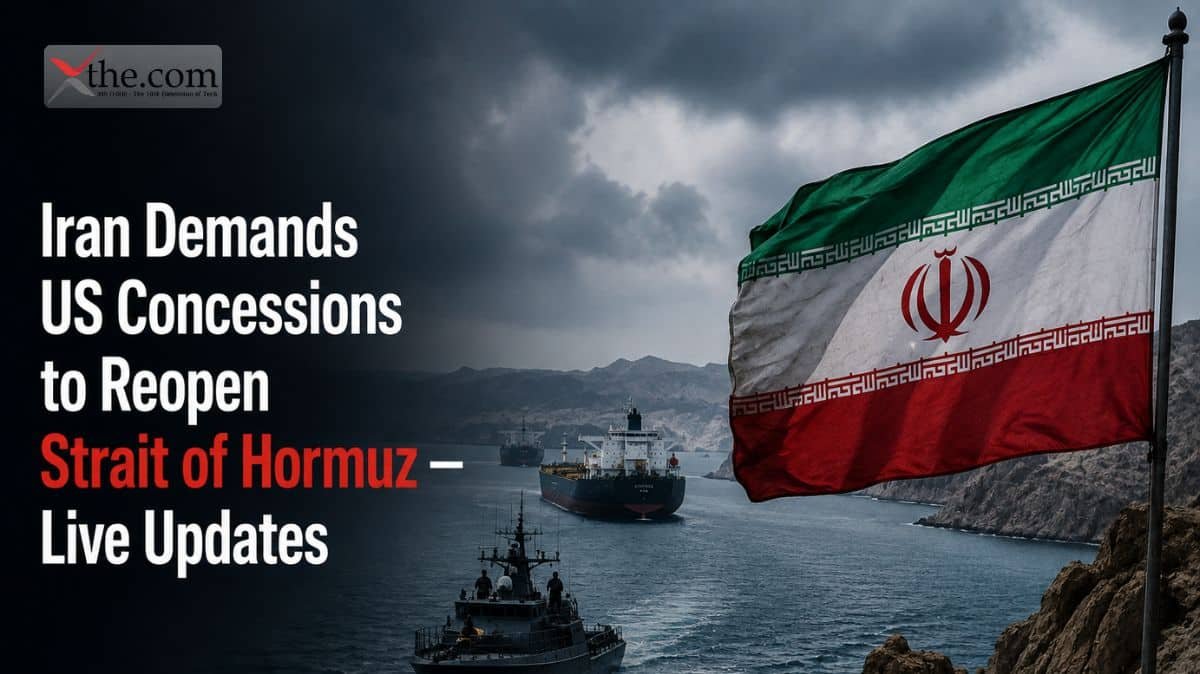
On August 10, 2026, Iran’s Supreme National Security Council issued a formal list of demands that must be met before the Strait of Hormuz — the world’s most critical oil chokepoint — can reopen. The demands represent Tehran’s most comprehensive negotiating position since closing the strait in February 2026, and they go far beyond what Washington has previously indicated it would accept.
Iran’s Seven Demands:
Table
| # | Demand | US Likely Response |
| 1 | Permanent end to the war with Iran and its armed allies | Partially possible via ceasefire |
| 2 | Lifting of the naval blockade of Iranian ports | Possible as part of deal |
| 3 | Withdrawal of US military from the Persian Gulf region | Highly unlikely |
| 4 | Full compensation for war damage to Iranian infrastructure | Unprecedented; unlikely |
| 5 | Lifting of all sanctions against Iran | Possible over time |
| 6 | Unconditional release of frozen Iranian assets (~$6-8 billion) | Possible as goodwill gesture |
| 7 | US must never threaten Iran again | Impossible to guarantee |
Iranian Foreign Minister Abbas Araghchi stated bluntly: “Negotiations cannot resume until violations of the interim deal end and the U.S. has remedied provisions it violated.”
What Iran Wants from the US
The demands reveal Iran’s negotiating strategy: start with maximalist positions and negotiate downward. But some demands are genuinely non-negotiable for Tehran.
The Non-Negotiables:
- Sanctions relief: Iran’s economy is collapsing under the combined weight of war damage, sanctions, and the Hormuz closure. Inflation exceeds 45%, and the rial has lost 60% of its value since February.
- Asset unfreezing: Approximately $6-8 billion in Iranian assets are frozen in South Korean, Japanese, and European banks. Iran needs this liquidity immediately.
- End to military threat: The assassination of senior Iranian officials (including former SNSC head Ali Larijani in March) has made Tehran paranoid about US and Israeli strikes.
The Bargaining Chips:
- War reparations: The demand for “full compensation” is likely a negotiating position Iran expects to compromise on.
- US withdrawal: Tehran knows American forces won’t leave the Gulf entirely, but a reduction in carrier presence might be achievable.
Trump’s Response: Semi-Negotiating
President Trump has taken a characteristically ambiguous position. In an interview with Axios published August 9, Trump asserted that the US is “only semi-negotiating” with Iran and is letting economic pressures take their toll.
The “semi-negotiating” formulation suggests Trump is keeping channels open through intermediaries while publicly maintaining a hard line. This approach allows the administration to:
- Avoid appearing weak during an election year
- Maintain military pressure while exploring diplomatic options
- Blame Iran if talks collapse
However, Trump’s position is complicated by domestic politics. With the economy losing jobs, oil prices elevated, and missile stockpiles depleted, continuing the war indefinitely carries significant political risk. A recent Reuters/Ipsos poll found only 33% of Americans support the Iran conflict.
The Oman Mediation Effort
Behind the scenes, Oman is playing a critical mediation role. The sultanate, which maintains friendly relations with both Washington and Tehran, is working to finalize a temporary maritime arrangement that would allow limited shipping through Hormuz while broader negotiations continue.
The Proposed Oman Arrangement:
- Ships would enter the strait near the Iranian coast and exit near Oman
- No fees or tolls during the interim period
- Endorsed by Gulf Cooperation Council members
- Joint announcement by Iran, Oman, the US, and the UN’s International Maritime Organization
The deal is designed to restore the separate interim agreement signed between the US and Iran in June 2026 — an agreement that both sides accuse the other of violating. Two sources familiar with the talks stressed that “terms still could change.”
Economic Impact: Oil Prices and Global Trade
The Hormuz closure has already caused significant economic damage:
Table
| Metric | Pre-War (Feb 2026) | Current (Aug 2026) | Impact |
| Brent Crude | $78/barrel | $84.41/barrel | +8.2% |
| Global Shipping Costs | Baseline | +35-50% | Major inflationary pressure |
| Iranian Oil Exports | 1.2M barrels/day | ~200K barrels/day | 83% reduction |
| Global Oil Supply Buffer | 3.5M barrels/day | 1.2M barrels/day | Critical tightness |
Brent crude traded 1.03% higher at $84.41 per barrel on August 10 as markets priced in continued uncertainty.
If Hormuz remains closed through the winter, energy analysts warn that oil could spike above $100/barrel — triggering a global recession.
Iran’s New Security Chief
Complicating negotiations further, Iran named a new head of its Supreme National Security Council on August 10. Mohsen Rezaei — a former Revolutionary Guard commander and military adviser to Supreme Leader Ayatollah Mojtaba Khamenei — replaces Mohammad Bagher Zolghadr.
Rezaei is a hardliner who earlier this month stated Iran will “never allow an unauthorized route through the Strait of Hormuz.” His appointment signals that Khamenei is not preparing for compromise — at least not yet.
The reshuffle is the latest in a series of leadership changes following Israeli strikes that killed several senior Iranian officials, including former SNSC head Ali Larijani in March. The council is adapting to wartime losses while maintaining a unified hardline position.
What Happens If Hormuz Stays Closed
If negotiations fail and Hormuz remains closed through September, three scenarios become likely:
Scenario 1: Economic Pressure Forces Iranian Compromise Iran’s economy cannot survive indefinitely. Without oil exports and with imports crippled, domestic unrest could force Tehran to accept less favorable terms.
Scenario 2: US Military Action to Reopen Strait The Pentagon has reportedly drafted plans for a naval operation to forcibly reopen Hormuz. This would be the largest naval engagement since WWII and carries enormous escalation risk.
Scenario 3: Stalemate Continues Through Winter The most likely near-term outcome. Both sides maintain positions, global energy markets tighten, and the world braces for $100+ oil.
Frequently Asked Questions
Q: What are Iran’s demands to reopen the Strait of Hormuz? A: Iran demands an end to the war, lifting of the naval blockade, US military withdrawal from the Gulf, war reparations, sanctions relief, release of frozen assets, and a US commitment to never threaten Iran again.
Q: Is the US negotiating with Iran directly? A: No. Iran says it will not engage in direct talks while the US violates the June 2026 interim deal. Messages are being exchanged through intermediaries, primarily Oman.
Q: What did Trump say about Iran negotiations? A: Trump told Axios the US is “only semi-negotiating” with Iran and is letting economic pressure take its toll.
Q: What is the Oman mediation proposal? A: Oman is brokering a temporary arrangement where ships would transit Hormuz near the Iranian coast (entering) and Omani coast (exiting) without fees during an interim period.
Q: How much are Iranian assets frozen overseas? A: Approximately $6-8 billion in Iranian assets are frozen in banks in South Korea, Japan, and Europe.
Q: Who is Iran’s new security chief? A: Mohsen Rezaei, a former Revolutionary Guard commander and hardliner, was named head of Iran’s Supreme National Security Council on August 10, 2026.
External Sources:
- CBS News: https://www.cbsnews.com/
- Axios: https://www.axios.com/
- AP News: https://apnews.com/








