




Millions Face Coverage Loss as Non-Citizen Medicaid Rules Take Effect October 1
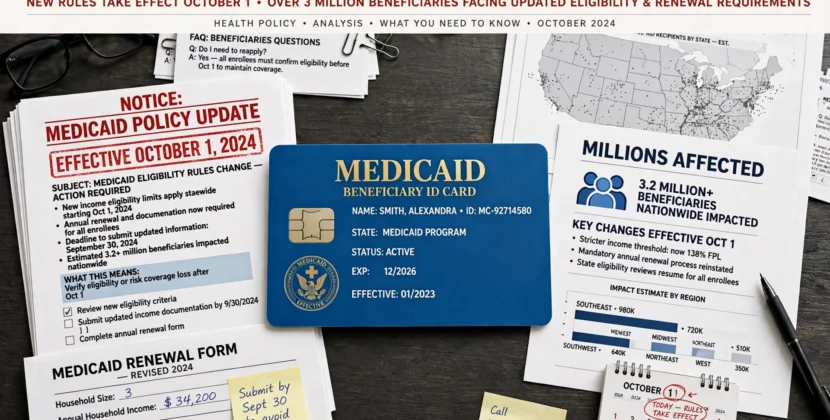
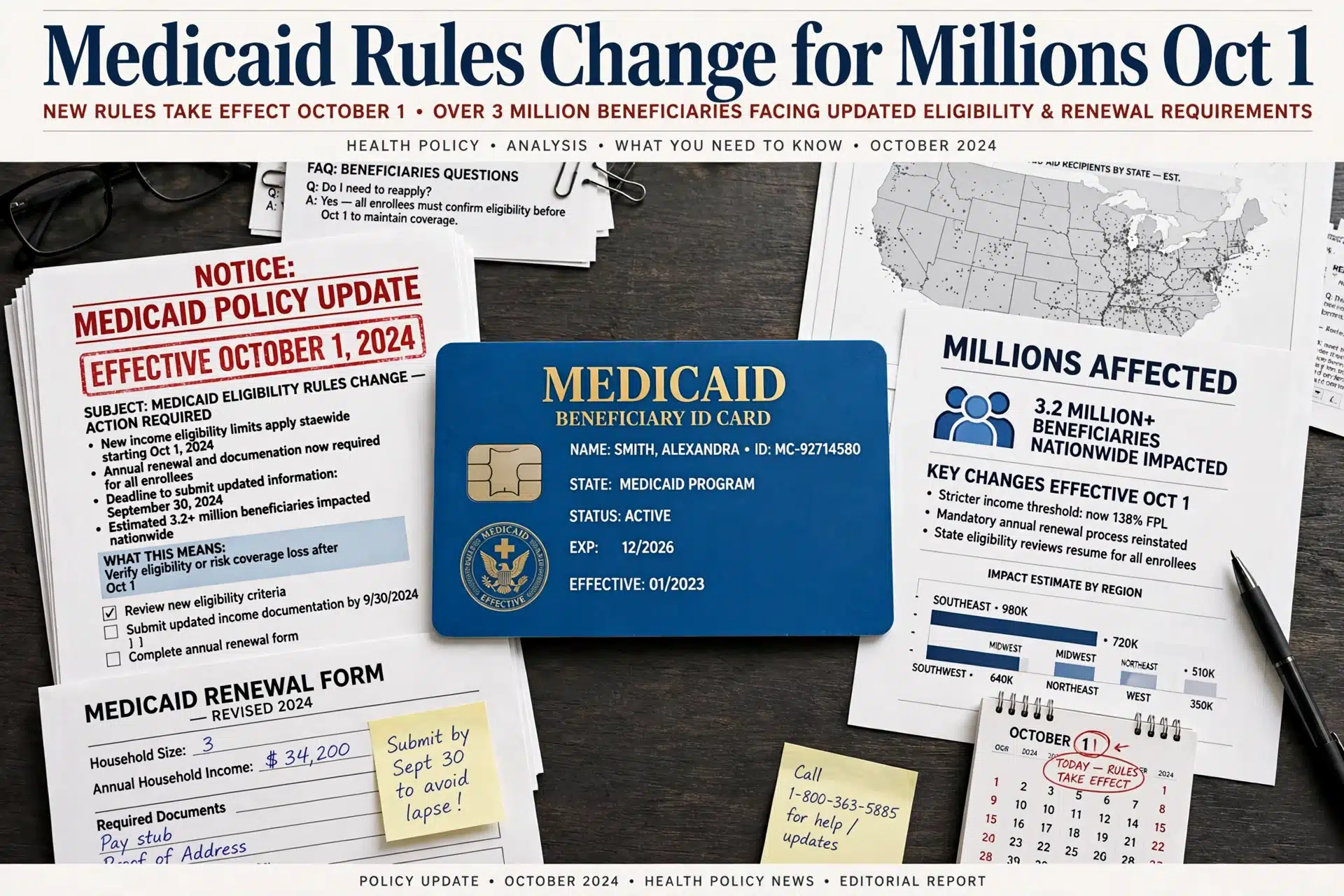
New federal eligibility rules for Medicaid and the Children’s Health Insurance Program took effect October 1, 2026, and health officials across the country are warning that the change will end coverage for many legal immigrants who have relied on the programs for years. The restrictions, written into H.R.1, the reconciliation bill signed into law in 2025, sharply narrow which immigration statuses qualify for federally funded Medicaid, restoring strict waiting periods and rolling back exemptions that states had used to extend coverage.
The timing is brutal for affected families. Applications filed on or after October 1 are judged under the new rules immediately, and states have begun reviewing current enrollees to determine who must be moved off the programs. With open enrollment for individual-market plans starting November 1, advocates are racing to notify beneficiaries, explain what changed, and map out alternatives before coverage letters start arriving.
What Changed on October 1
At its core, the law restores the rules of the 1996 welfare reform law, PRWORA, which imposed a five-year waiting period on most lawful permanent residents before they could receive federal Medicaid. For a decade, states had expanded coverage through exemptions and state-funded programs. Beginning October 1, 2026, LPRs are generally subject to the five-year bar again, and the prior exemptions that let green card holders enroll sooner are being rolled back.
Beyond the waiting period, the eligibility universe itself shrinks. After October 1, only U.S. citizens and nationals, plus a narrow group of qualifying immigrants, can be covered by Medicaid and CHIP with federal financial participation. Nonpregnant adults without qualifying status are the most exposed group, while pregnant women and children retain more protection under the changes. The National Immigration Law Center says many immigrants will lose access to federally funded Medicaid and CHIP starting with the new fiscal year.
Who Is Affected
The people most likely to be impacted are lawful permanent residents within their first five years in the country, asylum seekers and refugees in certain postures, and adults with various humanitarian or pending statuses that states had previously covered with federal matching funds. State health departments have published affected lists: North Carolina told residents that many people who are not U.S. citizens will lose Medicaid on October 1 because of the changes in the law, and Maryland estimated its changes alone could affect up to 15,000 noncitizens.
KFF, the health policy research organization, laid out the implementation questions states are now wrestling with: how quickly to unwind existing enrollees, whether to place people into pending or non-eligibility categories, how to handle pregnant people and children who remain eligible, and what notice requirements apply. Rhode Island, the District of Columbia and Virginia have all issued their own guidance pages, which tells you how widespread the administrative work has become.
How the Unwinding Will Work
States will identify and review current enrollees against the new criteria. Noncitizens who apply on or after October 1 have their eligibility determined under the new rules from day one. For existing enrollees, the process typically runs through renewal cycles: when the next redetermination arrives, the state applies the current law, and people who no longer qualify receive a notice ending coverage, often with a 30 to 60 day transition period depending on the state.
That rollout creates traps. Someone eligible in September may be ineligible in December without doing anything wrong, and notice letters can arrive in English to people with limited language access. Advocates urge affected enrollees to make sure their address is current with their state Medicaid agency, to open every letter, and to ask about fair hearing rights, since eligibility determinations can often be appealed even when the underlying law has changed.
What Alternatives Are Available
Losing Medicaid does not always mean losing coverage. In many states, adults who roll off Medicaid remain eligible for children’s coverage through CHIP even if their own status-based eligibility ends, and emergency Medicaid for acute conditions often remains available regardless of immigration status. When open enrollment begins November 1, subsidized marketplace plans become the main avenue, and in several states, state-funded programs cover remaining groups with state dollars rather than federal ones.
Practical steps for affected families: contact your state Medicaid office to confirm your renewal date and status category; check whether you qualify for a marketplace plan with subsidies; ask your county health department about state-funded coverage or sliding-scale clinics; and keep children separately enrolled in CHIP or school-based programs so one adult’s coverage change does not cascade through the household. Free legal aid organizations can help parse notices, especially for people with pending immigration cases whose status may shift again.
The Bigger Policy Picture
The restrictions are part of a broader squeeze on public coverage. Congress passed them as savings measures to offset tax priorities in the reconciliation bill, and analysts estimate the eligibility changes will reduce coverage rolls significantly over the next decade, with the first measurable drop arriving in the fourth quarter of 2026. Hospitals in states that expanded Medicaid are watching closely, because uninsured emergency-room volumes rise when coverage falls.
Health policy experts at KFF caution that implementation details will determine the human impact: states that move aggressively to unwind rolls will see faster coverage losses than states that phase changes in at renewal. The interaction with the insurance market also matters, since marketplace subsidies and state programs can absorb some, but not all, of those losing coverage. The first quarter of 2027 will show how large the gap really is.
What to Watch Next
Watch three things this fall. State notices are the leading indicator: the volume and timing of letters will reveal how fast the unwind is moving. Second, November 1 marketplace enrollment figures will show whether displaced enrollees are finding replacement coverage or falling through the cracks. Third, litigation and legislation: advocates are examining whether any categories were implemented beyond the statute’s text, while some states are considering using their own funds to backfill federal losses.
For affected families, the deadline that matters is now. Confirm your status, understand your renewal date, and line up alternatives before coverage ends. The rules changed on October 1; the notices are coming next, and preparation in the next few weeks will determine whether a paperwork transition becomes a gap in care.
Frequently Asked Questions
Who loses Medicaid under the October 1 rules?
The restrictions primarily affect lawful permanent residents within the five-year waiting period and nonpregnant adults whose immigration status no longer qualifies under the narrowed federal eligibility list.
Do green card holders automatically lose coverage?
Not immediately. LPRs subject to the restored five-year bar are affected first, while longer-term permanent residents and citizens generally remain eligible through their existing status.
Will my children lose coverage too?
CHIP rules were not changed as sharply as adult Medicaid rules, and many children retain eligibility even when a parent’s coverage ends. Check your state’s CHIP program separately.
What should I do if I get a termination notice?
Read it carefully, confirm your address with your state agency, ask about fair hearing rights before the deadline, and compare marketplace options ahead of the November 1 open enrollment start.