




Medicare Drug Premiums Climb 50% as Open Enrollment Runs
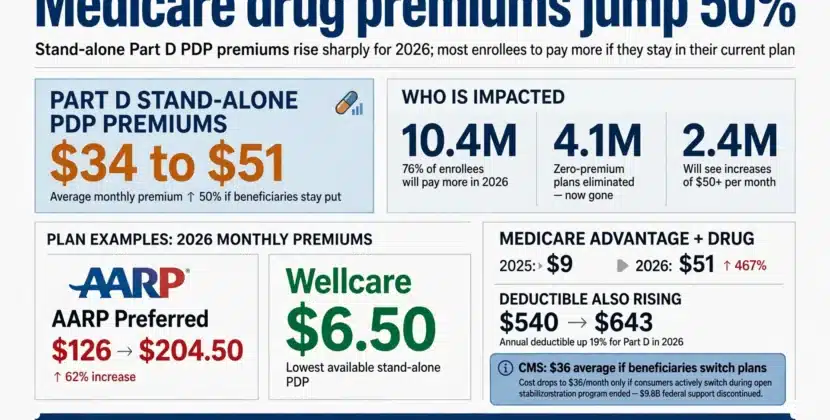
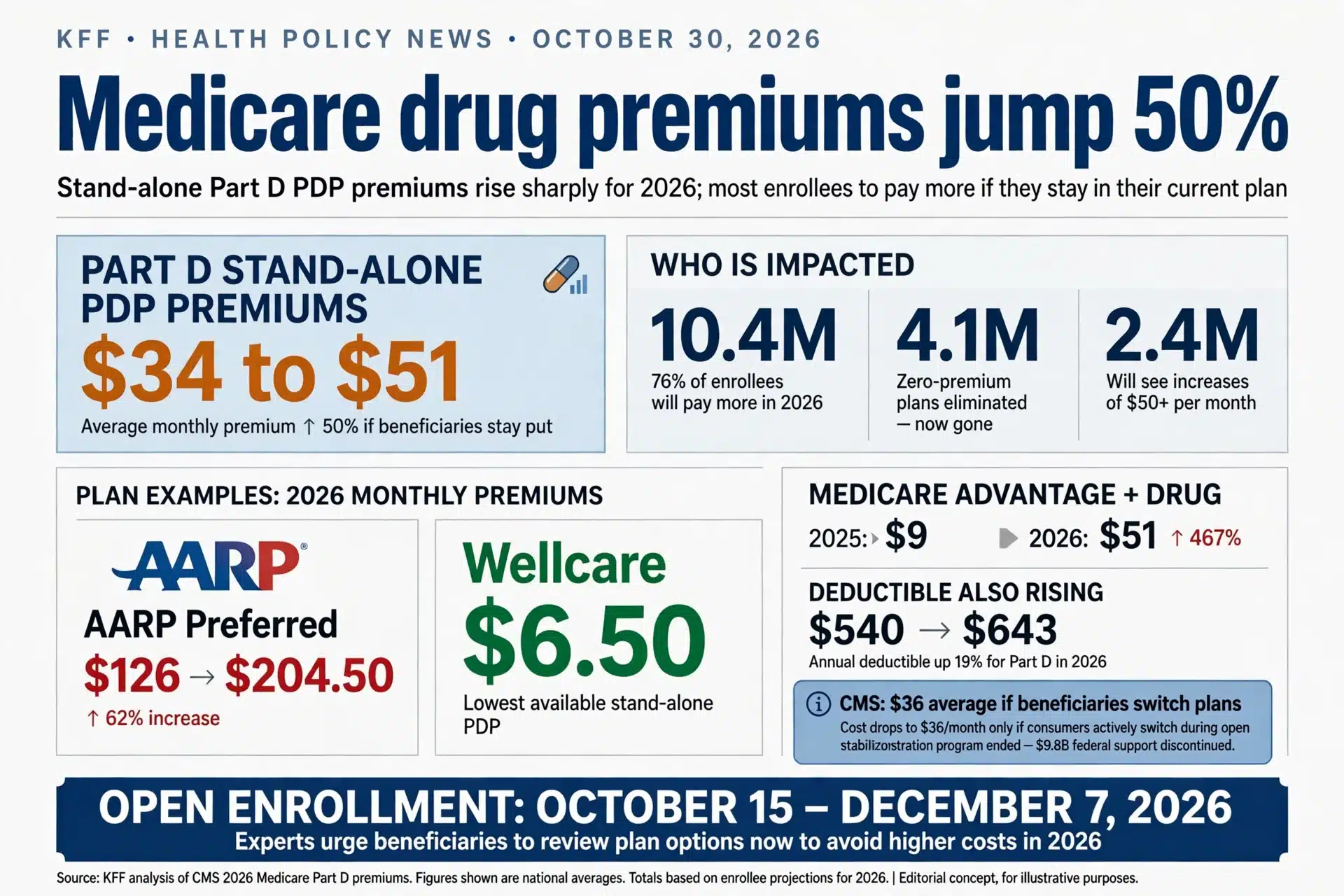
Medicare drug premiums are set to rise sharply next year for people who stay in stand-alone Part D plans. A KFF analysis published October 30, 2026 projects the average monthly premium at $51 in 2027, up from $34 this year, a 50 percent increase if current enrollees keep their existing coverage. Open enrollment runs through December 7, which makes the next few weeks the only window most beneficiaries have to avoid that increase.
Key Takeaways:
- – The average stand-alone Part D premium is projected at $51 a month in 2027, up 50 percent from $34.
- – Drug coverage inside Medicare Advantage plans is projected to average $9 a month, more than five times lower.
- – About 2.4 million enrollees would see premiums rise by more than $50 a month if they make no change, versus 38,000 this year.
- – No zero-premium stand-alone drug plans will be available in 2027.
What changed for 2027
The KFF analysis, which uses CMS plan files for 2024 through 2027, measures what happens if enrollees do nothing. On that assumption, the enrollment-weighted average premium for stand-alone prescription drug plans rises from $34 to $51. KFF’s headline finding is blunt: the increase is a projection of inertia, not a prediction of what everyone will pay.
Two structural changes drive the number. The administration ended the Part D Premium Stabilization Demonstration after 2026, removing subsidies that had capped premium growth for plan sponsors. At the same time, the number of stand-alone plan options shrank for the fourth consecutive year, leaving fewer low-cost alternatives in some counties. Fewer plans competing on price, with less subsidy behind them, produces the jump the analysis measures.
The gap between Part D and Medicare Advantage
The same analysis puts the average premium for drug coverage inside a Medicare Advantage prescription drug plan at $9 a month in 2027, against $51 for stand-alone coverage. The average stand-alone premium rises about $17 a month, while the Medicare Advantage figure rises less than $2.
That gap is the single most useful fact for anyone shopping right now, because it explains why so many enrollees are pitched Medicare Advantage during open enrollment. The comparison is not free. Advantage plans typically restrict networks and require prior authorization for some drugs, and a low premium can coexist with higher cost sharing at the pharmacy counter. The honest version of the trade-off is that a $9 premium and a $51 premium buy different things, and the right choice depends on which prescriptions a person actually fills.
Who gets hit hardest
KFF finds that among stand-alone plan enrollees who do not receive the Part D Low-Income Subsidy, 76 percent, or about 10.4 million people, would pay more next year by keeping their current plan. About 2.4 million would see a monthly increase above $50, compared with 38,000 enrollees in 2026, a roughly 60-fold jump.
Another 4.1 million enrollees without the subsidy are in zero-premium stand-alone plans this year. No zero-premium stand-alone plans exist for 2027, so those enrollees must move or start paying. The practical consequence is stated plainly in the analysis: the enrollees most exposed are those with incomes just above the subsidy threshold, who receive no low-income assistance and face the full increase.
Deductibles are moving too
Premiums are only part of the bill. In 2027, Part D plans may charge a deductible of up to $700, up from $615 in 2026. KFF projects an average deductible of $643 for stand-alone plan enrollees, up from $540, and $489 for Medicare Advantage drug plan enrollees, up from $360.
Nearly all stand-alone enrollees, 99.8 percent, will be in plans that charge a deductible in 2027, up from 96 percent this year. For someone on a branded drug, the deductible plus cost sharing plus the higher premium can add several hundred dollars to annual spending.
How to check your plan before December 7
The mechanics are simple and take about half an hour. Start with the Annual Notice of Change from your current plan, which lists next year’s premium, deductible and formulary changes. Then use the Medicare Plan Finder at Medicare.gov to enter your prescriptions at their actual doses and compare total annual cost, not just the monthly premium.
Three checks matter most. Confirm each drug is on the formulary and at what tier. Confirm whether prior authorization or step therapy applies. And confirm the pharmacy you use is in network at the preferred cost-sharing level, because the same plan can charge different amounts at different counters. A plan that saves $20 a month on premium and adds $60 a month in drug costs is a worse plan, and the Plan Finder will show that if the prescriptions are entered correctly.
If you use original Medicare with a stand-alone drug plan, changing plans during open enrollment requires no medical underwriting. If you are considering Medicare Advantage, read the network rules first, and check whether your specialists are in network for 2027 rather than 2026.
This article is not medical or insurance advice.
Drug price negotiations are running alongside
Separately from premiums, CMS published its selected drug list and negotiated price data file for 2028 on November 2, 2026, covering the third cycle of Medicare drug price negotiation. Fifteen drugs are in the 2028 group, and negotiated maximum fair prices must be made public by November 30, 2026, after negotiations concluded November 1.
Those negotiated prices apply to people with Medicare Part B or Part D coverage, and reported figures put usage at about 1.8 million people and $27 billion in spending across the 15 drugs, roughly 6 percent of Part D spending. Keep the two timelines separate: premiums for 2027 are being set now, while prices for 2028 are still being finalized.
What happens next
Enrollment decisions made by December 7 determine what people actually pay, and KFF’s own history shows the effect. In 2026, the projected average premium fell once enrollees switched to cheaper plans, which is why KFF presents $51 as a ceiling rather than a forecast. The posted average tends to come in lower than the do-nothing number.
The structural question outlasts this enrollment season. With the stabilization demonstration gone and plan options shrinking, the stand-alone market is consolidating toward fewer, more expensive choices, while Medicare Advantage absorbs the enrollees who leave. Whether that is a durable shift or a one-year repricing will be visible in next year’s plan filings.
Frequently Asked Questions
Why are Medicare Part D premiums rising so much in 2027?
KFF attributes the projected 50 percent average increase to the end of the Part D Premium Stabilization Demonstration after 2026 and to a fourth consecutive year of fewer stand-alone plan options. The $51 figure assumes enrollees keep their current plans.
How long is Medicare open enrollment?
The enrollment period runs through December 7, 2026 for coverage starting January 1, 2027. Changes made during the window take effect at the start of the year.
Is Medicare Advantage drug coverage cheaper than Part D?
On average, yes. KFF projects a $9 monthly premium for drug coverage inside Medicare Advantage plans in 2027 versus $51 for stand-alone Part D. The lower premium comes with network and prior authorization rules that can raise costs for specific drugs.
Bottom line
Medicare drug premiums are rising because subsidies ended and plan choices narrowed, not because the underlying drugs suddenly cost more. The 50 percent figure is what happens to people who do nothing, and the remedy is available for the next month: compare total annual costs at Medicare.gov, confirm your prescriptions are covered, and switch before December 7 if the math favors it.
Sources:
- https://www.kff.org/medicare/medicare-part-d-premiums-and-cost-sharing-in-2027/
- https://www.kff.org/medicare/the-average-monthly-premium-for-medicare-part-d-stand-alone-plans-is-projected-to-increase-by-50-from-34-to-51-in-2027-unless-enrollees-switch-to-lower-cost-plans/
- https://www.cms.gov/initiatives/medicare-prescription-drug-affordability/overview/medicare-drug-price-negotiation-program/selected-drugs-negotiated-prices
- https://www.aha.org/news/headline/2026-11-04-analysis-finds-average-monthly-premiums-part-d-stand-alone-drug-plans-increase-50-2027
- https://www.biopharmadive.com/news/medicare-part-d-premiums-skyrocket-2027-kff/873552/