





Washington, DC
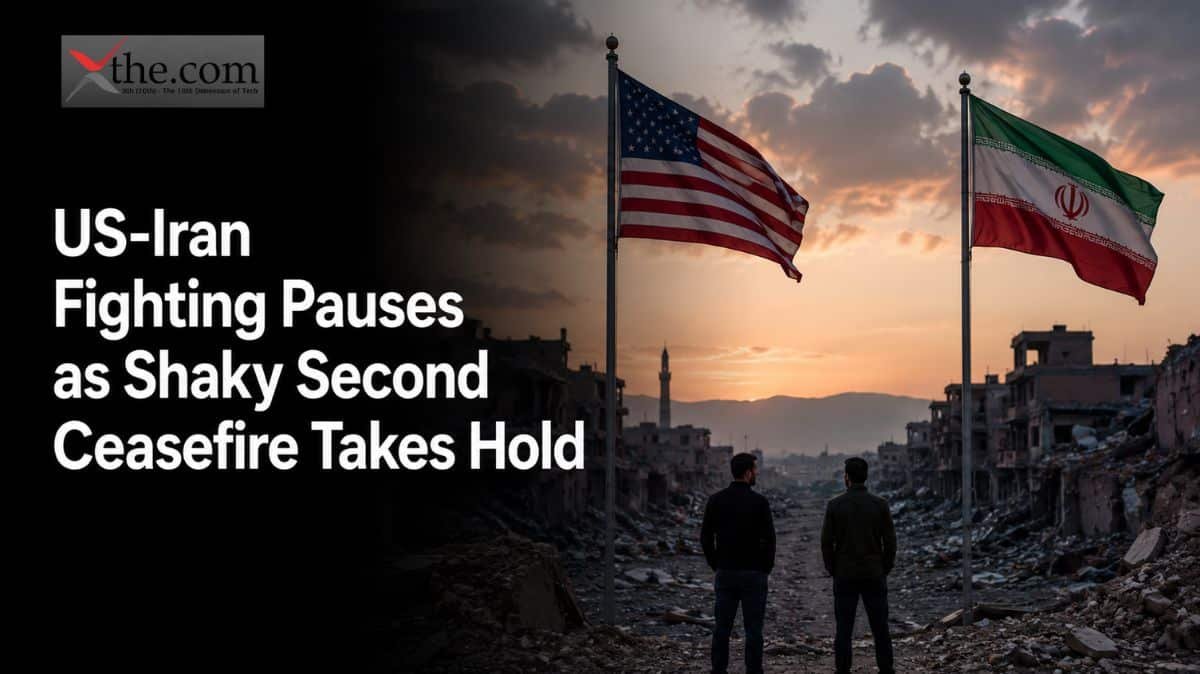
The impact of a ceasefire is felt well before any official announcement. Oil traders react quickly to risk; military leaders monitor every signal, and governments understand that a single missile can undo days of talk. This situation describes the US-Iran second ceasefire on July 10, as both sides entered another uneasy pause after two days of fierce exchanges that pushed the conflict to one of its most dangerous moments in months. The Iran-US fighting pause on July 10 offers temporary relief, but few observers believe the crisis has truly passed. Instead, the latest Iran ceasefire in 2026 is another fragile test of whether military restraint can hold under growing political and strategic-level pressure.
US-Iran Second Ceasefire on July 10 Faces Instant Questions.
The new ceasefire comes after almost 48 hours of heavy fighting that nearly ended the temporary agreement to stop the war. Reports say both sides carried out bigger attacks on Thursday than in previous clashes before the fighting suddenly stopped.
The shaky US-Iran ceasefire on July 10 shows how tough the situation is for negotiators. This is not the first try to end the fight. The first ceasefire fell apart within hours of ex-President Donald Trump’s NATO-related announcement, which raised new doubts about military plans. That failure has made it harder to maintain later agreements.
Military experts say that repeated violations make subsequent breakdowns more likely. Each pause raises hope, but every new clash reduces trust between sides that already have little confidence in each other.
This has led to a cycle in which fighting heats up, then pauses, as both sides try to demonstrate their strength without triggering a broader regional war.
Why the Second Ceasefire Is More Fragile Than the First
This pause is different from earlier ones because both governments have already faced the political fallout from a failed ceasefire.
The first agreement fell apart quickly, forcing diplomats to rush to reopen talks while military leaders prepared further action. That experience now affects decisions on both sides.
The US-Iran two-day ceasefire emerged only after sustained military pressure convinced both governments that continued escalation carried growing risks. Yet neither side has publicly signaled any willingness to compromise on wider strategic objectives.
This is why experts still call the agreement very unstable. There may be a brief lull in fighting, but the political issues remain unsettled.
Every new ceasefire also faces more doubt from global markets, regional partners, and intelligence agencies, since they have seen earlier deals fall apart so quickly.
Ayatollah Khamenei’s Burial Adds Political Weight
Another major development came as Khamenei, in Mashhad on July 9, dominated headlines across Iran.
Huge crowds came together in Mashhad for Ayatollah Ali Khamenei’s burial, creating a tense and emotional political mood during a sensitive time for the country.
Large national ceremonies like this often bring people together at home but also put more pressure on leaders not to look weak abroad. This makes ceasefire talk harder, since holding back the military can become a political issue when emotions are running high.
After the burial, Iranian leaders now face the tough task of balancing what people at home expect with the demands of worldwide diplomacy.
Oil Markets Respond Within Hours
Financial markets reacted immediately when news confirmed that the fighting had slowed.
The oil price reaction ceasefire was one of the clearest indicators of investor outlook.
Earlier this week, West Texas Intermediate crude climbed roughly 6 percent after the previous ceasefire collapsed, briefly approaching $ 74 per barrel as traders anticipated potential supply disruptions across the Middle East.
After the latest pause was confirmed, oil prices gave up most of their earlier gains.
This rapid shift shows how closely energy markets now track military events between the US and Iran.
For energy investors, price changes have become much more sudden because geopolitical news arrives faster than regular supply-and-demand updates.
Iran ceasefire 2026 and the Energy Sector
The current Iran ceasefire 2026 is now more than just a diplomatic matter. It has evolved into one of the year’s most significant drivers of commodity volatility.
Energy portfolio managers are dealing with a very tough market right now.
A missile strike can send oil prices up in minutes, while news of a ceasefire can wipe out those gains just as fast.
These rapid changes make it hard for large investors, such as those managing pension funds, hedge funds, and commodity portfolios, to make decisions.
Instead of just looking at production numbers or inventory reports, traders now pay close attention to military updates, satellite images, and diplomatic news before making market moves.
As a result, the market is now influenced just as much by geopolitical news as by actual oil supply.
Regional Security Is Still Unclear
Even though things are quieter now, military experts say that it’s too soon to think the conflict is really winding down.
Communication between the sides is still limited.
Both sides still have the same strategic aims.
Military forces are still spread across the region.
These factors mean that even a small incident could start another round of fighting.
The US-Iran ceasefire, shaky July 10, therefore, reflects tactical restraint rather than strategic reconciliation.
History shows that ceasefires without bigger political deals often fall apart when unexpected events happen.
Global Markets Continue Watching Every Development
International investors have reacted with caution rather than excitement.
Stock markets liked the news that fighting had slowed, but trading volumes show that many big investors are still playing it safely.
Currency markets also showed less demand for safe-haven investments after the ceasefire, though these changes were smaller than the recent swings in oil prices.
The most uncertainty is still in energy markets, where even small news has caused big reactions in the last few days.
With so much uncertainty around geopolitics, military moves, and unpredictable diplomacy, investors doubt prices will settle anytime soon.
Comprehending the Broader Strategic Picture
The phrase “US Iran fighting pauses second ceasefire July 10 2026 shaky” sums up the current situation well.
Fighting has stopped for now, but the main dispute remains unsettled.
Neither Washington nor Tehran seems ready to change their long-term security goals.
This means each ceasefire mainly serves to stop things from getting worse right away, not to solve the bigger conflict.
So, the latest deal is a short-term success, not a major diplomatic breakthrough.
In the same way, the phrase “Iran US war Day 133 ceasefire pause oil market reaction July 10” shows how closely linked military events and financial markets have become.
Now, investors, policymakers, and regional leaders look at battlefield news, oil prices, shipping routes, and diplomatic messages all together as part of the same big picture.
Outlook
The Iran-US fighting pause on July 10 has provided the region with valuable breathing room, but experience implies caution remains warranted. The failure of the first ceasefire demonstrated how quickly political announcements and military calculations can reverse diplomatic progress. The second agreement faces even greater scrutiny because expectations are lower, and the consequences of another collapse are higher. Whether this latest US-Iran ceasefire on July 10 evolves into a durable reduction in hostilities or merely another temporary interruption will depend less on public declarations than on disciplined military restraint, sustained diplomatic involvement, and the ability of both governments to prevent isolated incidents from reigniting a conflict that continues to shape global security and energy markets.
Source: U.S.-Iran fighting appears to pause. And, life inside Israel’s military zones in Gaza