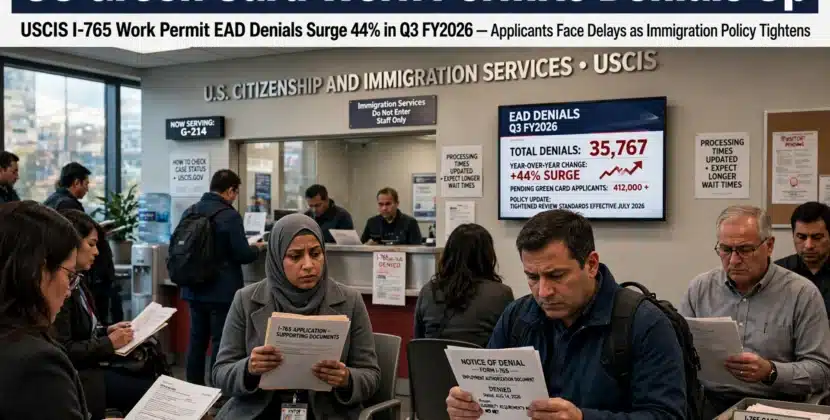





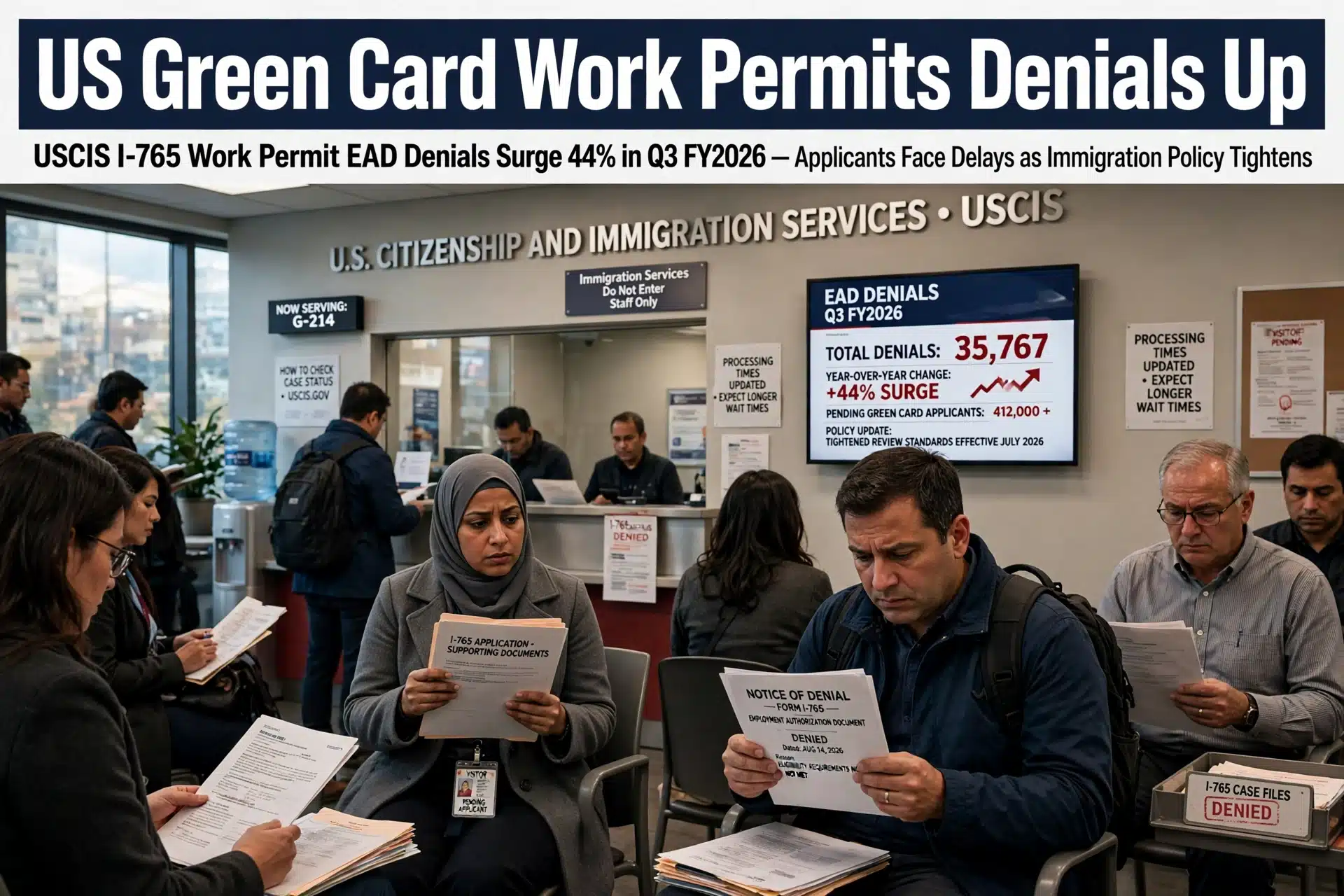
Data released by United States Citizenship and Immigration Services (USCIS) covering the third quarter of the 2026 fiscal year highlights a dramatic tightening of employment authorization adjudications [cite: 1.2.1]. Foreign nationals seeking permanent residency in the US experienced a sharp surge in work permit denials, with rejection rates climbing to approximately 44% between April and June 2026 [cite: 1.2.1]. This escalation represents a significant jump from the 25% rejection average recorded during the first half of the fiscal year, placing intense pressure on international professionals, corporate employers, and legal practitioners navigating the adjustment-of-status pipeline.
Analyzing the Q3 USCIS Adjudication Numbers
According to official figures analyzed across government filings, USCIS received 153,039 applications under Form I-765 (Application for Employment Authorization) through the adjustment-of-status category during the April-June quarter [cite: 1.2.1]. Out of this total volume, the agency approved 46,405 applications while issuing 35,767 formal rejections [cite: 1.2.1]. The remaining applications continued working through administrative processing queues.
The sudden spike in denials has alarmed immigration attorneys and human resources departments across the United States. Many applicants who rely on Employment Authorization Documents (EADs) to maintain continuous employment while their Green Card petitions remain pending face unexpected disruptions. Compounding the issue, the total backlog of pending Form I-765 adjustment-of-status applications stood at 671,362, with standard processing times averaging 6.4 months [cite: 1.2.1].
Impact Across H-1B and Employment-Based Petitions
The stricter adjudication trends extended well beyond adjustment-of-status work permits. Temporary foreign worker petitions filed under Form I-129—which encompasses H-1B specialty occupation visas—recorded 39,560 denials against 143,748 approvals, resulting in an overall rejection rate of approximately 22% [cite: 1.2.1].
Similarly, employment-based immigrant worker petitions submitted via Form I-140 registered 7,069 denials and 37,975 approvals, representing a 16% rejection rate [cite: 1.2.1]. Family-based immigration petitions filed under Form I-130 saw 16,661 rejections, accounting for roughly 17% of total adjudications [cite: 1.2.1]. Industry experts note that heightened scrutiny on evidentiary standards, specialized role definitions, and wage level justifications are driving the elevated denial figures.
Why Are Rejection Rates Climbing in 2026?
Immigration analysts point to several contributing factors behind the tightening approval criteria. Federal adjudicators have adopted more rigorous compliance checks regarding employer-employee relationships, specialized knowledge documentation, and maintenance of lawful status prior to filing. Furthermore, operational backlogs have pushed adjudicating officers to apply stricter initial review thresholds.
For corporate employers hiring international talent, these trends necessitate enhanced legal preparation. Submitting comprehensive documentation at the initial filing stage is critical to avoiding Requests for Evidence (RFEs) or outright denials that can derail project staffing and employee retention plans.
Strategic Advice for Employers and Applicants
In light of the 44% EAD rejection rate, legal counsel recommends filing renewal applications well in advance of current expiration dates. Under current federal regulations, eligible applicants should review automatic extension provisions where applicable, though relying on extensions requires careful tracking of regulatory limits.
Employers sponsoring foreign nationals should conduct thorough internal audits of job descriptions, prevailing wage determinations, and corporate compliance records to withstand heightened federal scrutiny.
Frequently Asked Questions
Q: What is a green card work permit (Form I-765)? Form I-765 allows eligible foreign nationals seeking permanent residency to obtain an Employment Authorization Document (EAD) to work legally while their green card is processed [cite: 1.2.1].
Q: How high did the rejection rate climb? USCIS rejection rates for adjustment-of-status EAD applications climbed to approximately 44% during the April–June 2026 quarter [cite: 1.2.1].
Q: What steps can applicants take to mitigate risks? Applicants should file renewals well ahead of deadlines, ensure airtight supporting documentation, and consult qualified immigration counsel.
Disclaimer
Note: This article is for informational news reporting purposes only and does not constitute legal or immigration advice. Readers should consult a licensed immigration attorney for specific case evaluations.
Conclusion
The latest USCIS adjudication statistics underscore an increasingly challenging regulatory environment for foreign nationals and US employers. With work permit denial rates reaching 44% and massive backlogs persisting, proactive compliance and meticulous legal preparation are more essential than ever for navigating the US immigration system.
Sources
Reference 1: • Free Press Journal / Financial Express Reporting (October 15, 2026): ‘US Rejects Over 35,000 Green Card Applicants’ Work Permits As Denial Rate Jumps To 44 Per Cent’ – https://www.freepressjournal.in/world/us-rejects-over-35000-green-card-applicants-work-permits-as-denial-rate-jumps-to-44-per-cent [cite: 1.2.1]
Reference 2: • Live Mint Reporting (October 16, 2026): ‘US immigration fees rise effective today: Will H-1B workers, students and green card applicants from India pay more?’ – https://www.livemint.com/news/india/us-immigration-fees-rise-effective-today-will-h-1b-workers-students-and-green-card-applicants-from-india-pay-more-11792130925700.html [cite: 1.2.2]