





Washington, DC.
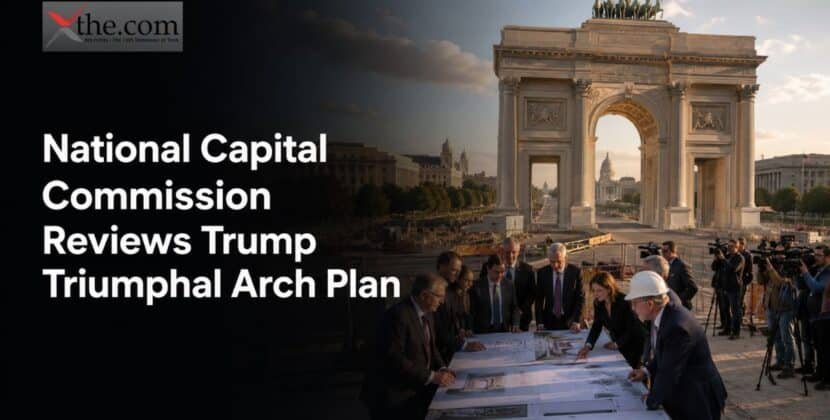
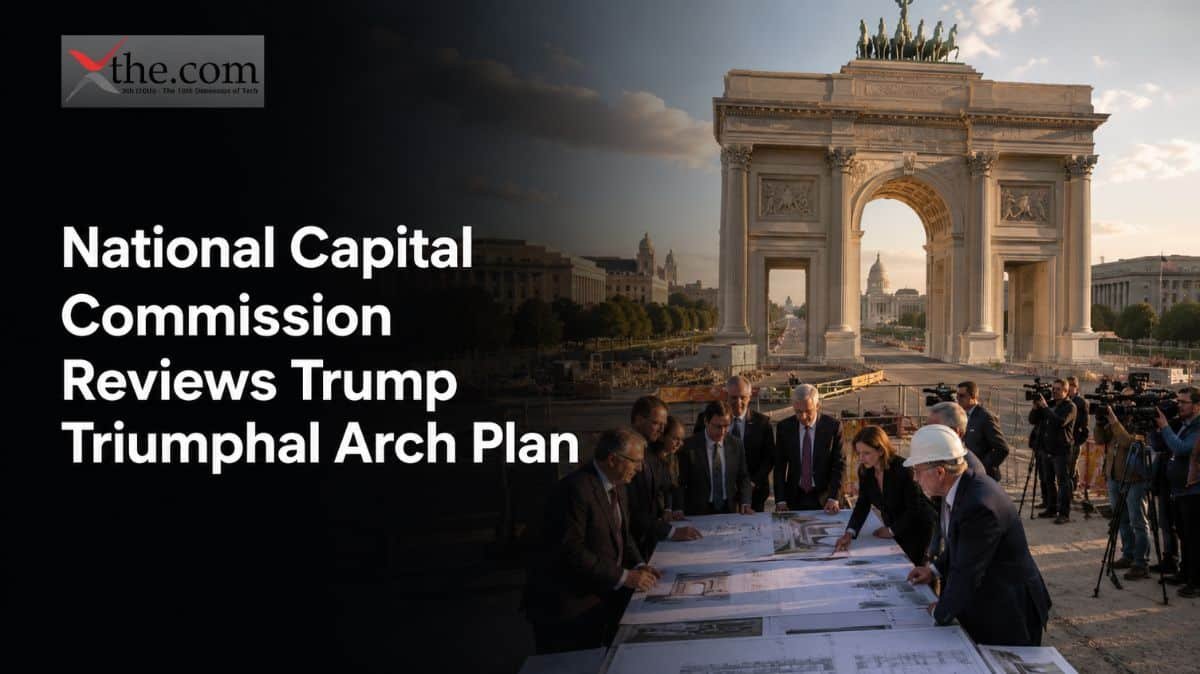
For 116 years, Washington’s skyline has been limited to 130 feet. But on July 9, 2026, a federal commission decided that a president’s monument was worth stretching it by 120 feet. The Trump triumphal arch Washington, DC, 2026 project cleared a critical procedural hurdle Thursday, when the National Capital Planning Commission’s arch review concluded with preliminary approval, despite almost three hours of public testimony urging them to reject it.
The vote is not final. It delays the debate over the monument’s height, sightlines, and the example it sets until September, when the commission will make its final decision. Still, it shows that in this administration, monuments can move forward quickly and mostly according to the wishes of a small group close to the president.
What the Commission Actually Approved
Thursday’s meeting, part of the ongoing Trump DC arch review, focused on preliminary site and building plans rather than a final green light. Commission staff, in an 185-page report released before the meeting, recommended approving these early plans but pointed out that they directly conflict with the Height of Buildings Act of 1910, the law that has kept Washington’s skyline low and easy to recognize for over a century.
The planned arch would be 250 feet tall, made up of a 166-foot mezzanine, a 24-foot observation deck, and a 60-foot Lady Liberty statue on top. This goes well over the Height Act’s 130-foot limit. Staff suggested a compromise: reduce the mezzanine to 130 feet and the observation deck to 20 feet, while technically complying with the law. The Interior Department has argued that the Height Act does not apply to federal buildings, but the commission disagrees. Commission Chairman Will Scharf, who is also Trump’s White House staff secretary, said he expects a strong debate on this issue before the September vote.
The Design and Its Site
The Trump 250-foot arch Washington, DC, Harrison Design proposal did not emerge from an open competition. Architecture studio Harrison Design has produced the renderings shown to the public and the National Park Service, which manages Memorial Circle. This is the traffic circle on the Virginia side of Arlington Memorial Bridge where the arch would be built. One popular rendering shows the arch lit up at night, with its opening framing Arlington House, the Custis-Lee mansion that overlooks Arlington National Cemetery.
Preservationists are especially worried about this framing. Memorial Circle was designed almost a century ago to create a direct line of sight between the Lincoln Memorial and Arlington National Cemetery, symbolizing postwar reunification between North and South. Building an arch more than twice as tall as the 99-foot Lincoln Memorial in this spot would not just add a new landmark. It would change the view that the corridor was meant to protect.
Public Testimony and the Cost of Speed
The National Capital Planning Commission July 9 hearing drew opponents ranging from historians to military families. Cynthia Morrison, a Gold Star mother from North Carolina, told the commissioners that the view toward Arlington National Cemetery was personally meaningful because of her son’s service and the Tomb of the Unknown Soldier. She said that an arch dominating that view would affect something tied to memory, not just appearance. Her comments reflected a larger point made by historic preservation experts, who have said that a monument of this size should not be rushed or controlled by only a few people.
This criticism matters because of who has been involved in developing the project. Design critic Catesby Leigh first suggested the arch idea in April 2025 on a conservative think tank’s website, using sketches from two sources: local architect Nicolas Charbonneau, whose firm Harrison Design later made the official renderings, and a group led by Rodney Mims Cook Jr., a developer Trump chose to lead the U.S. Commission of Fine Arts. Cook later voted as chairman of that commission to approve the arch’s design in May, without the usual open review or input from Congress that memorial projects often require. All other members of the Fine Arts Commission were also Trump appointees, and only one had formal training in architecture. Since then, a group of veterans and historians have sued the administration in federal court to stop construction because of its impact on the cemetery’s view.
Skyline Precedent and the Arc de Triomphe Comparison
Much of the public debate keeps returning to a single image: the Trump arch National Mall skyline silhouette before Washington’s famously flat horizon. The comparison Trump himself has invoked is Paris’s Arc de Triomphe, a 164-foot monument he has cited as his model and inspiration. His proposed structure would stand roughly 86 feet taller, more than 50 percent larger than the Parisian original, and would edge close to half the height of the Washington Monument, which rises about 555 feet. Supporters frame that scale as a fitting tribute to the country’s 250th anniversary; critics call it an aesthetic mismatch with a city whose entire built environment was shaped around restraint.
The stakes go beyond one structure. Approval of a Trump DC monument 2026 at this height, achieved through a compressed assessment timeline and a commission stacked with the president’s allies, would set a working example for how future federal monuments in Washington are chosen and approved. This is the main concern behind Thursday’s testimony: not just whether the arch should be at Memorial Circle, but whether the rules that have formed Washington’s skyline for over a century can withstand pressure from the White House.
Officially, the review is still ongoing. The record now shows what happened when the National Capital Planning Commission reviewed the Trump triumphal arch on July 9, 2026, and that the commission is willing to move the project forward even though it currently violates federal law. Whether the September vote sincerely solves this problem or just covers it up with a new mezzanine design will show whether Washington’s skyline law still has real meaning.
What Comes Next
The Trump triumphal arch Washington DC design controversy National Mall skyline commission vote 2026 now moves toward a September reckoning, when the commission is expected to weigh final site and building plans alongside outstanding questions on vehicular traffic around Memorial Circle, the arch’s granite exterior, and the Height Act compliance issue staff have previously flagged. Litigation from veterans’ groups adds a second track that could outlast the commission’s own calendar. Whatever the commission decides, the arch has already accomplished something rarer than construction: it has forced Washington to ask, in public and under oath, how much of its skyline one single administration can rewrite before the law that protects it stops being a law at all.
Source: National Capital Planning Commission considers Trump’s triumphal arch plan