




Cupertino, CA | July 17, 2026
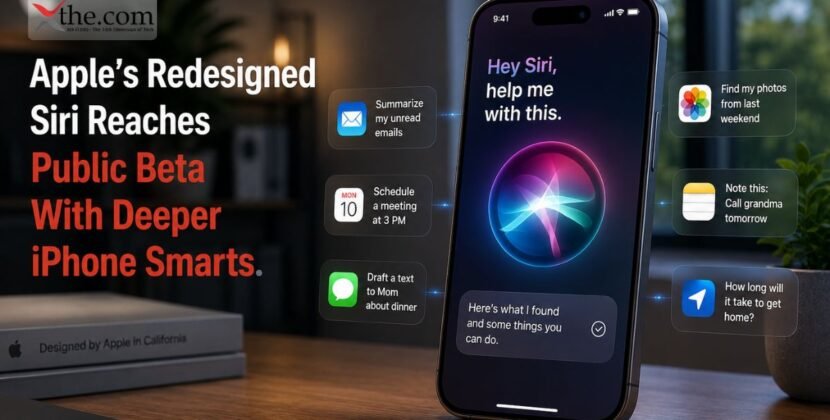
Apple has just opened its biggest software experiment in a decade to a huge audience—two and a half billion active devices. On July 13, anyone willing to enroll could try the Apple Siri public beta 2026, not just the developers who started testing in June. After two years of criticism over a promised Siri overhaul that was quietly delayed, this launch feels especially significant.
The new Siri AI features iPhone users are now testing answer a question investor have asked with rising impatience: can Apple create an assistant that equals the generative-AI tools changing how people search, write, and organize their lives? Early feedback is mixed but not negative. Siri finally feels like modern software.
What Changed Inside the Beta
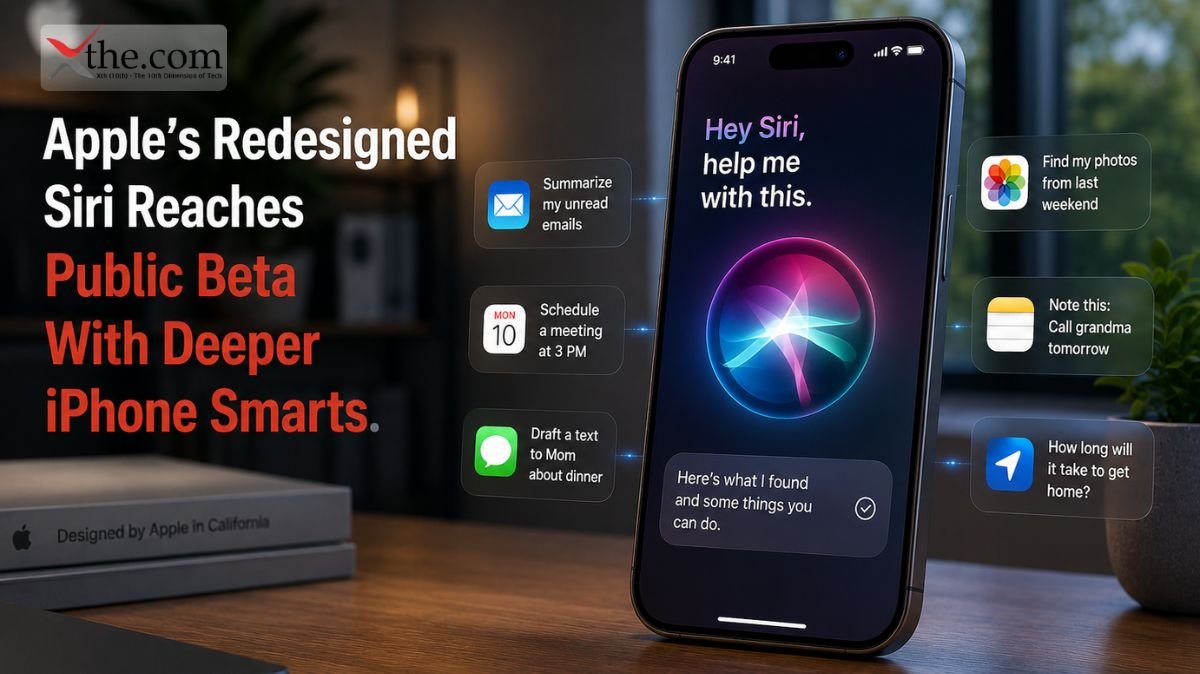
The main improvement in the Apple Intelligence Siri update is its new contextual awareness. Older versions of Siri could set timers and read texts, but they could not see what was on your screen. The redesigned assistant can. For example, if you are reading an email about a restaurant, you can ask Siri to add the reservation to your calendar, and it will automatically find the date, time, and address.
This is possible thanks to what Apple calls Siri on-screen awareness beta. This feature lets Siri understand whatever is on your screen, whether it is a webpage, a photo, or a message. Combined with its new ability to search through your emails, photos, and calendar, Siri now feels more like a built-in part of the operating system than just another app.
Private Cloud Compute Does the Heavy Lifting
Some requests are too complex to run directly on an iPhone, and Apple has been open about this from the start. When a task requires more processing power, such as pulling together information from different apps or writing a detailed reply, it is routed to Apple Private Cloud Compute. This is Apple’s server system designed to handle AI tasks without keeping your data. Apple has shared technical details showing that these servers use custom chips and delete your session data after completing the request, intended to reassure users concerned about privacy.
There is a clear challenge here. Apple wants Siri to be as powerful as chatbots trained on the open internet, but it also promises that user data will never be used for training or ads. Whether users care about this difference is what the beta aims to find out.
Siri vs ChatGPT Gemini Assistant: How the Comparison Holds Up
Apple does not use the word “chatbot” in its marketing, but reviewers have run the comparison anyway. In the ongoing Siri vs ChatGPT Gemini assistant debate, early testers describe Siri as narrower but more integrated. It will not write a five-paragraph essay about the way ChatGPT might, and it lacks Gemini’s freewheeling conversational range. What it does instead act: compose a text reply that corresponds to your former conversation, find a photo from a rough description, or send a multi-step task to another app without making you stop what you are doing.
This difference is important for business. Google and OpenAI made assistants that are separate apps people open on purpose. Apple is betting that most people do not want another app. Instead, they want an assistant built into the phone they already use, ready with a button press or a glance.
Developer Adoption Is the Real Test
Siri’s advanced features do not work alone. Its ability to book a table, edit a document, or reorder groceries depends on how quickly outside developers use Apple’s new App Intents framework. This system lets Siri control other apps for you. Apple showed how it works with its own apps in June, but it cannot control how quickly companies like Uber, DoorDash, or Slack add support.
This is where earlier Siri promises to fell short. Apple showed off big app-integration features in the past, but developers did not adopt them because it was not worth the extra work. Whether things go differently this time depends on whether Apple gives developers better reasons to join in, such as more visibility in Siri results or the App Store.
What Apple Intelligence Still Leaves on the Table
Anyone following Apple’s original plans can see there is still a gap between what was promised and what is delivered. Users who want to try the full Apple AI iPhone 2026 experience will notice a two-stage rollout. The new Siri is only available in English at first, with other languages coming later. It is also missing from iPhones in the European Union due to ongoing issues with regulators, and it will not be available in China until Apple passes additional regulatory checks.
Those exclusions are not cosmetic. A meaningful share of Apple’s worldwide user base will be outside the feedback loop that shapes Siri’s public debut, and Apple has offered no firm timeline for resolving the EU standoff. There is also the matter of reliability: testers have reported instances where Siri misreads on-screen content or stalls on requests spanning multiple apps, which is unremarkable for a first public build but helps explain why Apple reserved a fall release window rather than shipping this version to everyone at once.
Anyone Curious About Apple Redesigned Siri Public Beta 2026 What It Can Do on iPhone Has an Easy Way In
For readers searching to understand “Apple redesigned Siri public beta 2026 what it can do on iPhone” in practical terms, the short answer is this: install it through the free Apple Beta Software Program, back up the device first, and expect an assistant that reads context, searches personal data, and increasingly acts on both, with the caveat that the most ambitious features still depend on app-by-app developer support. For the more technical among them, the phrase “Apple Siri AI update on-device Private Cloud Compute explained” captures the split-processing model at the heart of the release, where simple requests stay on the iPhone’s own chip, and harder ones travel to Apple’s privacy-hardened servers and back.
The Road Ahead
Apple has about two months before the full public release, which will come with the next iPhone lineup. This period is about more than just fixing bugs. It will show whether everyday users, not just developers and reviewers, find Siri’s new context-awareness truly helpful or just impressive in a demo. Apple’s reputation is on the line after years of delays, and the whole AI industry is watching to see if this integration-focused approach can compete with assistants that deliver endless possibilities. The real test is not another beta—it is whether the apps people already use will work with Siri and make it worth the wait.