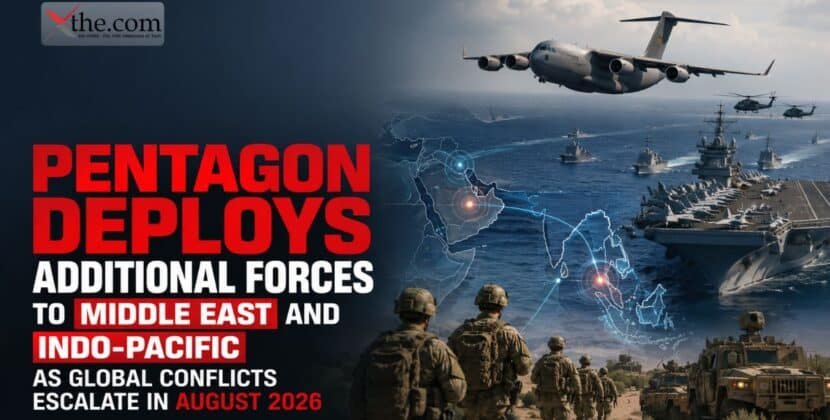







The US Department of Defense has ordered the deployment of an additional 12,000 troops across the Middle East and Indo-Pacific regions, marking the largest single reinforcement of American military presence since 2022. Defense Secretary Lloyd Austin confirmed the deployments during a press briefing at the Pentagon, citing “deteriorating security environments” in multiple theaters simultaneously.
Middle East: Gaza Ceasefire Collapses
The fragile ceasefire agreement brokered in June 2026 between Israel and Hamas has effectively collapsed following a series of rocket attacks on southern Israeli cities and retaliatory Israeli airstrikes on Gaza Strip targets. The USS Abraham Lincoln carrier strike group, already in the region, has been joined by the USS Bataan amphibious ready group carrying 2,400 Marines.
“We are not seeking escalation, but we will defend our interests and allies decisively,” Secretary Austin stated. The additional forces include Patriot missile defense batteries positioned in Jordan and Kuwait, along with F-22 Raptor fighter squadrons relocated from Alaska to Qatar.
Iran’s Revolutionary Guard Corps issued a statement warning that “US military expansion in the region will not go unanswered,” raising fears of proxy attacks on American bases in Iraq and Syria — similar to the 170 attacks that occurred between October 2023 and February 2024.
Indo-Pacific: South China Sea Tensions
Simultaneously, the Pentagon is reinforcing its Pacific posture following a near-collision incident between a Chinese J-16 fighter jet and a US RC-135 reconnaissance aircraft over international waters in the South China Sea. The incident, captured on video and released by US Indo-Pacific Command, shows the Chinese aircraft crossing within 30 feet of the American plane.
In response, the US has deployed an additional destroyer squadron to Yokosuka, Japan, and approved $380 million in new military aid to Taiwan, including Harpoon anti-ship missiles and early warning radar systems. China’s Foreign Ministry condemned the aid package as “dangerous provocation that undermines regional stability.”
Ukraine: Two Years Later
While media attention has shifted, the war in Ukraine continues with no clear resolution. The US has committed an additional $2.3 billion in military assistance for August, bringing total American aid since February 2022 to over $175 billion. Ukrainian forces have made marginal territorial gains in the Donetsk region but remain heavily dependent on Western ammunition supplies.
Critics in Congress, led by Senator Rand Paul, have renewed calls for greater oversight of Ukraine funding. “We cannot write blank checks while American cities face infrastructure crises,” Paul argued on the Senate floor. However, bipartisan majorities continue supporting aid packages, viewing Ukrainian resistance as essential to deterring broader Russian aggression in Europe.
Domestic Impact: What Americans Feel
The deployments carry significant domestic implications. Military families face extended separations as deployment rotations stretch from standard 6-month cycles to 9-12 months. The Army recently missed its recruiting target for the third consecutive quarter, falling 15,000 soldiers short of its annual goal, forcing increased reliance on National Guard and Reserve call-ups.
Economically, defense contractors are major beneficiaries. Lockheed Martin, Raytheon, and Northrop Grumman shares have risen 8-14% since deployment announcements. However, oil prices have climbed to $84 per barrel on supply disruption fears, translating to higher gasoline prices for American consumers already squeezed by persistent inflation.
Veterans Affairs Under Pressure
The VA healthcare system is bracing for increased demand as deployment-related mental health issues — PTSD, traumatic brain injury, and depression — typically surge 12-18 months after troop rotations begin. VA Secretary Denis McDonough announced a $400 million emergency funding request to expand telehealth mental health services and hire 1,200 additional psychiatric specialists.
Public Opinion
A Pew Research Center poll conducted August 1-7 shows 52% of Americans support maintaining current military commitments, down from 61% in January. Among 18-29 year-olds, support drops to 38%, with many expressing concern that US resources are spread too thinly across multiple global hotspots.