






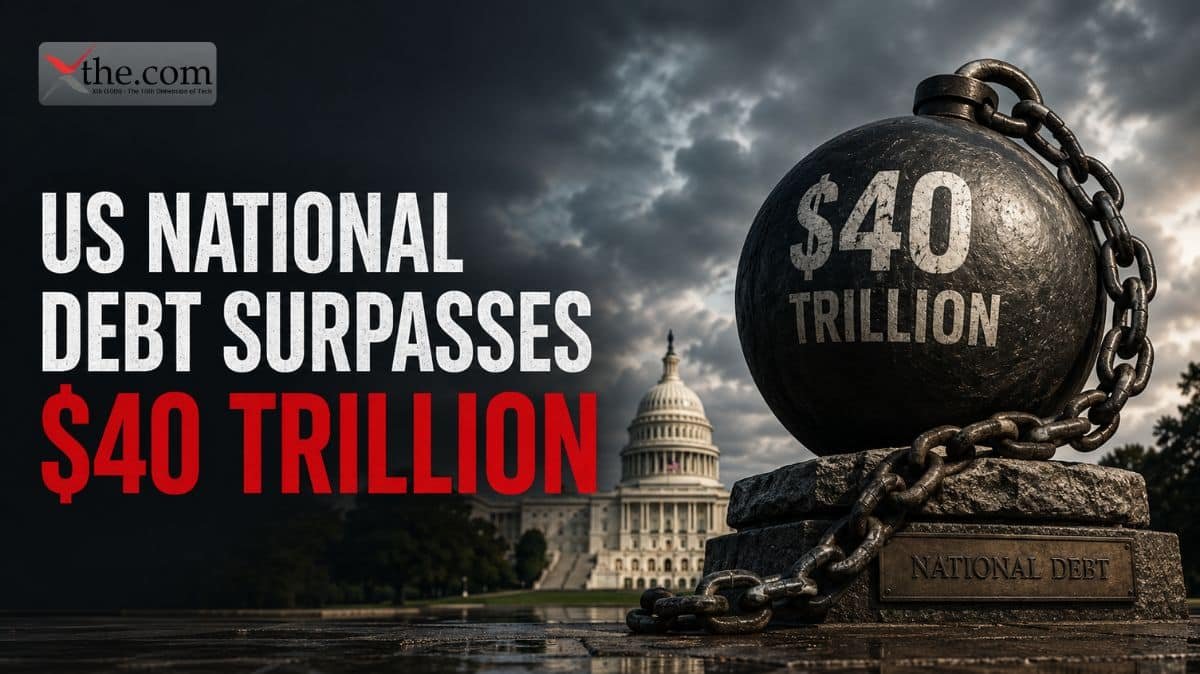
The United States national debt has crossed the 40 trillion dollar threshold for the first time in history, marking an ominous milestone for the world largest economy. The debt reached 40.047 trillion dollars on August 19, 2026, according to the Treasury Department, less than five months after hitting 39 trillion dollars.
The rapid acceleration of the national debt has alarmed economists and fiscal watchdogs across the political spectrum. The debt has quadrupled in less than 20 years, growing from approximately 10 trillion dollars in 2008 to the current 40 trillion dollar level.
How America Reached 40 Trillion
The path to 40 trillion dollars in debt has been paved by a combination of tax cuts, spending increases, economic crises, and pandemic-era stimulus programs. The 2008 financial crisis prompted massive government spending to stabilize the financial system. The 2020 COVID-19 pandemic led to trillions of dollars in emergency spending.
Under the current administration, tax cuts and increased military spending have added to the fiscal pressure. Meanwhile, mandatory spending programs including Social Security, Medicare, and Medicaid continue to grow as the population ages.
The Congressional Budget Office estimates that debt will rise from 101 percent of gross domestic product in 2026 to 120 percent by 2036. This trajectory means that the debt is growing faster than the economy, a situation that most economists consider unsustainable.
What the Debt Means for Americans
The practical implications of the growing national debt extend far beyond abstract economic theory. For individual Americans, the consequences include higher interest rates on mortgages, auto loans, and credit cards. When the government borrows heavily, it competes with private borrowers for available capital.
The debt also limits the government ability to respond to future crises. When the next recession or national emergency occurs, the federal government will have less fiscal room to maneuver. Higher debt levels mean higher interest payments, which crowd out spending on infrastructure, education, and healthcare.
For young Americans, the debt represents an intergenerational transfer of obligations. Today borrowing will be repaid through higher taxes or reduced government services in the future.
The Political Divide
The national debt has become a deeply partisan issue, with each party blaming the other for fiscal irresponsibility. Republicans point to Democratic spending programs as the primary driver of debt growth, while Democrats highlight Republican tax cuts that reduced government revenue.
The reality is that both parties bear responsibility for the current fiscal situation. Major spending increases have occurred under administrations of both parties, and significant tax cuts have been enacted by both Republican and Democratic Congresses.
The Global Perspective
Americas 40 trillion dollar debt does not exist in isolation. It is part of a global trend of increasing government borrowing that has accelerated since the 2008 financial crisis. However, the United States occupies a unique position because the dollar serves as the world primary reserve currency.
This reserve currency status has allowed the US to borrow at lower interest rates than would otherwise be available. Foreign governments and investors hold trillions of dollars in US Treasury securities, providing a ready market for American debt.
Expert Opinions
Economists across the ideological spectrum have expressed concern about the debt trajectory. The Committee for a Responsible Federal Budget has called the current fiscal path unsustainable and warned that without action, the debt could reach 200 percent of GDP within three decades.
Some economists argue that the focus on debt reduction is misguided, particularly during periods of low economic growth. They point out that government borrowing can stimulate economic activity and that interest rates on US debt remain historically low.
Market participants are also watching the debt level closely. Bond market investors have begun demanding higher yields on longer-term Treasury securities, reflecting increased concern about fiscal sustainability.
What Comes Next
The 40 trillion dollar milestone is unlikely to prompt immediate policy changes. The political dynamics that created the debt will continue to prevent meaningful fiscal reform in the near term.
Potential solutions include a combination of spending reforms and revenue increases. Entitlement reform, which would adjust the terms of Social Security and Medicare, is politically difficult but economically necessary. Tax reform that closes loopholes could generate additional revenue.
The most likely scenario is a gradual adjustment as market forces and political pressure slowly push policymakers toward fiscal responsibility. The danger is that this adjustment comes too late to prevent a serious economic disruption.
For now, the 40 trillion dollar debt serves as a stark reminder of the consequences of decades of fiscal profligacy. Whether America can reverse course before the consequences become severe remains one of the defining economic questions of our time.
The interest payments alone on 40 trillion dollars of debt are staggering. The US government is projected to spend more than 1.2 trillion dollars on net interest payments.
The composition of the debt holders matters. The majority of the debt is now held by domestic investors including pension funds and insurance companies.
The last time the debt-to-GDP ratio approached current levels was in the aftermath of World War II. The economic conditions then were fundamentally different.
The Federal Reserve faces an increasingly difficult balancing act between fighting inflation and managing debt servicing costs.
Economic research consistently shows that debt levels above 90 percent of GDP are associated with slower economic growth.
The solution will require bipartisan cooperation. Neither tax increases alone nor spending cuts alone can solve a problem of this magnitude.
State and local governments are also feeling the pressure from the national debt, as higher federal borrowing costs translate into higher interest rates for municipal bonds.
The international implications are significant. If foreign investors lose confidence in the US ability to manage its debt, they could reduce their purchases of Treasury securities.
Education about the national debt and its implications is essential for a functioning democracy.
The debate over fiscal responsibility is likely to intensify as the 2026 midterm elections approach, with both parties seeking to position themselves as the responsible stewards of the national finances.
Individual Americans can protect themselves from the consequences of the national debt by diversifying their investment portfolios, maintaining emergency savings, and staying informed about fiscal policy developments that may affect their financial well-being.