




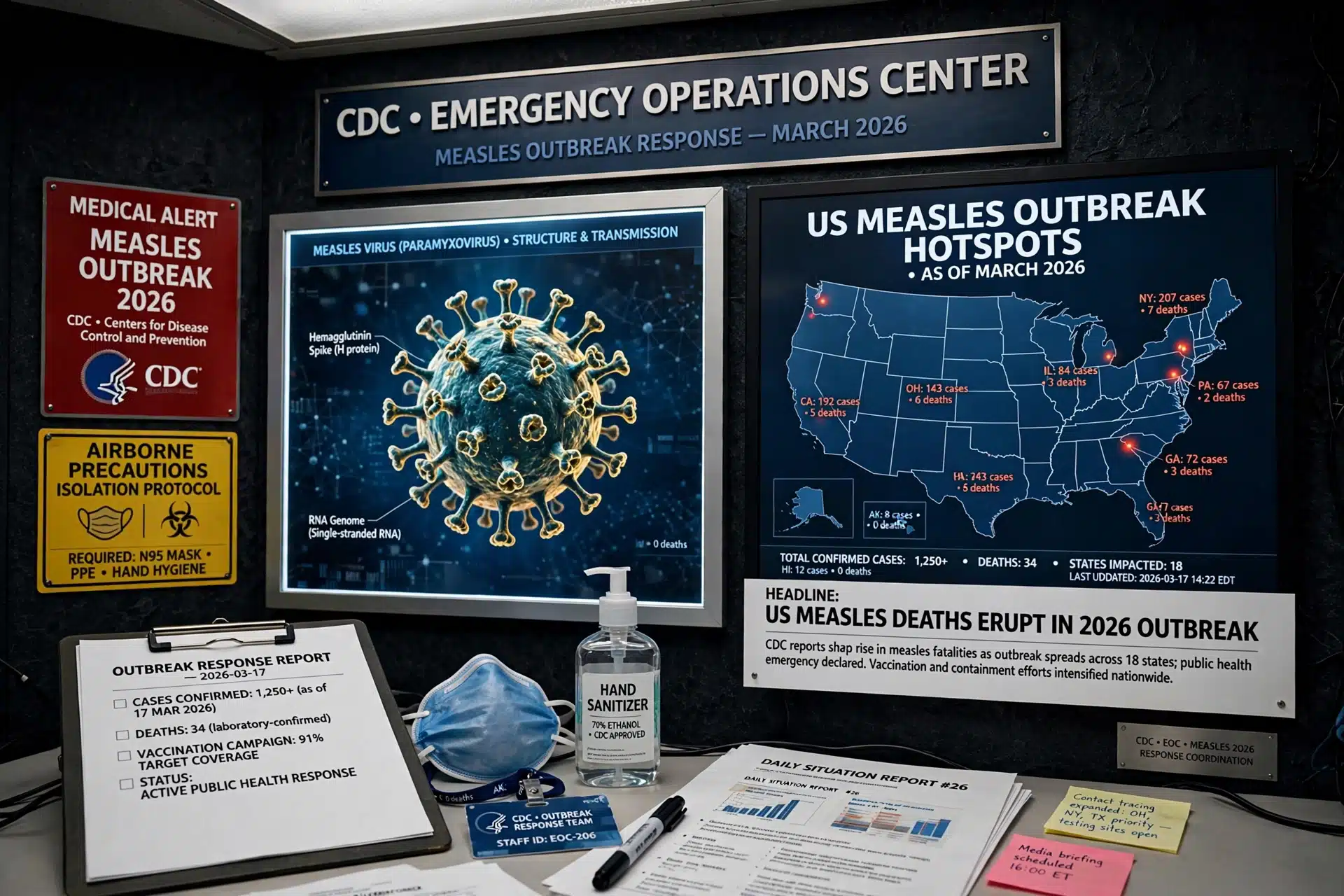
US Measles Outbreak Deepens as Pennsylvania Reports Fourth Death and CDC Holds Off on Confirming
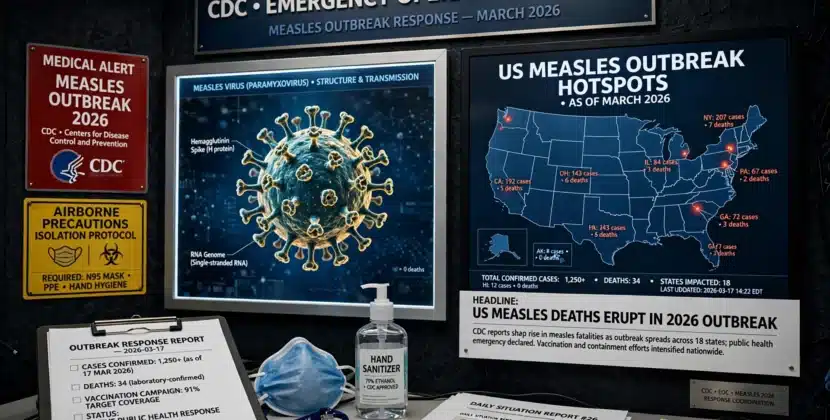
America’s measles crisis is intensifying. As of September 17, 2026, the Centers for Disease Control and Prevention has confirmed 3,471 measles cases in the United States this year, a staggering total that has already surpassed the 2,289 cases reported in all of 2025 and puts 2026 on track to be the worst year for measles in more than three decades.
Complicating the picture, Pennsylvania health officials have now reported a fourth measles-associated death, while the CDC has not yet confirmed any of them in the national tally. That standoff between federal and state health authorities has become one of the most searched health stories in the country, as Americans try to understand how bad the outbreak truly is and whether their families are at risk.
The Numbers Behind the 2026 Measles Outbreak
The CDC’s official count stood at 3,471 confirmed cases as of September 17, with the vast majority of those infections occurring in people who were unvaccinated or whose vaccination status was unknown. Public health officials added 177 cases in a single weekly update, showing that transmission continues in multiple states simultaneously.
Pennsylvania alone has recorded hundreds of cases in 2026, with Lancaster County emerging as a major hotspot and the state ranking among the highest tallies in the nation. Other states with significant activity include Texas, Kansas, Oklahoma, Utah and Arizona, though cases have been reported across the country. Approximately nine out of ten confirmed cases have been in unvaccinated individuals or those with unknown status, underscoring the central role of MMR vaccination gaps.
Pennsylvania’s Deaths and the CDC Standoff
The most contentious dimension of the outbreak is the death toll. Pennsylvania officials have reported four deaths associated with measles, the state’s first measles-linked fatalities in roughly 35 years. The CDC, however, has not counted any of them in the national death total, saying it is reviewing additional information regarding the circumstances of each case.
The disagreement has fueled controversy. Reporting indicatethat the new CDC director previously ordered a delay in counting at least two of the deaths, a decision that drew sharp criticism from public health experts who argue that the federal government is minimizing the severity of the crisis. State officials, for their part, say their investigations meet Pennsylvania’s standards for associating measles with a fatal outcome.
For everyday Americans, the practical effect is confusing: headlines report deaths in Pennsylvania while official federal statistics show zero. Epidemiologists say the truth is likely that the deaths are genuinely linked to measles but require additional documentation, including laboratory confirmation and review of medical records, before the CDC will list them as underlying measles deaths.
Why Measles Is Surging Across America
Measles is one of the most contagious viruses known to medicine. A single infected person can spread it to roughly nine out of ten unvaccinated close contacts, and the virus can linger in the air or on surfaces for up to two hours after an infected person leaves a room. Herd protection against measles requires vaccination coverage of about 95%, and much of the United States has fallen below that threshold.
Vaccination rates have declined in recent years, driven by a combination of pandemic-era disruptions to routine childhood immunization, growing skepticism fueled by social media, and access barriers in some communities. Kindergarten MMR coverage has slipped nationally, leaving clusters of susceptible children where the virus can ignite outbreaks in schools, daycares and religious communities.
Adding to the risk, measles was declared eliminated in the United States in 2000, meaning sustained domestic transmission had been stopped. The 2026 outbreak represents the most serious challenge to that status in decades, and health officials warn that continued declines in vaccination could make elimination impossible to maintain.
Symptoms, Risks and When to See a Doctor
Measles typically begins with high fever, cough, runny nose and red, watery eyes, followed by a characteristic rash that spreads from the face downward. Complications can be severe: about one in five unvaccinated people who contract measles is hospitalized. Young children face the highest risk of dangerous swelling of the brain, pneumonia and, in rare cases, death or long-term neurological damage.
Health officials urge anyone with measles symptoms and a possible exposure to call their doctor before arriving at a clinic or emergency room so that waiting-room exposure can be prevented. The MMR vaccine remains highly effective: two doses provide about 97% protection, and a single dose provides about 93%. People unsure of their vaccination history can safely receive an extra dose.
What Comes Next for the Outbreak
The coming weeks will be critical. Public health agencies are racing to vaccinate in affected communities, and the CDC is expected to resolve the death-counting dispute as reviews conclude. Meanwhile, cooler weather pushing people indoors could accelerate transmission if coverage gaps are not closed quickly.
The outbreak has already become a flashpoint in the broader national debate over vaccines and public health trust. Whatever happens next, 2026 will be remembered as the year measles returned to American life in force, and the decisions communities make about vaccination now will determine how much worse it gets.
Frequently Asked Questions
How many measles cases are there in the US in 2026?
The CDC confirmed 3,471 measles cases as of September 17, 2026, already well above the total for all of 2025 and one of the highest annual totals since elimination was achieved in 2000.
How many people have died from measles in 2026?
Pennsylvania has reported four measles-associated deaths, but the CDC has not yet confirmed them in the national total while it reviews the circumstances of each case.
Which states have the most measles cases?
Pennsylvania, Texas, Kansas, Oklahoma, Utah and Arizona are among the states with the largest outbreaks, though cases have been reported nationwide.
How effective is the MMR vaccine?
Two doses of the MMR vaccine are about 97% effective at preventing measles, and one dose is about 93% effective. Most adults need only two documented doses.