




Canada Retaliatory Tariffs Hit US Steel and Aluminum at 50 Percent
Canada’s retaliatory tariffs on American goods took full effect on September 8, 2026, imposing duties of up to 50 percent on approximately 700 U.S. products worth an estimated C$27.6 billion. The move marks a dramatic escalation in the trade war between the two closest allies and trading partners, with Canadian Prime Minister Mark Carney vowing a dollar-for-dollar response to President Trump’s own 50 percent tariffs on Canadian imports.
What Canada Is Targeting
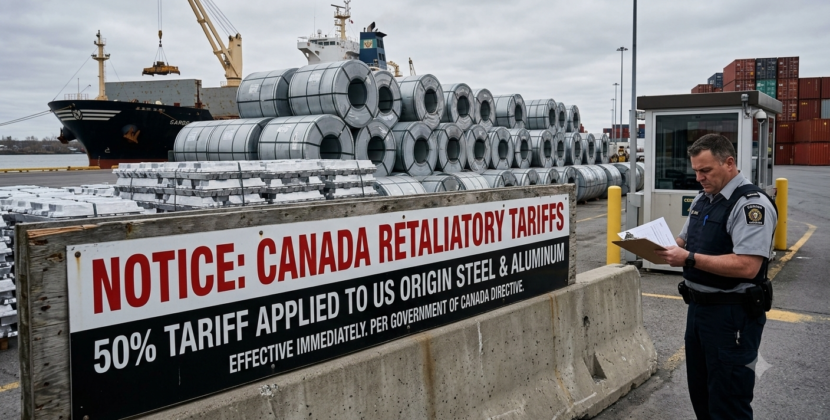
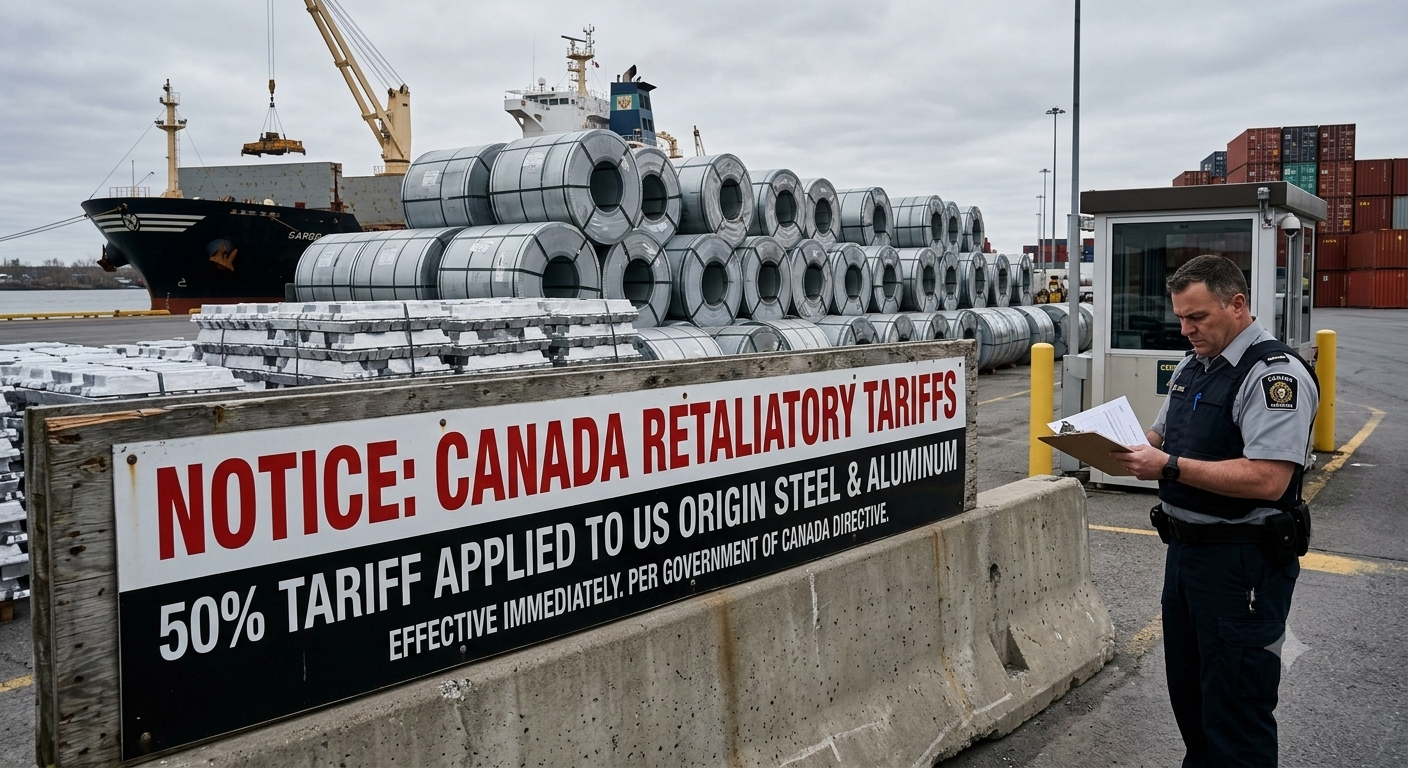
The most significant component of Canada’s retaliatory package is a 50 percent tariff on American steel, aluminum, and iron products. These tariffs mirror the 50 percent duties that Trump imposed on Canadian steel and aluminum in July, which affected roughly $20 billion worth of Canadian exports to the United States.
Beyond metals, Canada has imposed tariffs ranging from 15 to 25 percent on a wide range of American products, including furniture, motorcycles, clothing, beauty products, agricultural equipment, and certain food items. The tariffs are designed to maximize political pressure on the Trump administration by targeting goods from key U.S. manufacturing states and agricultural regions.
This is about fairness, Prime Minister Carney said at a press conference in Ottawa. Canada did not start this trade war, but we will finish it. We will stand up for Canadian workers and Canadian businesses.
The Impact on American Exporters
American companies that export to Canada are already feeling the effects of the new tariffs. Canada is the largest single destination for U.S. exports, purchasing approximately $377 billion worth of American goods annually. The tariffs make American products significantly more expensive in the Canadian market, potentially driving Canadian buyers toward alternative suppliers.
The steel and aluminum industries are among the hardest hit. U.S. steel producers have seen their Canadian orders drop by an estimated 30 percent since the tariffs took effect, while aluminum exporters report that several major Canadian buyers have switched to suppliers in Europe and Asia.
We are losing contracts that we have held for decades, said Thomas Graham, president of the American Iron and Steel Institute. This is not a theoretical threat. It is happening right now, and it is costing American jobs.
The agricultural sector is also under pressure. Canadian buyers of American beef, pork, dairy, and grain products are renegotiating contracts at lower prices or seeking alternative suppliers. Some American farmers report that they have already lost significant Canadian contracts to competitors in Australia, Brazil, and the European Union.
Canada’s Strategic Response
The tariffs are just one element of Canada’s broader response to the trade war. Prime Minister Carney has also announced new support programs for Canadian businesses affected by the dispute, including emergency lending facilities, export diversification grants, and trade adjustment assistance for workers.
Canada has also accelerated efforts to diversify its trade relationships. In recent months, Canada has expanded trade agreements with the European Union, Japan, South Korea, and several Southeast Asian nations. These agreements are designed to reduce Canada’s dependence on the U.S. market, which has historically accounted for about 75 percent of Canadian exports.
The trade war has been a wake-up call for Canada, said Kevin Lynch, former clerk of the Privy Council. We have been too dependent on the U.S. market for too long. This is forcing us to diversify, and that is ultimately a good thing for the Canadian economy.
The Bigger Picture
The Canada-U.S. trade dispute is part of a broader pattern of escalating trade tensions that has reshaped the global economy. The Trump administration has imposed tariffs on China, the European Union, and numerous other trading partners, while those countries have responded with their own retaliatory measures.
The result is a fragmented global trade system that is producing higher costs, greater uncertainty, and slower economic growth. The International Monetary Fund has warned that the trade war could reduce global GDP by as much as 0.5 percent over the next two years, with the heaviest impact falling on the countries involved in the disputes.
The Canada-U.S. trade relationship is one of the largest and most integrated in the world, with approximately $2.5 billion in goods and services crossing the border each day. The tariffs threaten to disrupt supply chains that have been built over decades, forcing businesses on both sides of the border to adapt to a new and uncertain economic reality.
What Comes Next
Both sides show no signs of backing down. The Trump administration has indicated that it may respond with additional tariffs on Canadian goods, while Canada has warned that it has a long list of additional products it is prepared to target. The most likely scenario in the near term is a continuation of the current standoff.
However, there are some signs of potential movement behind the scenes. According to reports from Reuters, officials from both countries have been in back-channel communication, exploring the possibility of a phased de-escalation that would involve mutual tariff reductions over a period of months.
The key question is whether there is enough political will on both sides to reach a deal. Trump has made tariffs a centerpiece of his economic platform and is unlikely to back down without significant concessions from Canada. Carney, meanwhile, has staked his political credibility on standing up to the United States and cannot afford to appear weak.
For American and Canadian businesses and consumers, the message is clear: the trade war is far from over, and the economic pain is likely to intensify before it gets better. The coming weeks and months will be critical in determining whether the two countries can find a path to resolution or whether the dispute will continue to escalate.
Impact on Consumer Prices
The tariffs are not just a headache for businesses. American and Canadian consumers are also feeling the pinch. In the United States, prices on Canadian products like lumber, dairy, and maple syrup have already risen, while Canadian consumers are paying more for American cars, appliances, and electronics.
According to estimates from the Yale Budget Lab, the combined effect of all U.S. tariffs in 2026 will cost the average American household approximately $3,800 per year. When Canada’s retaliatory tariffs are factored in, the economic pain is spread across both countries, with neither side emerging as a clear winner.
The housing market has been particularly affected. Canadian lumber tariffs have pushed up the cost of new home construction in the United States, while American furniture and building materials are now more expensive in Canada. The National Association of Home Builders has warned that the tariffs could add an average of $10,000 to the cost of a new home.
For everyday consumers, the bottom line is that things are getting more expensive, and there is no end in sight. The longer the trade war continues, the more entrenched these price increases will become, and the harder it will be for businesses and consumers to adapt.