




USCIS Fee Increase for Fiscal Year 2027: Which Forms Cost More Starting October 1
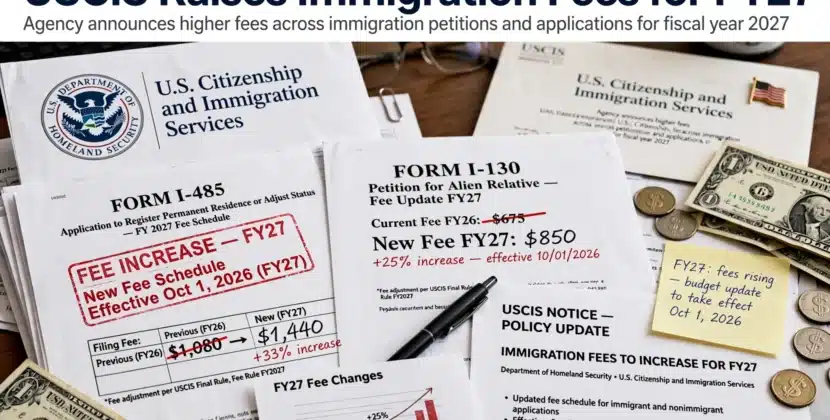
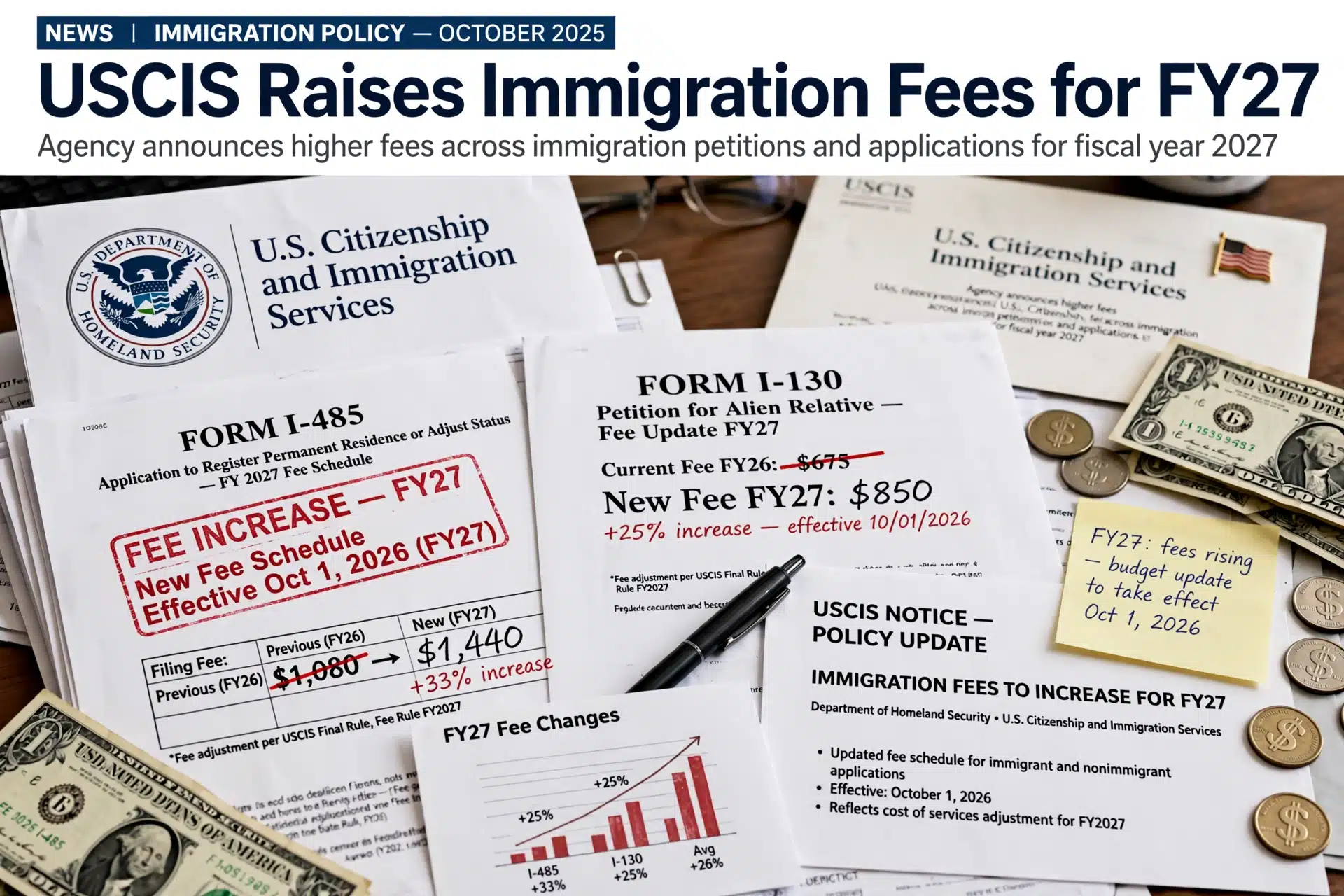
USCIS announced on September 30 that it will raise certain immigration filing fees for fiscal year 2027, confirming the second annual inflation adjustment required under H.R.1, the reconciliation bill that rewrote how the agency funds itself. The Federal Register notice posted this week puts the new schedule in motion as the 2027 fiscal year opens, touching many of the forms individual immigrants and employers file most often, from green card and work permit applications to naturalization petitions.
The increase is mechanical rather than a policy shift: H.R.1 requires the Department of Homeland Security to adjust immigration-related fees for inflation every fiscal year, so applicants see higher prices on some forms and unchanged amounts on others, depending on rounding. Even so, the timing lands inside a stacked cost environment, with premium processing already raised in March, a proposed five-figure H-1B cap fee pending and asylum-related charges already in effect. Here is what changed and how to plan around it.
What USCIS Announced and When
The agency’s September 30 alert directs applicants to the official fee page, G-1055, where the current schedule is published, and confirms that the fiscal 2027 inflation adjustment applies to the H.R.1 fee categories. Because fiscal year 2027 began October 1, the adjusted amounts apply to filings received on or after the effective date listed in the Federal Register notice, while applications already in process at the old amounts generally keep the fee paid at submission.
This is the second adjustment in the H.R.1 series. The first, published in late 2025 and effective January 1, 2026, produced visible jumps such as the $100 asylum fee moving up modestly and several employment-based forms creeping higher. Officials noted at the time that when an adjusted amount falls short of the next $10 increment, the fee stays flat, which is why some forms will not move at all in 2027 even though the calculation ran.
Why Fees Rise Every Year Under H.R.1
Before H.R.1, USCIS fees were set by rulemaking that happened years apart, often leaving the agency running on outdated schedules and issuing fee waivers it could not fully fund. H.R.1 replaced that stop-and-go cycle with a standing inflation formula: each year, DHS recalculates the affected fees against the applicable inflation index and publishes the result in the Federal Register.
For applicants, the trade-off is predictability instead of shock. Annual adjustments of a few percentage points are easier to budget than a 20 percent surprise after a five-year freeze, and agencies get revenue that tracks their actual processing costs. The downside is compounding: two years of adjustments already stack, and over a green card journey that spans several forms, the cumulative added cost becomes real money for families and small employers sponsoring workers.
Which Forms and Applicants Are Affected
The adjustment covers the H.R.1-related fee categories, which include core adjustment of status filings, employment authorization documents, naturalization and petition-based immigration benefits. Family sponsorship petitions, work permit renewals and citizenship applications are all inside the calculation, so a household filing an I-485 with a work permit and a later naturalization application pays the adjusted rate on each step.
Fees outside the H.R.1 list follow their own schedules. Premium processing is governed by its own inflation rule, and discretionary surcharges like the H-1B registration fee are set separately. The practical rule for applicants: check G-1055 the day you file, confirm the amount on the payment instructions for your specific form, and never assume last year’s money order or card charge still covers it, because USCIS rejects filings with short payments and returns them.
The Bigger Fee Landscape in 2026
The 2027 adjustment is one layer of a much larger cost picture. Premium processing fees rose again on March 1, 2026, with Form I-129 and Form I-140 filings each moving up by about $160. The $10 H-1B registration fee remains separate from the cap petition itself, and DHS has proposed a dramatically larger $103,265 fee on H-1B cap selections, a rule still in the proposal stage that drew heavy comment from employers.
Asylum seekers now pay a $100 application fee under a rule that took effect in 2025, and a proposed $1,000 fee for certain parole categories sits alongside it. Meanwhile, processing time backlogs remain the hidden cost: applicants paying more today are still waiting months for decisions. The cumulative effect is that immigration has become a subscription-grade expense, with families paying repeatedly across a decade-long path to citizenship.
How to Prepare Before You File
Three moves reduce the pain of a fee increase. First, verify the exact amount on the official fee page at filing time rather than relying on a lawyer’s invoice prepared weeks earlier. Second, if you are close to filing and the effective date has not arrived, filing before the new schedule applies can save the difference on large forms. Third, check fee waiver and reduced fee eligibility, because Form I-912 waivers still exist for certain benefit types even as the qualifying list has narrowed.
Employers should also budget for the whole sequence rather than one form. A sponsorship involves petition fees, premium processing if timing matters, and travel or consular charges later. Building the 2027 amounts into budget requests now prevents finance teams from rediscovering the increase when the invoice arrives, and it avoids the worst-case scenario of a rejected filing that must be refiled at the higher rate.
What Applicants Should Watch Next
Three developments will shape the next twelve months. The pending H-1B cap fee proposal is the largest potential jump and would hit tech employers hardest if finalized. The annual inflation formula means another adjustment is coming for fiscal 2028, so long-range planners should assume fees rise every October from here. And processing fee revenue feeds capacity: if higher fees translate into faster adjudications, applicants may view the increase differently than if backlogs grow.
For now, the immediate action is simple. Pull up the current fee schedule, confirm your form’s amount against the official page and file with the correct payment. The days of paying 2025 prices for 2026 benefits ended with H.R.1, and fiscal 2027 confirms that immigration costs now move annually like clockwork.
Frequently Asked Questions
When does the USCIS fee increase take effect?
The fiscal year 2027 adjustment applies to filings received on or after the effective date in the Federal Register notice, and fiscal year 2027 began October 1, 2026.
Which forms cost more under the new schedule?
The adjustment covers the H.R.1 fee categories, including adjustment of status, employment authorization, naturalization and petition-based benefits, though some amounts stay flat because of $10 increment rounding.
Why does USCIS raise fees every year?
H.R.1 requires DHS to adjust immigration fees for inflation annually, replacing the old multi-year rulemaking cycles with a predictable yearly recalculation.
Does the fee increase affect H-1B visas?
The inflation adjustment touches petition-related fees, while the $10 H-1B registration fee is set separately and a much larger proposed cap fee remains under review by DHS.