




US Ban on $1 Billion of Canadian Imports Takes Effect as Trade War Deepens
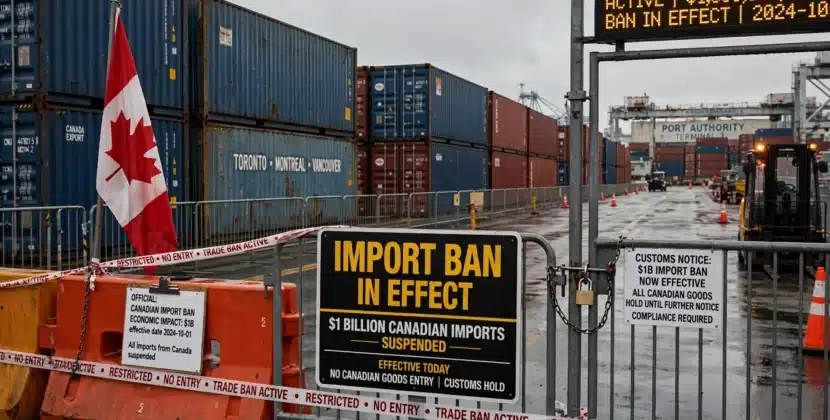
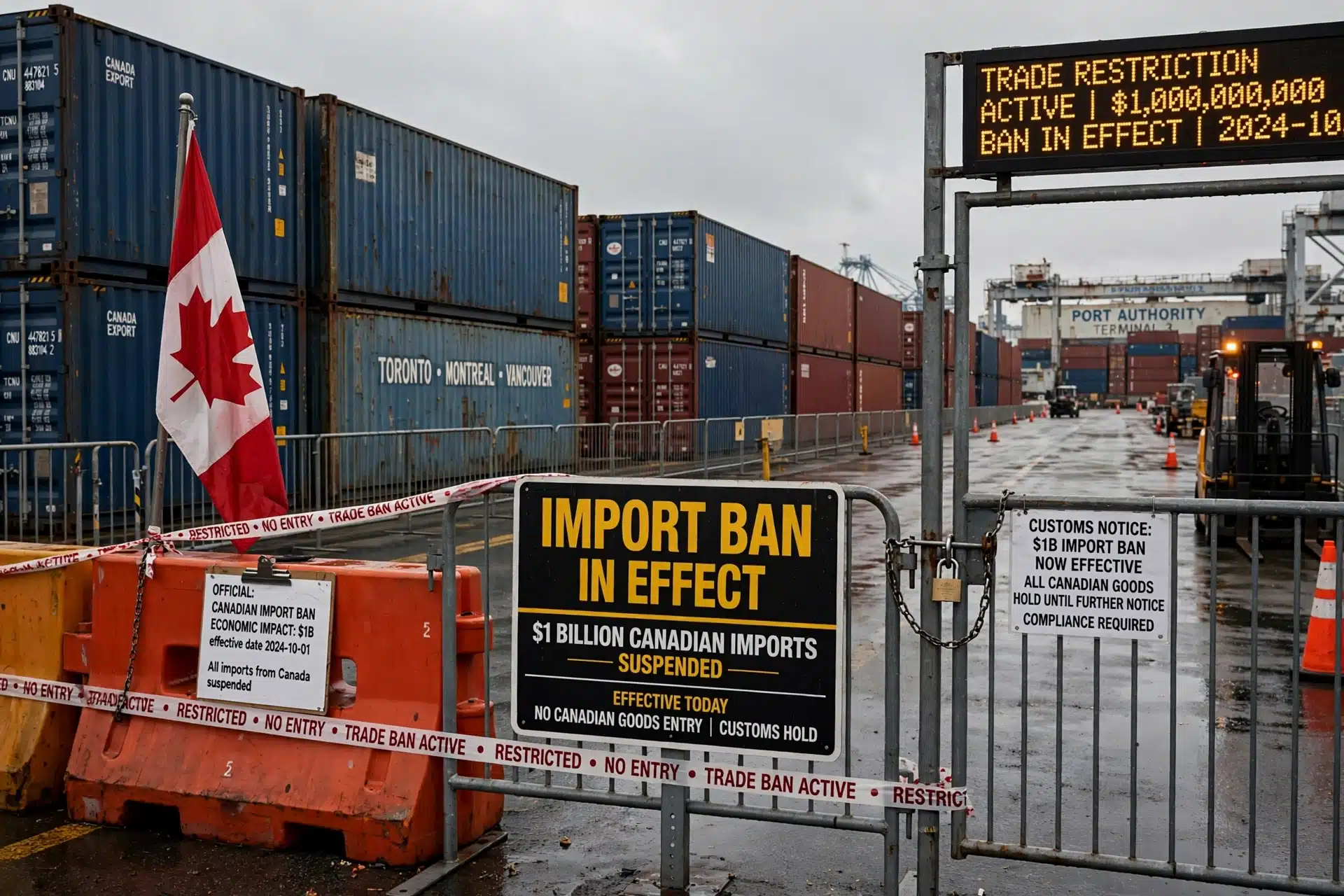
A sweeping American ban on nearly $1 billion worth of Canadian imports came into force at midnight Tuesday, shutting the door on Canadian alcoholic beverages, dairy products, motorcycles, molasses and other goods and marking the sharpest escalation yet in a trade war between the two historically friendly neighbors. The restrictions landed just as Ottawa’s own retaliatory tariffs on hundreds of American products have taken hold, tightening a vise that businesses on both sides of the border say is now doing real damage.
The timing is politically charged, arriving weeks before the US midterm campaign enters its final stretch and with relations between Washington and Ottawa already at their lowest point in a generation. The White House framed the move as a response to Canada’s own retaliation, while Canadian leaders called it a needless blow to a partnership that has anchored North American industry for decades. Here is what is banned, why it happened and what American consumers should expect to notice first.
What Exactly Is Being Banned
The import ban covers a targeted list of Canadian products worth close to $1 billion annually. Chief among them are alcoholic beverages, a category that includes iconic Canadian whisky brands and other spirits that have flowed across the border without friction for generations. Dairy products such as whey also fall under the restrictions, along with motorcycles and a grab bag of industrial and food items including molasses.
The ban did not appear overnight; the White House announced the measures earlier in September in a fact sheet describing it as a direct response to Canada’s retaliation, with a September 29 effective date written into the order. Products added to and removed from the list took effect earlier in the month, giving importers a brief window to reposition stock before the main prohibition kicked in.
How We Got Here: A tit-for-Tat Trade War
The dispute has been compounding for months. Canada responded to earlier American tariffs with its own levies, applying 50 percent duties to US steel and aluminum and hitting hundreds of American goods in a direct retaliation that the Canadian government cast as defending its workers. Washington’s import ban is the counterpunch, and officials on both sides have shown little appetite for the off-ramps that typically defuse these standoffs.
The breakdown matters because of scale: the United States and Canada share the world’s largest bilateral trading relationship, with supply chains that cross the border repeatedly for automobiles, agriculture and energy. Each new restriction forces companies to re-paper contracts, reroute shipments and eat costs that did not exist a year ago. Trade lawyers said the ban on finished goods is more disruptive than tariffs of similar size, because a prohibition leaves importers with no price at which they can keep doing business.
What American Consumers Will Notice First
The most visible effects will show up in stores and bars. Canadian whisky drinkers could face short selections as existing inventory sells through, with no legal restock behind it. Dairy processors that rely on Canadian whey face input cost increases that eventually surface in finished products. Motorcycle buyers looking at Canadian-made models will find the market thinned, and restaurants built around Canadian imports will need to rewrite menus.
Economists caution that consumers will not see a single dramatic price shock so much as a slow squeeze. When a channel closes, substitutes from other countries fill part of the gap at slightly higher cost, and those margins compound through distributors. The same dynamic runs in reverse for Canadian consumers, who already face retaliatory tariffs on American liquor, ketchup and other staples, a reminder that trade wars tax both sides.
What It Means for Businesses on Both Sides
For exporters, the ban is an existential problem rather than a pricing one. A distillery that built its American distribution around border shipments now needs entirely new markets, and dairy suppliers face the same math. On the US side, importers and retailers must scramble for alternative suppliers, while manufacturers that used Canadian inputs watch their cost structures shift with no guarantee of stability.
The deeper worry is uncertainty. Businesses can plan around a tariff; a ban can be expanded with a product list update. Executives on both sides have called for a negotiated framework, and Canada’s leadership has signaled it will match escalation rather than concede it. With midterms approaching, neither government has shown interest in being seen blinking first.
What to Watch Next
Three developments will shape the next phase: whether Canada announces a new round of counter-bans targeting American services or brands, whether either side carves out exemptions for politically sensitive products, and whether the dispute spills into sectors like autos and energy that dominate the bilateral relationship. Diplomatic contacts continue, but officials familiar with the talks say the gap between the two capitals is measured in politics more than economics.
For American households, the checklist is simple: expect thinner selection and gradually higher prices on Canadian whisky, certain dairy products and affected motorcycles, and watch for the second-order effects as suppliers adjust. Trade wars rarely announce their costs loudly; they show up one shelf at a time.
Industry groups on both sides of the border have asked their governments for a freeze on new measures while existing disputes are litigated, but neither capital has accepted the idea. Until some off-ramp appears, companies will keep planning for the worst case, which in practice means higher inventories, duplicate suppliers and a slow tax on the integrated North American economy that consumers eventually pay without ever seeing it on a receipt.
Frequently Asked Questions
What products are included in the US ban on Canadian imports?
The ban covers roughly $1 billion worth of Canadian goods, including alcoholic beverages such as Canadian whisky, dairy products including whey, motorcycles, molasses and other listed items.
When did the Canadian import ban take effect?
The restrictions came into force on September 29, 2026, after being announced earlier that month as a response to Canada’s retaliatory tariffs on American products.
Will this make Canadian whiskey and dairy more expensive in the US?
Likely yes, gradually. With the import channel closed, existing inventory sells through first, then substitutes and shortages push prices up across affected categories.
How has Canada responded to the American trade war?
Canada has already imposed its own retaliatory tariffs, including 50 percent duties on US steel and aluminum and levies on hundreds of American goods, and officials have signaled they will match further escalation.