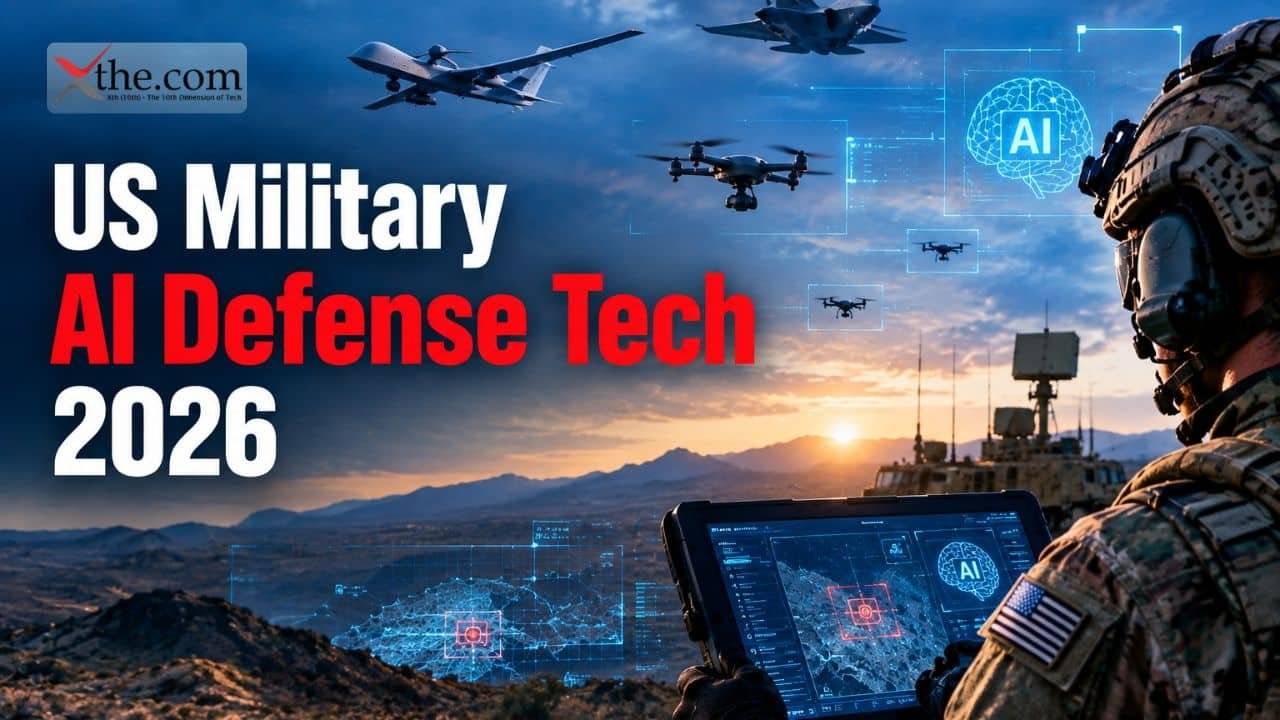
The traditional boundaries separating Silicon Valley software innovation from Pentagon defense acquisition have dissolved entirely. As geopolitical tensions persist and asymmetric warfare demands rapid technological adaptation, the United States military is leaning heavily into artificial intelligence, autonomous robotics, and hybrid-electric aerospace engineering. Across tech hubs in the Pacific Northwest and specialized manufacturing centers nationwide, venture-backed defense tech startups are securing monumental federal contracts to build the next generation of American military hardware.
A prime example of this defense tech boom is the rapid ascent of autonomous ground and aerial systems designed for frontline deployment. Recently, companies like Overland AI unveiled advanced autonomous ground vehicles such as IBEX, which has been officially selected by the United States Marine Corps to navigate complex, GPS-denied terrains without human driver intervention. By utilizing sophisticated machine learning vision algorithms and real-time path planning, these robotic platforms can transport supplies, conduct reconnaissance, and execute hazardous support missions while keeping American service members out of direct harm’s way.
In the skies, the transformation is equally striking. Defense contractors have secured multi-million dollar federal awards, including a landmark $150 million Navy contract secured by Shield AI to advance autonomous, AI-piloted fighter jet capabilities. These autonomous flight control systems are engineered to replicate the tactical decision-making of elite human pilots under extreme gravitational forces and electronic warfare jamming conditions. By integrating software that can dogfight and maneuver independently, the Department of Defense aims to maintain absolute air superiority in contested operational theaters against near-peer adversaries.
Beyond autonomous vehicles, the broader defense ecosystem is benefiting from massive private capital injections. Venture capital funds—including notable backing from climate and tech luminaries—are pouring billions into dual-use technologies, ranging from satellite radar startups like Kapta Space to hybrid-electric aerospace prototypes. This influx of capital ensures that American defense innovation outpaces global competitors. However, this convergence has also sparked intense ethical debates within university research labs and tech boardrooms regarding the militarization of artificial intelligence. Nonetheless, as federal procurement budgets prioritize autonomous resilience, defense technology has firmly established itself as one of the most lucrative and rapidly expanding sectors in the modern American economy.