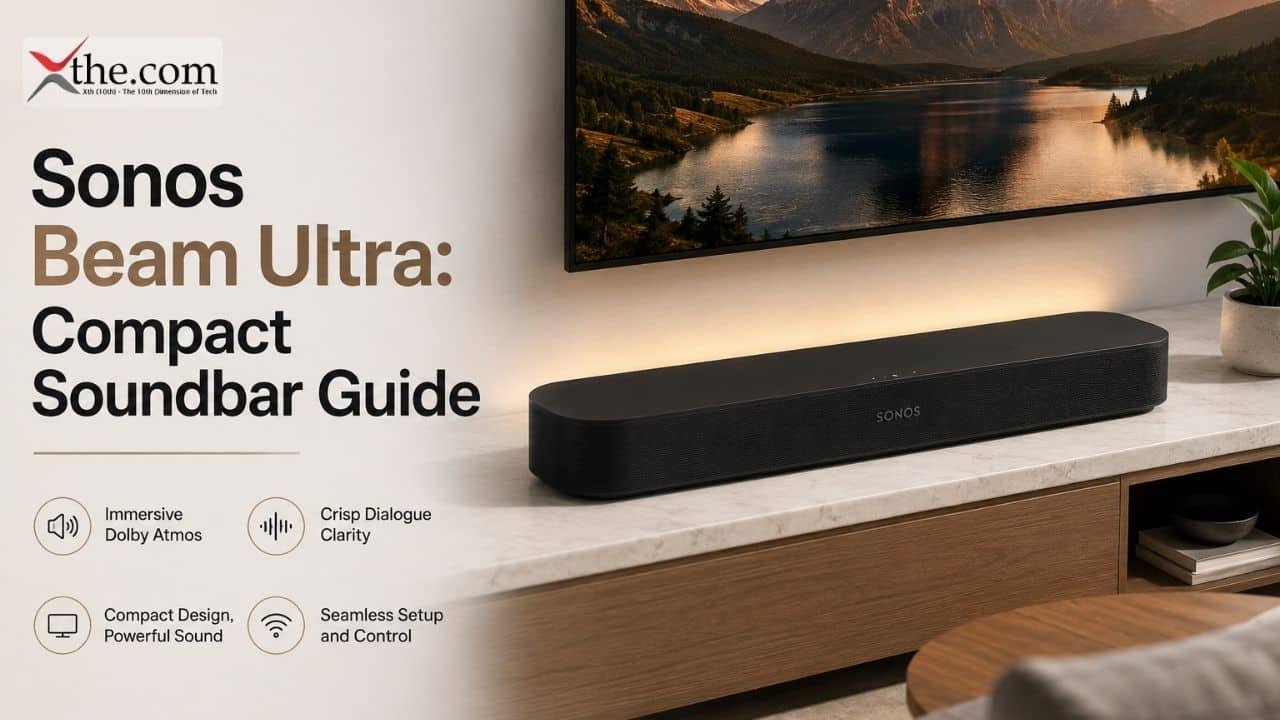
Sonos Beam Ultra: Is the $699 Compact Dolby Atmos Soundbar Worth Buying?
Sonos refreshed its most popular soundbar on September 1, 2026, and the Beam Ultra arrived in stores on September 29 at $699. It is the third generation of the small bar that put cinematic sound in rooms where a full theater setup makes no sense, and this year Sonos gave it the feature Americans ask for most: physical upward-firing drivers for real Dolby Atmos height effects, in a chassis barely wider than a laptop. The result is what reviewers are calling a credible compact Atmos system, but at $699 the question for US shoppers is no longer whether it sounds good; it is whether it is the right soundbar for your room and budget.
This buying guide covers the Beam Ultra’s price, specifications and review consensus, compares it with the bigger Sonos Arc Ultra and non-Sonos rivals, and tells you exactly who should buy it and who should spend less or more.
Quick Verdict
- – Buy the Sonos Beam Ultra if your living room or bedroom is small to medium sized and you want Atmos effects without a $1,000-plus bar. Reviewers rate it near the top of its class: Engadget scored it 9 out of 10, and Gizmodo rated it 4.5 out of 5.
- – Skip it if you have a large open-plan room. Even positive reviews say the Beam Ultra is not a replacement for the Sonos Arc Ultra in big spaces.
- – Budget for a subwoofer later if you care about movies. The bar’s bass is respectable for its size, but reviewers consistently describe adding a Sonos Sub as the biggest single upgrade, and it costs extra.
What You Get for $699
The Sonos Beam Ultra packs nine custom drivers, including two dedicated upward-firing drivers, arranged in a 7.1.2 Dolby Atmos layout with nine amplifiers behind a grille 75 centimeters wide, about 29.5 inches, and just over 10 centimeters tall. CNET’s launch coverage confirmed the connectivity US buyers need: Wi-Fi for streaming and multiroom audio, Bluetooth for casual phone pairing, and HDMI eARC to carry Atmos audio from a TV over a single cable.
Two software features matter more than the driver count for everyday viewing. The first is AI Speech Enhancement with four selectable levels, which isolates dialogue when a movie mix buries it under score and effects. The second is the broader Sonos ecosystem: any existing Sonos speaker in the house can become a wireless surround channel, and a Sonos Sub can be added wirelessly, so the $699 bar is an entry point to a system rather than a sealed box purchase. Sonos launched the bar alongside the Ace Ultra headphones the same day, signaling where its premium audio push is aimed this fall.
The Review Consensus
Published reviews land in the same place. Gizmodo, rating the bar 4.5 out of 5, praised clear dialogue, an immersive soundstage and polished software, while noting the cost climbs quickly once you add a subwoofer. Engadget’s 9 out of 10 review highlighted strong movie and music performance and called it best suited to small or medium rooms, with one honest caveat for Atmos buyers: upward-firing height effects work best with flat ceilings, so vaulted or sloped ceilings soften the illusion.
CNET placed the bar in its proper slot in the lineup, between the smaller original Beam and the flagship Arc Ultra, and European reviewers testing the same bar reached the same conclusion from the other side of the Atlantic: excellent height effects, wide soundstage and clear dialogue for the size, but buyers of large rooms should step up to the Arc Ultra instead. No review tested the Beam Ultra and found it wanting for its intended room size; the disagreements are only about how much extra the ecosystem extras cost.
Beam Ultra vs Arc Ultra vs the Original Beam
The choice inside Sonos’s lineup comes down to room size and budget. The original Beam remains the value pick for bedrooms and small apartments at a lower price. The Beam Ultra at $699 buys the upward-firing Atmos drivers, the newer processing and the speech enhancement system that the smaller bar lacks. The Arc Ultra sits above both with more drivers, bigger bass and a price tag designed for large living rooms.
US shoppers should measure before buying. The Beam Ultra’s 29.5-inch width fits under most TVs on a typical media console, which is precisely the scenario the original Beam made famous. If your TV sits on a dresser in a 12 by 15 foot bedroom, the Arc Ultra is wasted money and physical space. If your couch sits 12 feet from a 75-inch TV in a room with vaulted ceilings, the Beam Ultra will sound polite, and the Arc Ultra earns its premium.
Setup and Ecosystem: The Real Moat
Setup runs through the Sonos app over Wi-Fi, with HDMI eARC carrying TV audio and the app handling music streaming, multiroom grouping and the speech-enhancement levels. Bluetooth exists for guests and quick phone pairing without joining the Wi-Fi system. The upgrade path is the argument competitors struggle against: a household with a Sonos kitchen speaker today can add the Beam Ultra as a living room bar and group every room for whole-home audio in one app.
Rivals at $699 and below from Samsung, Sony and Bose offer strong Atmos performance, but none tie into a whole-home multiroom system with wireless surrounds and subwoofers sold individually years after launch. If long-term flexibility matters more than the last increment of bass, that ecosystem advantage is worth real money.
Who Should Buy the Sonos Beam Ultra?
Apartment dwellers and homeowners with medium living rooms who want a single-cable upgrade over TV speakers should buy it confidently. Dolby Atmos material from streaming services finally has a way to reach you without a five-speaker rack. Existing Sonos households get the most value, because any owned speaker doubles as a surround and the system grows over years rather than being replaced.
Wait or look elsewhere if your room is large, your ceilings are vaulted, or you already own a working soundbar within two years old; the step-up from a decent bar to the Beam Ultra is meaningful but not urgent. And price-watch into the holiday season: this bar launched at the end of September, and Black Friday falls on November 27 this year, which historically brings Sonos bundles at authorized US retailers rather than direct discounts from Sonos itself.
Frequently Asked Questions
How much does the Sonos Beam Ultra cost?
The Sonos Beam Ultra costs $699 in the United States. Preorders opened September 1, 2026, and the bar reached general availability on September 29, 2026.
Does the Sonos Beam Ultra support Dolby Atmos?
Yes. It renders 7.1.2 Dolby Atmos using nine drivers, including two physical upward-firing drivers, and connects to TVs over HDMI eARC. Height effects work best under flat ceilings.
Do I need to buy rear speakers or a subwoofer?
No. The bar works standalone, and any existing Sonos speaker can serve as a wireless surround. Reviews consistently say a Sonos Sub is the biggest upgrade for movie bass, but it is an extra purchase.
Beam Ultra or Arc Ultra for a large living room?
The Arc Ultra. Every review of the Beam Ultra places it in small to medium rooms and describes the Arc Ultra as the right choice when the space is big and open.