Table of Contents
The Z7 III Case: Why Now
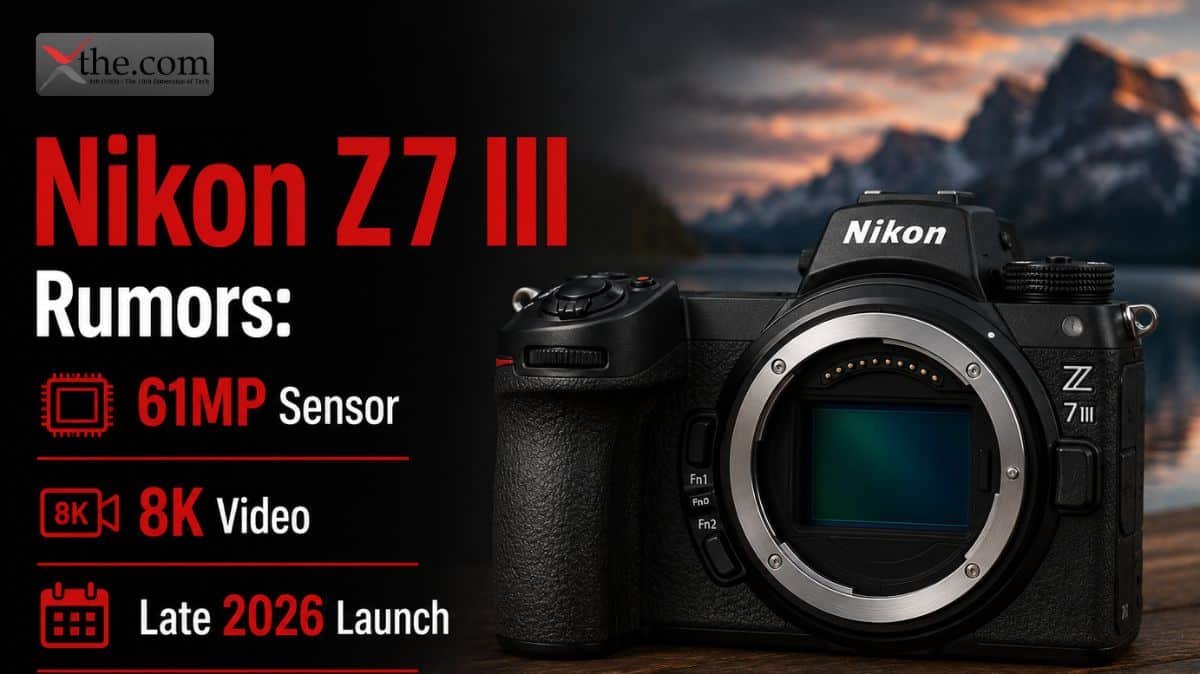
The Nikon Z7 III is emerging as the most logical next major announcement from Nikon. According to detailed analysis from camera rumor sites, three converging factors make the Z7 III the strongest candidate in Nikon’s 2026-2027 roadmap: it is the longest overdue camera in Nikon’s lineup, faces rising competition in the high-resolution full-frame segment, and creates minimal internal cannibalization risk with Nikon’s flagship Z9.
The Z7 II launched in October 2020 — nearly six years ago. In the fast-moving mirrorless market, that’s an eternity. The Z7 II’s 45.7MP sensor, while still capable, now lags behind Sony’s 61MP A7R V and Canon’s 45MP R5 II in both resolution and video features. Nikon shooters have been waiting patiently for an upgrade that restores their brand’s competitiveness in the high-resolution market.
Expected Specifications
Based on supply chain leaks, FCC filings, and analysis of Nikon’s development patterns, here are the most credible Z7 III specifications:
Table
| Specification | Expected Value |
| Sensor | 61+ MP FX-Format BSI CMOS |
| Image Processor | EXPEED 8 |
| Video | 8K30p, 4K60p, 10-bit Internal, ProRes RAW |
| Continuous Shooting | Up to 20 fps |
| Autofocus | 493-Point AF with AI Subject Detection |
| LCD | 3.2″ 4-Axis Tilting Touchscreen |
| Memory | Dual UHS-II SD Slots |
| Connectivity | 5 GHz Wi-Fi, Bluetooth |
| Stabilization | 5-Axis In-Body Image Stabilization |
The 61MP Sensor Question
The most debated aspect of the Z7 III is its sensor. Rumors suggest Nikon is considering two paths:
Option A: Sony 61MP Sensor Nikon has historically sourced sensors from Sony Semiconductor. A 61MP sensor matching the Sony A7R V would immediately restore competitive parity and give Nikon shooters the resolution they need for large-format printing and heavy cropping.
Option B: TowerJazz 67MP Sensor More intriguingly, reports indicate Nikon has been prototyping a 67MP sensor with TowerJazz for over two years. A custom 67MP sensor would give Nikon a resolution advantage over both Sony and Canon — a compelling selling point for landscape and studio photographers.
A 67MP sensor would produce files approximately 30% larger than the current Z7 II’s 45.7MP output. For photographers who regularly produce large prints or need extreme cropping flexibility for wildlife work, the extra resolution would be genuinely valuable. However, it would also demand faster memory cards and more storage — costs that Nikon would need to justify to its user base.
Video Upgrades: 8K and ProRes RAW
The Z7 II’s video capabilities — 4K60p with significant crop — have aged poorly compared to competitors. The Z7 III is expected to address this comprehensively:
- 8K30p internal recording with 10-bit color depth
- 4K60p with minimal or no crop
- ProRes RAW internal recording — a feature currently exclusive to much more expensive cinema cameras
- N-Log and HLG profiles for maximum grading flexibility
These upgrades would transform the Z7 III from a stills-first camera with acceptable video into a genuine hybrid tool capable of professional video production. For the growing segment of content creators who shoot both photography and video, this dual capability is essential.
Z7 III vs Z7 II: What’s Changing
Table
| Feature | Nikon Z7 II (2020) | Nikon Z7 III (Expected) |
| Sensor | 45.7MP | 61-67MP |
| Processor | Dual EXPEED 6 | EXPEED 8 |
| Video | 4K60p (cropped) | 8K30p, 4K60p |
| Continuous Shooting | 10 fps | 20 fps |
| Autofocus | 493-point (no AI) | AI Subject Detection |
| LCD | Tilting | 4-Axis Tilting |
| Memory | 1 CFexpress + 1 SD | Dual UHS-II SD |
The jump from 10 fps to 20 fps is particularly significant. It would make the Z7 III viable for action and wildlife photography — genres that previously required the Z8 or Z9. Combined with AI subject detection borrowed from the Z9’s autofocus system, the Z7 III could become the most versatile camera in Nikon’s lineup.
Competitive Pressure from Sony
Sony continues to dominate the high-resolution full-frame segment. The Sony A7R V — with its 61MP sensor, AI autofocus, and 8-stop stabilization — has set the benchmark that Nikon must match or exceed.
Canon’s EOS R5 II also competes in this space, offering 45MP resolution with 30 fps burst shooting and 8K60p video. Nikon cannot afford to let the Z7 II languish as its only high-resolution option for another year — not when professionals are actively comparing specs across brands.
The competitive heat is most intense in three areas:
- High-resolution full-frame: Where Sony and Canon have both released major updates
- Video capabilities: Where 8K is becoming standard for flagship hybrids
- AI autofocus: Where subject recognition and tracking determine real-world usability
Z9 II and Z8 II: Where Do They Fit
Nikon’s product strategy constraints mean the Z7 III’s timing is influenced by its siblings:
Z9 II: Remains a high priority but RED technology integration has lengthened development. A 2026 announcement is possible but less probable than 2027. The Z9 II is expected to feature EXPEED 8, 8K60p, and 30 fps continuous shooting.
Z8 II: Unlikely in 2026. Launching a Z8 II would sit too close to the Z9 II, potentially cannibalizing flagship sales. Nikon is likely to wait until the Z9 II is established before refreshing the Z8.
This product gap actually strengthens the Z7 III’s case. It targets a different buyer — resolution-focused photographers rather than speed or video-first users — and fills the longest-standing gap in Nikon’s lineup without threatening flagship sales.
USA Pricing and Availability Predictions
Based on Nikon’s historical pricing strategy and competitive positioning:
Table
| Scenario | USA Price | Announcement Timeline |
| Conservative (Sony 61MP sensor) | $3,599 – $3,899 | Late 2026 |
| Aggressive (67MP custom sensor) | $3,899 – $4,299 | Early 2027 |
| Development teaser only | N/A | Late 2026 |
The Z7 II launched at $2,999, but inflation in camera components and the significant spec bump justify a higher price. For context, the Sony A7R V retails at $4,200, and Canon’s R5 II at $4,400. A Z7 III priced between $3,600-$4,000 would be competitive while maintaining Nikon’s traditional value positioning.
Should You Wait for the Z7 III
Buy the Z7 II Now If:
- You need a high-resolution camera immediately for paid work
- You can find the Z7 II at a significant discount (under $2,500)
- Your primary need is landscape or studio photography where the current specs suffice
Wait for the Z7 III If:
- Video is important to your work (8K and ProRes RAW are significant upgrades)
- You need better autofocus for wildlife or action photography
- You want the latest sensor technology for maximum dynamic range
- You can delay your purchase until late 2026 or early 2027
Consider the Z8 If:
- You need professional video and stills capability now
- Budget allows for the ~$3,500 current price
- You don’t mind a larger, heavier body
Frequently Asked Questions
Q: When will the Nikon Z7 III be announced? A: Based on current rumors and supply chain signals, the Z7 III is most likely to be announced in late 2026 or early 2027.
Q: How many megapixels will the Z7 III have? A: Rumors suggest either a 61MP Sony sensor or a 67MP custom TowerJazz sensor. The 67MP prototype has reportedly been in development for over two years.
Q: Will the Z7 III shoot 8K video? A: Yes, rumors indicate 8K30p internal recording with 10-bit color and ProRes RAW support.
Q: What processor will the Z7 III use? A: The Z7 III is expected to use Nikon’s EXPEED 8 image processor, the same generation expected in the Z9 II.
Q: Should I buy a Z7 II now or wait? A: If you find the Z7 II under $2,500, it’s still an excellent camera. But if video, autofocus, or resolution are priorities, waiting for the Z7 III is advisable.
Q: Will the Z7 III have AI autofocus? A: Yes, the Z7 III is expected to inherit the AI subject-detection autofocus system from the Z9, capable of recognizing people, animals, birds, vehicles, and more.
External Sources:
- Photography Life: https://photographylife.com/best-mirrorless-camera
- Nikon USA: https://www.nikonusa.com/