



Cupertino, California
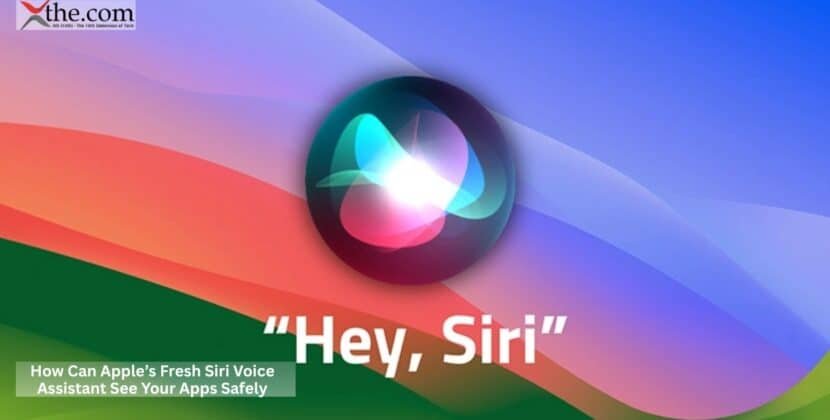
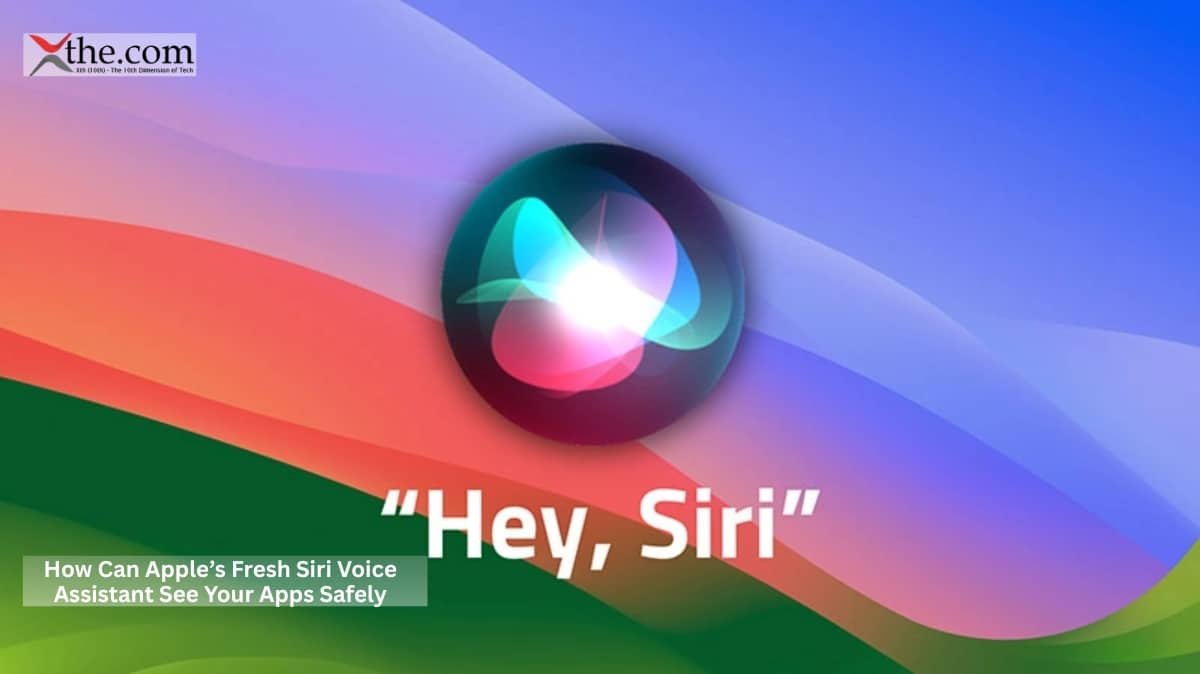
Your banking app is open. Your password manager is just two taps away. Soon, Apple’s voice assistant will know exactly what’s on your screen, not to collect it, but to help you use it. That difference is important, and the technology behind it is more advanced than most people think.
Apple introduces Siri AI into a new operational tier with the release of its next-generation operating system, one in which the assistant no longer merely responds to spoken commands but also reads live application state in real time. For tens of millions of iPhone and Mac users who rely on their devices for financial management, health tracking, and private correspondence, the architecture Apple has built to support this functionality deserves a careful, sober examination.
How Apple Introduces Siri AI Into App-Layer Intelligence
The main change is in how Siri works. Before, Siri mostly answered questions: you spoke, it searched, and gave you results. Now, Apple engineers say Siri uses screen layer analysis. This means it constantly checks which app is active, what’s on the screen, and what information the app shares through Apple’s on-device intelligence tools.
For example, when you open your airline’s app to check your boarding pass, Siri doesn’t just read the content like a camera would. Instead, it looks at the organized data beneath what you see. This lets Siri find your flight number, check it against your calendar, and offer to share it through iMessage, all without you speaking anything.
To make screen layer analysis work, Apple has to update the whole software system, from the parts that draw the screen to the tools that track what’s visible. Developers who want their apps to work well with Siri need to provide organized data using Apple’s App Intents framework. This requirement is already changing how many apps are made.
The Privacy Architecture: On-Device First, Always
Here is where Apple introduces Siri AI capabilities that diverge sharply from how competing voice platforms have historically operated. The company has embedded its privacy commitments directly into the data model, rather than bolting them on afterward as policy.
The first layer of protection is the on-device data sandbox. All screen layer analysis happens right on your device’s neural engine, which Apple has included in every iPhone since the A12 Bionic. No raw screen content ever leaves your device. Siri reads the organized data, figures out what you want, and does everything within the secure part of your phone. What you see on your screen is never sent to Apple’s servers.
The on-device data sandbox architecture means that, in the event of a network-level breach or a malicious API call from a third-party integration, the underlying screen content remains inaccessible. The sandbox creates a hard boundary between what the assistant can act on and what any external process could theoretically request.
Private Cloud Compute: The Second Ring of Defense
Not every Siri task can be completed on-device. More complex requests those requiring large language model reasoning, multi-step web lookups, or cross-device orchestration must route to Apple’s server infrastructure. This is where memory privacy becomes the engineering challenge, and where Apple’s Private Cloud Compute framework enters the architecture.
Private Cloud Compute is designed so that even Apple’s server staff can’t read your data. The system checks that each server is running only the code Apple has promised, using cryptographic proof. All requests are encrypted end-to-end, with keys only your device has. Once the task is done, the data is deleted and not saved in logs or used for training.
For users who want real proof, Apple will publish the Private Cloud Compute software so that independent security researchers can audit it. This is an unusual move in the industry, and it indicates both the stakes of memory privacy and the pressure Apple faces to substantiate its claims with real evidence.
What Apple’s introduction of Siri AI Screen Context Capabilities means for App Developers
The broader consequence of Apple introduces Siri AI screen context capabilities into the OS layer is a material change in how third-party developers must design their applications. An app that structures its UI purely around visual aesthetics without exposing clean semantic data through Apple’s accessibility and App Intents APIs will participate only partially in the assistant’s automation layer.
This change creates new competition. Apps that follow Apple’s structured data rules will offer better and more reliable automation. Apps that don’t will give users a weaker Siri experience, and people will notice. Companies making business tools, healthcare apps, and financial software are already updating their plans because of this.
Interestingly, meeting Apple’s privacy rules and its automation rules is really the same thing. An app that provides clear, organized data for Siri to use is both the most useful for automation and the safest for end-user privacy.
The Proof Is in the Cryptography
It’s reasonable to be skeptical of privacy claims from tech companies, given past problems. What makes Apple’s current system worth a closer look is the clear, mathematical way it protects your data. The on-device data sandbox is enforced by hardware, not only a company policy. Private Cloud Compute’s attestation is a public, verifiable promise, not just an internal check.
As Apple introduces Siri AI deeper into everyday use, the new system for screen layer analysis and memory privacy will be tested in ways no one can fully predict. Security experts will examine the attestation model. Regulators in Europe and the US will look closely at how data moves. And users, especially in the US, who process sensitive financial and health data on their iPhones, will judge the system based on what happens when it launches.
Apple’s engineering is impressive. Whether it works as promised in the real world is something we’ll find out over the next year and a half.
Source: Apple Newsroom