



New York, New York.
GE Vernova’s turbines have their limits. The AI trade has faced a familiar problem: investors could not tell who was ahead until the stock market opened and closed for the day. Now, there is a new way to bridge the gap between real-time AI infrastructure activity and what investors can actually see. This solution did not come from a hedge fund, but from the world of crypto.
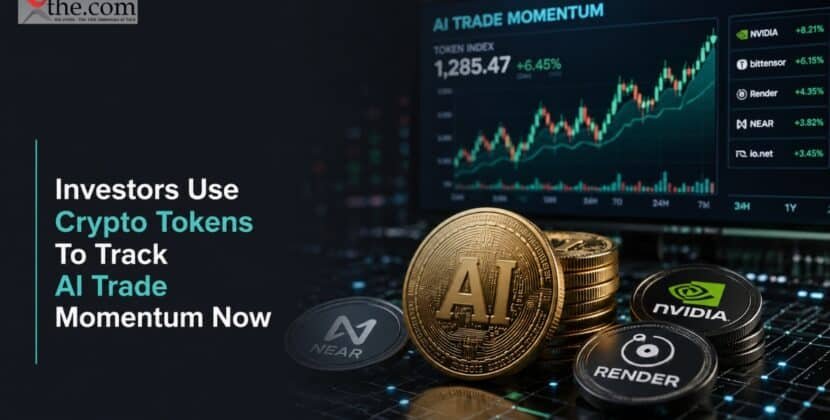
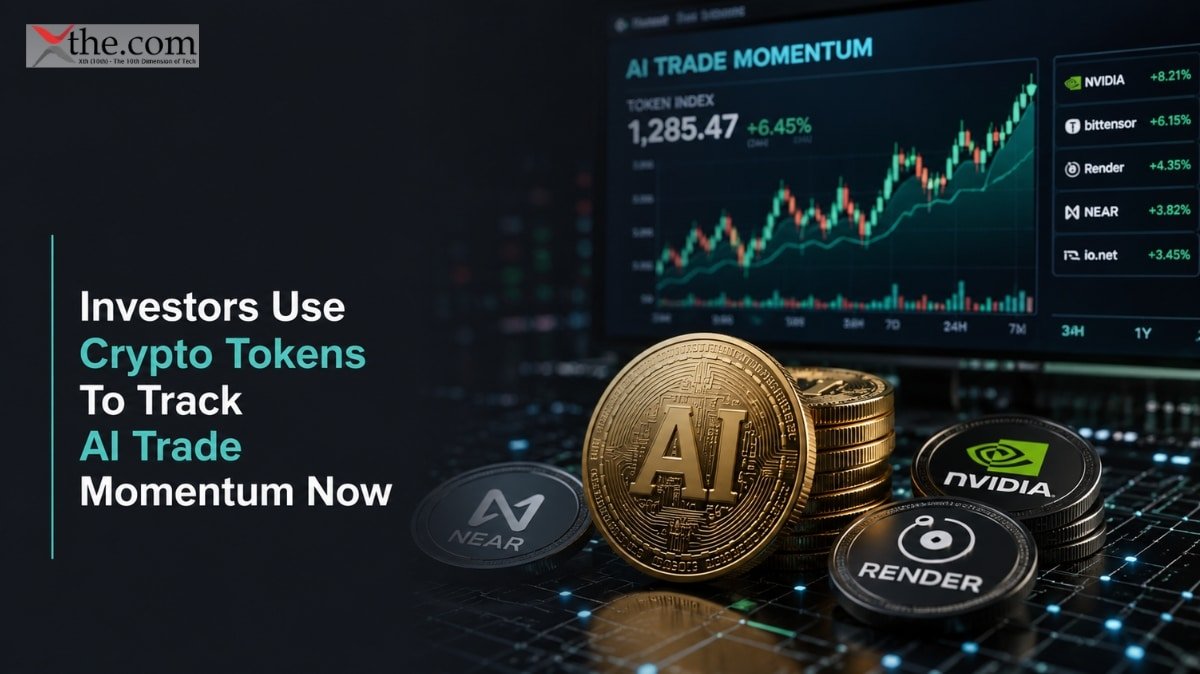
More institutional and retail investors are using certain digital tokens as real-time indicators of AI growth. They watch these tokens much like traders once watched overnight futures. According to Bloomberg, crypto AI tokens in 2026 have become a surprising but trusted way to track where money is moving in AI infrastructure, often hours or days before it appears in filings or stock prices. The main draw is that these markets are always open.
Why On-Chain Data Beat the Stock Ticker to the Punch
Stock markets are open about six and a half hours a day, five days a week. In contrast, AI crypto investment activity runs nonstop. Several platforms now offer tokenized GPU capacity, so anyone can buy or sell computing power much like trading oil futures. Networks like Akash and io.net have created decentralized marketplaces where buyers and sellers of computing power trade around the clock, with every transaction recorded on a public ledger.
Transparency is fundamental here. When token prices tied to GPU rentals rise, it usually signals more model training is underway before any company announces a capacity increase. If prices fall, it can signal fewer training jobs, lower demand, or a pause while customers wait for new chips. Traders see these blockchain AI-tracking tokens as a real-time gauge of an industry that otherwise reports updates only quarterly.
The Signal Bloomberg Is Now Watching Closely
This week brought clear proof that these tokens are now a mainstream data point. Bloomberg’s Silicon Data LLM Token Expenditure Index, which tracks what customers pay for AI model use, is down nearly 20% from its May high after almost doubling since December. This index measures a different part of the market than GPU rental tokens do, but both are now tracked together. Together, they help show the demand behind the $700 billion spent on AI infrastructure in this market cycle.
That sums up the story of the AI token market in July 2026. There is not just one indicator. Instead, traders use a mix of on-chain and usage-based metrics to create something stock markets cannot yet match: a continuous, dollar-based measure of how much AI computing power is actually being used, rather than only what is announced.
How Investors Are Actually Using This Data
How investors are using crypto tokens to track AI trade momentum signals in July 2026 explained starts with a basic premise. Rather than waiting for Nvidia, Microsoft, or Oracle to report earnings, traders can monitor GPU token volumes and prices in real time to gauge whether demand for computing power is rising or falling. When a data center operator adds new capacity, the token market often reacts before the news becomes public. Many trading desks now use this data as one of several inputs, along with options activity and analyst reports, rather than relying on it alone.
This is why crypto AI trade signals are best used as a supplement to traditional research, not a replacement. For example, if a portfolio manager sees token market activity move differently from stock prices in semiconductor or cloud companies, it can be a sign to look more closely at company reports, not a reason to trade immediately. In this way, these tokens act more like an early warning system than a prediction tool: if something changes, it is time to investigate.
Retail Access Just Got Easier, and Faster
Retail investors are gaining the same access institutions have quietly had for months. Robinhood crypto agentic trading launched in early July 2026, extending the company’s Agentic Trading platform from equities into crypto markets, permitting users to connect AI agents that operate under strict, user-defined limits around the clock. Robinhood Crypto’s Johann Kerbrat framed the expansion around a simple observation: crypto never stops moving, so the tools built to watch it should not stop either. CEO Vlad Tenev has gone further, arguing that agentic trading tools will eventually give retail investors access to the same computational firepower that institutional trading desks have used for decades.
The combination of nonstop tokenized data and round-the-clock AI-driven trading is why demand for power grid AI infrastructure and crypto markets are now closely connected, something few expected two years ago. Investors no longer have to pick between following the physical growth of AI data centers and watching the crypto markets that set prices for computing power. These two areas have now come together.
The Case for Treating This as a Hedge, Not a Bet
There are no safety nets here. These are speculative assets traded in a market without real regulation for tokenized computing or AI usage indexes. Prices can be unstable, and smaller tokens are especially at risk for manipulation. A signal that seems clear after the fact can be confusing or misleading when it matters most. Using these tokens as a primary investment strategy, rather than just a data point, means taking on risks with little past experience to guide you.
Used more conservatively, though, some allocators are exploring an AI portfolio hedge crypto approach: a small, deliberately sized position in tokenized compute or AI-adjacent crypto assets, intended less as a return driver and more as a way to stay ahead of shifts in AI infrastructure sentiment before they show up in equity portfolios. Crypto tokens tracking AI infrastructure investment trends what investors need to know 2026 comes down to that distinction. This is not a replacement for fundamental research into chipmakers, power providers, or cloud platforms. It is a faster image held up to the same underlying demand.
The AI trade has always outpaced the systems designed to track it. Crypto tokens did not cause this gap, but they are the first tool to close it in real time, trading nonstop in a market that never sleeps. Whether this becomes a lasting part of how investors track the AI cycle, or fades as regulations or better stock market data emerge, should become clear before the end of 2026.
Source: This Week In AI Chips – Blockchain Meets Stocks With Onchain Tokenization Trends