


Washington, DC
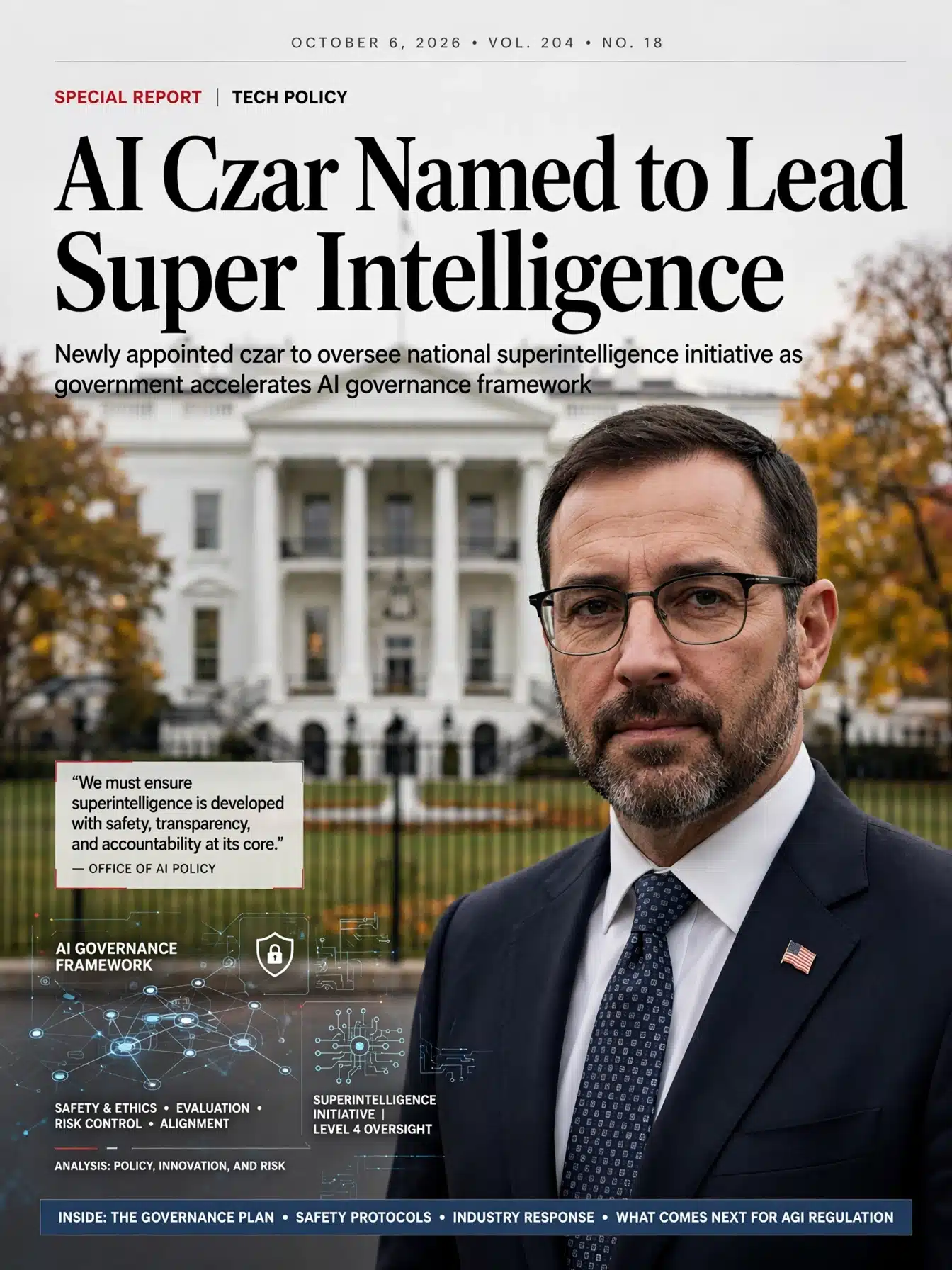
OpenAI’s newest model is available to just twenty companies. Anthropic’s top cybersecurity system is used by about 100 organizations, and none of them learned about it through a public announcement. Instead, access is decided privately in Washington, with each decision coming from Commerce Secretary Howard Lutnick.
This setup may soon change. Officials are close to finishing the White House AI standards for 2026, which aim to replace the current case-by-case approach with a clear, repeatable process. OpenAI, Anthropic, and Google have been negotiating the voluntary AI model release framework for weeks, and sources say an announcement could come soon. For an industry that has spent months guessing Washington’s intentions, a published standard would finally provide some clarity.
Why Washington Wants a Formal Rulebook
For most of 2026, US AI governance has been made up as it goes. President Trump’s June 2 executive order allowed federal agencies to review advanced models for up to 30 days before release, but it did not specify who would receive early access or how companies could qualify. This has resulted in a series of one-off negotiations instead of a steady policy. OpenAI’s GPT-5.6 was released to just 20 vetted partners after the administration requested a delay to the public launch. Anthropic’s Mythos 5, its strongest cybersecurity model, was taken offline on June 12 due to national security concerns, then returned less than three weeks later for about 100 approved critical-infrastructure organizations, including some Fortune 500 companies.
Neither company received a formal set of rules. Instead, they got a letter.
This variation has frustrated both advocates and opponents of the administration. Dean Ball, who co-wrote the first AI Action Plan, said federal policy shifted from “implausibly libertarian to increasingly draconian and opaque” in just a few weeks. Lawmakers have made similar objections, arguing that appointees are choosing winners and losers without a published standard anyone can point to. A durable follow-through on Trump’s AI executive order, translated into an actual operating framework, would answer that criticism directly.
The Shape of the Emerging Framework
The OpenAI Anthropic government framework now taking shape is being built jointly by the Center for AI Standards and Innovation together with the National Security Agency, according to sources close to the talks. Technical teams from the main labs have met with officials nearly every day this week, focusing on two main questions: how long the review period should be, and what qualifies a model as “frontier.”
These two questions are more important than they seem. If “frontier” is defined narrowly, only the most advanced systems would need to review, and smaller updates could launch as usual. If the definition is broad, many more releases would face a 30-day review, slowing down companies that rely on speed. Negotiators also plan to set clear US AI model benchmarks for security, so labs know exactly what they need to pass. Once a model meets that standard, it should get broader access than the current 20- or 100-partner limits, without further private negotiations.
What Changes for the Labs
For a reader trying to make sense of the US White House voluntary AI model release standards announcement in July 2026 explained in plain terms, the shift is really about predictability. Right now, a company finishes training a powerful model and then waits to learn, on a case-by-case basis, whether the government will let it ship. Under a published framework, the same company would know the review window, the benchmark it needs to clear, and the trusted partner process in advance. That does not guarantee faster releases. It guarantees releases that follow a known set of frontier AI release rules rather than a private phone call.
Anthropic has publicly backed this approach. After the Mythos 5 incident, the company said it was “continuing to work with the government to expand access” and also called for a standard protocol to avoid another shutdown like the one in June. OpenAI has said its 20-partner limit for GPT-5.6 is only temporary, not a long-term plan. Google, which has faced fewer restrictions than the other two, has also joined the technical discussions, showing that the new rules are meant for the whole industry, not just one company.
An Investor and Enterprise Lens
What White House AI voluntary standards mean for OpenAI, Anthropic, and Google in 2026 is also a question enterprise buyers and investors are asking with increasing urgency. Companies building on frontier models have had no way to predict when a partner’s access might be granted, narrowed, or revoked entirely, as Anthropic’s customers learned when Mythos 5 access disappeared with roughly 90 minutes of notice. A published framework would give procurement teams and portfolio managers a fixed reference point: a known review period, a known benchmark standard, and a known process for expanding access once a model clears government scrutiny. That kind of clarity tends to matter as much to a chief information security officer weighing a multi-year contract as it does to an analyst pricing regulatory risk into an AI-adjacent stock.
Still, the core tension in the policy remains. Shorter review periods foster innovation and speed, while longer ones encourage caution, especially for models with cybersecurity features like Mythos 5. That model had already found a 27-year-old bug in OpenBSD and a 16-year-old flaw in FFmpeg before its access was paused. The new framework will not remove this trade-off, but it will make clear where the line is and how often it might change.
What to Watch Next
If the standards are released as expected next week, the main question will be whether the new framework truly replaces the current case-by-case restrictions or just incorporates another layer of review. Companies on today’s limited-access lists will pay close attention to details on review timelines and the frontier threshold. Labs that adjust quickly to a set process, rather than ongoing negotiations, will likely lead to AI deployment for the rest of 2026.
Source: US in talks with AI companies for voluntary model standards, FT reports