






Washington, D.C.
West Texas Intermediate dropped below $68 a barrel this week, surprising many in the energy trading world who thought prices would stay higher after the recent conflict in the Strait of Hormuz. This price shift says more about the current state of the Iran nuclear talks pause than any official statement from Doha. The markets are acting as if a deal is likely, even though nothing has been signed yet. They seem to believe that the week of quiet between Washington and Tehran is just a pause, not the end of negotiations.
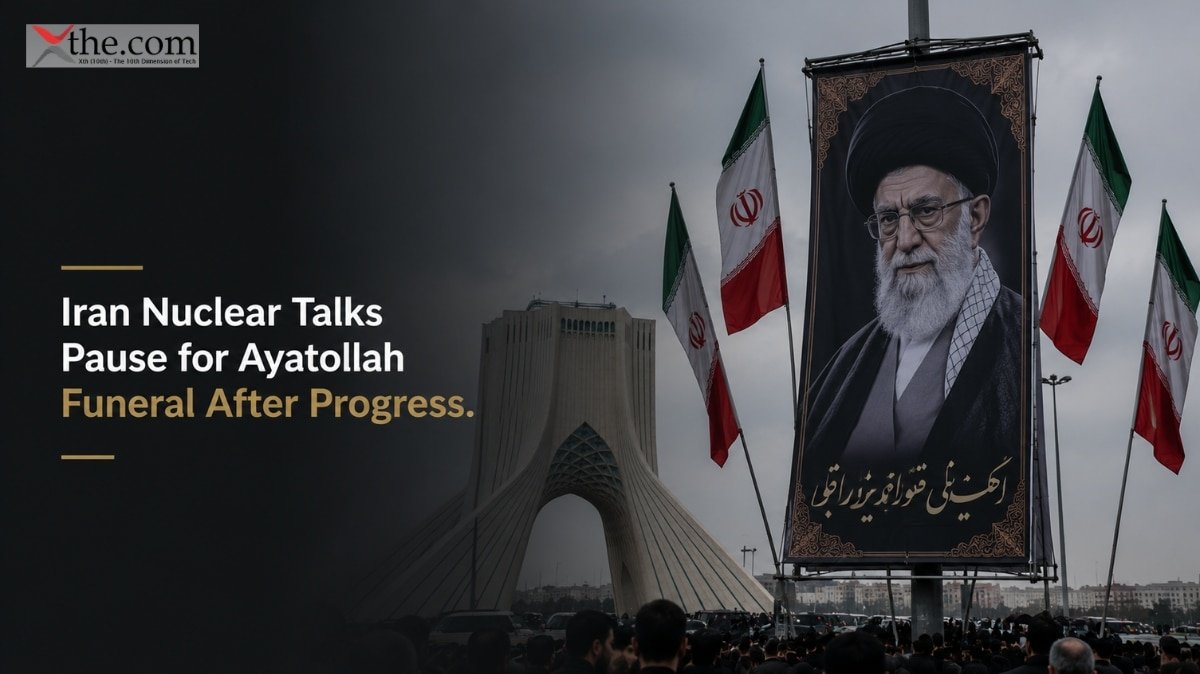
This week, negotiators left Qatar without reaching an agreement, but not because talks broke down. Iran’s supreme leader, Ayatollah Ali Khamenei, is being buried in a six-day funeral across several cities, with officials expecting up to 20 million mourners. Given these events, it was not realistic to continue technical talks. Both sides agreed to take a formal break, which analysts are now calling the Ayatollah funeral negotiations window.
Trump Iran Denuclearization Efforts Survive the Interruption
President Trump told reporters this week that “the denuclearization of Iran is moving along well,” a comment that landed with more weight than its offhand delivery suggested. It came just a day before both sides confirmed the Iran nuclear talks pause, which suggests the White House wanted the record to show forward motion before the mourning period began. Qatari and Pakistani mediators agreed, saying that positive steps were made this week and that the next round of talks will be scheduled as soon as the funeral events end on July 9.
It’s important to note that the progress made was more limited than some headlines suggested. Most of Wednesday’s talks focused on commercial shipping through the Strait of Hormuz and unfreezing about six billion dollars in Iranian assets, not the nuclear issue itself. Vice President JD Vance acknowledged as much, telling reporters the nuclear question would be addressed later rather than in this round. Still, the two governments agreed to establish a communication channel to flag potential violations of their memorandum of understanding during the pause, a small mechanical step that nonetheless signals that both sides expect the framework to remain in place when talks resume. The wider arc of Trump Iran denuclearization rhetoric has stayed consistent for months: Washington wants a verifiable end to Iran’s weapons ambitions, and Tehran has agreed to this in principle, though details are still being worked out.
Steve Witkoff Iran Diplomacy and the Doha Backdrop
Much of the connective tissue behind this week’s movement runs through Steve Witkoff Iran diplomacy, along with senior adviser Jared Kushner. Neither of them met directly with Iranian officials; instead, lower-level officials handled the technical talks through Qatari and Pakistani intermediaries. However, Witkoff and Kushner met separately with Qatar’s prime minister and emir. A senior administration official described these meetings as very positive, and they seem to have set the mood for the wider progress in the US-Iran Doha talks progress that both governments highlighted this week. This approach has been consistent since the memorandum of understanding was signed on June 17: senior American envoys manage the overall diplomatic strategy, while career negotiators handle particular matters such as asset releases and shipping rules in the Persian Gulf.
None of these changes the fact that Iran’s chief negotiator this week called on citizens to turn out en masse for funeral events to avenge Khamenei’s killing, rhetoric that sits uneasily alongside talk of a durable ceasefire. Diplomacy and domestic political theater are running on separate tracks in Tehran right now, and investors watching the oil tape will need to get comfortable with that contradiction persisting for weeks, if not months. Khamenei’s death was never in question for the market; the fact that Iran’s supreme leader killed in a February strike could still be dictating negotiating dynamics five months later says something about how slowly institutional transitions move inside the Islamic Republic.
What the Timeline Tells Investors
Anyone searching for expressions like “US Iran nuclear talks pause ayatollah funeral one week break ceasefire progress July 2026” is really looking for indications about market timing. A one-week break is something traders can handle. Oil prices moving back toward pre-war levels show that the market expects the current framework to survive Iran’s leadership change. The bigger question is what happens after July 9, when Khamenei’s son and likely successor, Mojtaba, may appear publicly for the first time in his new role. How he responds to the American negotiating position, which has not yet been tested, could have a greater impact on oil prices in the third quarter than anything discussed in Doha this week.
Oil Markets and the Inflation Calculus
Crude oil prices have dropped more than 30% from their wartime highs above $90, with West Texas Intermediate now around $67 to $68 a barrel as tanker traffic through the Strait of Hormuz returns to normal levels. Saudi Arabia’s exports are back to about 90% of their pre-outage level, and the UAE says it has fully restored output, with some oil now moving through overland pipelines rather than the strait. Federal Reserve Chair Kevin Warsh has said this price drop is helping to reduce inflation risk, since lower energy prices ease pressure on consumer gas bills and the overall cost structure that was driving inflation earlier this year. That’s why many trading desks are now framing the question as “What Iran supreme leader death means for US nuclear negotiations and oil prices in July 2026?” Political and economic stories have now become one.
Every basis point of the US-Iran ceasefire July 2026 arrangement now carries an implicit price tag in the oil futures prices. Traders are not just reacting to news from Doha; they are considering the chances that the ceasefire will last through the funeral period and beyond, and weighing that against the risk that a leadership gap in Tehran could lead to a tougher stance after the mourning ends.
Reading the Framework’s Durability
The memorandum of understanding signed last month gives both sides 60 days to reach a final agreement, with the option to extend if both agree. Former Navy Vice Admiral Robert Murrett expects there will be extensions, no matter how this week’s talks ended. This is a realistic starting point. Washington and Tehran have met twice since the ceasefire, once directly and once indirectly, and the fact that Iran’s leadership change has not stopped the process is important. It shows that both sides have enough momentum to keep talks going beyond any single meeting.
For portfolio managers and executives watching energy markets for the rest of the year, the key thing to watch is not the funeral itself. Instead, they should look at whether the new communication channel between the two sides is actually used, and whether talks resume on time after the mourning period ends on July 9. If talks restart smoothly, it would support the market’s belief that the conflict is ending for good. But if there are delays or problems, it will be the first real sign of whether Mojtaba Khamenei plans to handle Iran’s foreign policy differently from his father.