





Austin, Texas | July 3, 2026
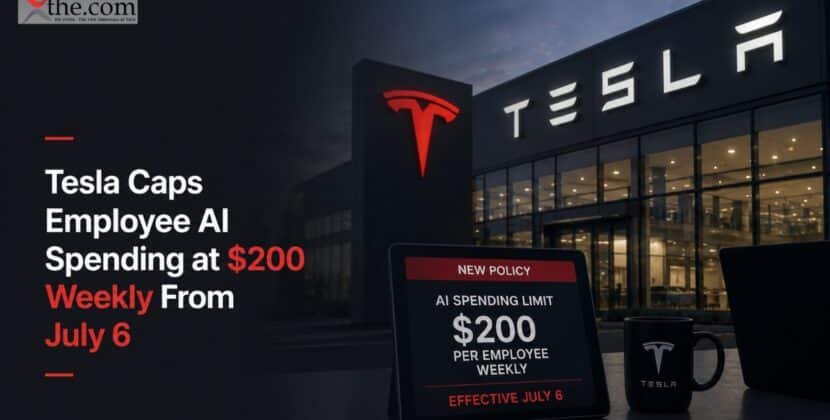
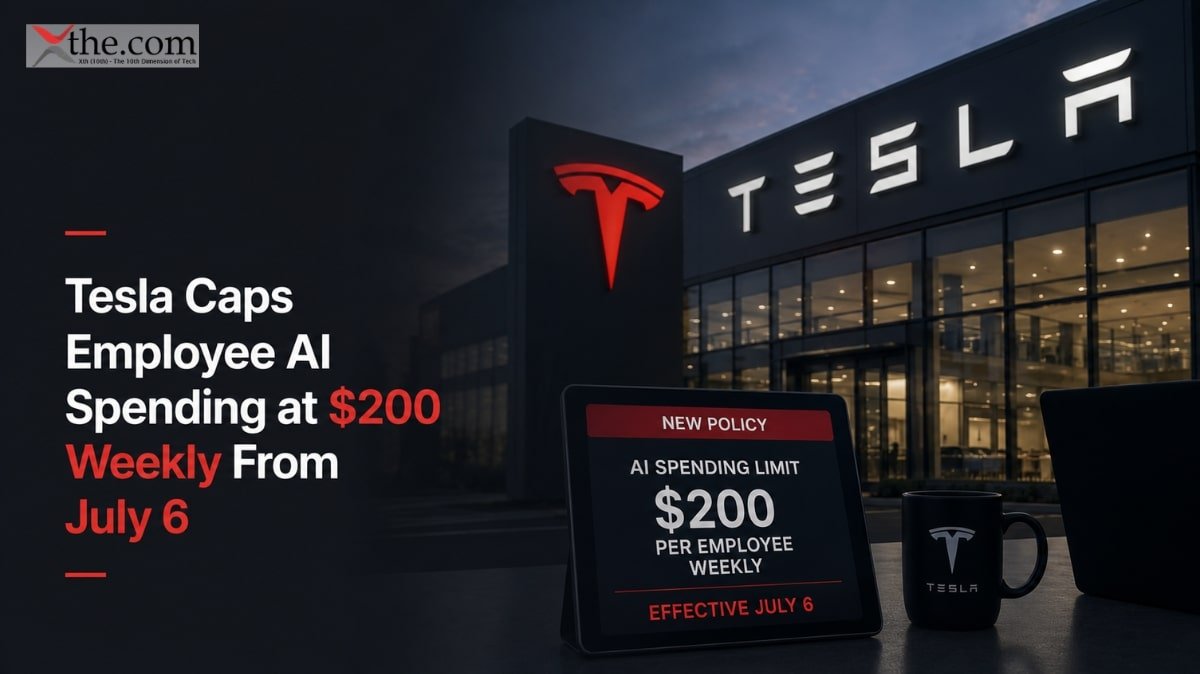
Some Tesla engineers were burning through thousands of dollars in AI tokens every single week. Starting July 6, that era ends. Tesla has told staff in an internal memo that it will impose a Tesla AI spending cap on individual employees, and the fine print reveals more about corporate power than corporate thrift. The Tesla employee AI limit sets a $200-per-week ceiling on third-party tools, but a carve-out for xAI, the AI venture run by Tesla CEO Elon Musk, ensures one company’s products remain unaffected by the new math.
The Mechanics Behind the Tesla $200 Weekly AI Cap July 6
The policy was first reported by The Information and confirmed by Electrek. Now, any Tesla employee who wants to spend more than $200 a week on outside AI tools must get approval by a manager. This limit amounts to about $10,400 per worker per year, which is still generous by most corporate standards. The rule is clearly meant to apply only to tools Tesla does not own.
There is a reason for the new rule. In the past six months, Tesla leaders have tried to consolidate all employee AI use into a single system by creating a platform called Bottle Rocket. This gave staff access to models from OpenAI, Anthropic, xAI, and Cursor, even unreleased ones. Some teams even made dashboards to rank employees by how many tokens they used, hoping to encourage more use. The plan worked, maybe too well. Software engineers were frequently spending thousands of dollars on tokens each week. What started as encouragement quickly became a spending problem, so Tesla sent the memo last month to control costs.
The Tesla xAI Exemption Nobody Missed
Buried inside the memo is the detail every outlet zeroed in on: the cap explicitly excludes beta versions of xAI products. That is the Tesla xAI exemption, and it matters because xAI is Musk’s own company, which makes the Grok chatbot and the Composer coding tool. Employees can use Grok’s beta releases without any spending limit, but if they want to use OpenAI’s or Anthropic’s tools, they face the $200 cap and need manager approval.
For months, Musk has encouraged Tesla staff to use products connected to his other businesses. After xAI started working with Cursor’s parent company, Anysphere, in April, Musk emailed everyone at Tesla to try Composer. SpaceX is now said to be buying Anysphere in an all-stock deal worth $60 billion, expected to close this quarter. Tesla engineers were among the first to test new versions of Grok and Composer, with xAI’s product lead running review meetings in Tesla’s Teams channels.
But the exemption has not solved the problem. Despite efforts to promote Grok, four people familiar with its use say it remains unpopular among Tesla staff, who often prefer Anthropic’s Claude. Tesla’s product history may explain why. When Grok was first added to Tesla vehicles, it reportedly failed to connect to key car functions. Musk later admitted xAI was “not built right,” just weeks after Tesla invested $2 billion in the startup.
Why Every Major Employer Is Suddenly Rationing AI
Tesla is not alone in this. It is just the latest name on a growing list. Uber AI budget exhausted April describes exactly what happened at the ride-hailing giant, which burned through its entire 2026 AI budget in four months after encouraging staff to use the technology as much as they wanted. Uber then set a cap of $1,500 per employee per month. This is about seven and a half times Tesla’s weekly limit when compared on a monthly basis, but the reason is the same: encourage use, see costs rise quickly, then set a limit.
This trend goes beyond ride-hailing companies. Meta Amazon AI spending limits now sit alongside Tesla’s and Uber’s in the same conversation. Meta has begun reining in staff spending for outside AI tools. Amazon removed a leaderboard that ranked workers by AI use after some employees tried to cheat the system. Walmart has set its own caps or encouraged staff to use cheaper models. AT&T has begun limiting some employees’ access to Microsoft’s GitHub Copilot. These changes do not mean companies are giving up on AI. Instead, they show that companies are learning how expensive usage-based billing can be when thousands of employees use AI tools many times a day.
The Root of the Corporate AI Cost Crisis 2026
Part of the issue comes from how these tools work. A simple chatbot answers a question and stops, so its cost is easy to predict. But agentic tools repeatedly call the model to complete a task, repeating steps and checking their own work. This has caused some companies’ AI bills to triple, even though the cost of each unit of computing has dropped. No one planned for AI agents to act like interns who charge by the minute. Now, analysts call this the corporate AI cost crisis of 2026, when companies moved from paying every bill without much thought to carefully watching expenses and setting limits per employee.
A new industry has already sprung up to help companies manage these costs. Microsoft and Databricks now offer tools that let companies track and limit employee AI spending in real time. When vendors start selling budget controls rather than just more computing power, it signals where they think the market is headed next.
Capital Spending Tells the Real Story
These changes do not mean Tesla doubts the importance of AI for its future. In fact, the opposite is true. While limiting employee spending, Tesla increased its 2026 capital spending forecast to over $25 billion, almost three times the $8.5 billion spent in 2025. This money is not for employee chatbot subscriptions. It will go toward AI training infrastructure, chip design, the robotaxi network, and the Optimus humanoid robot program. Musk has often said these areas will shape Tesla’s value much more than car sales.
The search phrase “Tesla caps employee AI tool spending $200 per week July 6 2026 xAI Grok exemption explained” is popular for a reason: the exemption changes a simple cost-control memo into a story about company governance. Tesla shareholders have debated for months how much overlap there should be between Musk’s different businesses. This policy quietly strengthens those ties by directing thousands of employees toward a private company he controls, even though many still prefer Anthropic’s tools.
The search phrase “Why Tesla and Uber Meta Amazon are all capping employee AI spending and what it means now” highlights a broader shift in corporate America. Companies are not losing interest in AI. Instead, they are now deciding exactly who benefits from every dollar spent on it. In the next round of earnings calls, watch to see if more employers follow Tesla’s example with weekly spending limits per employee, instead of the wider departmental budgets used in the early days of AI adoption.