






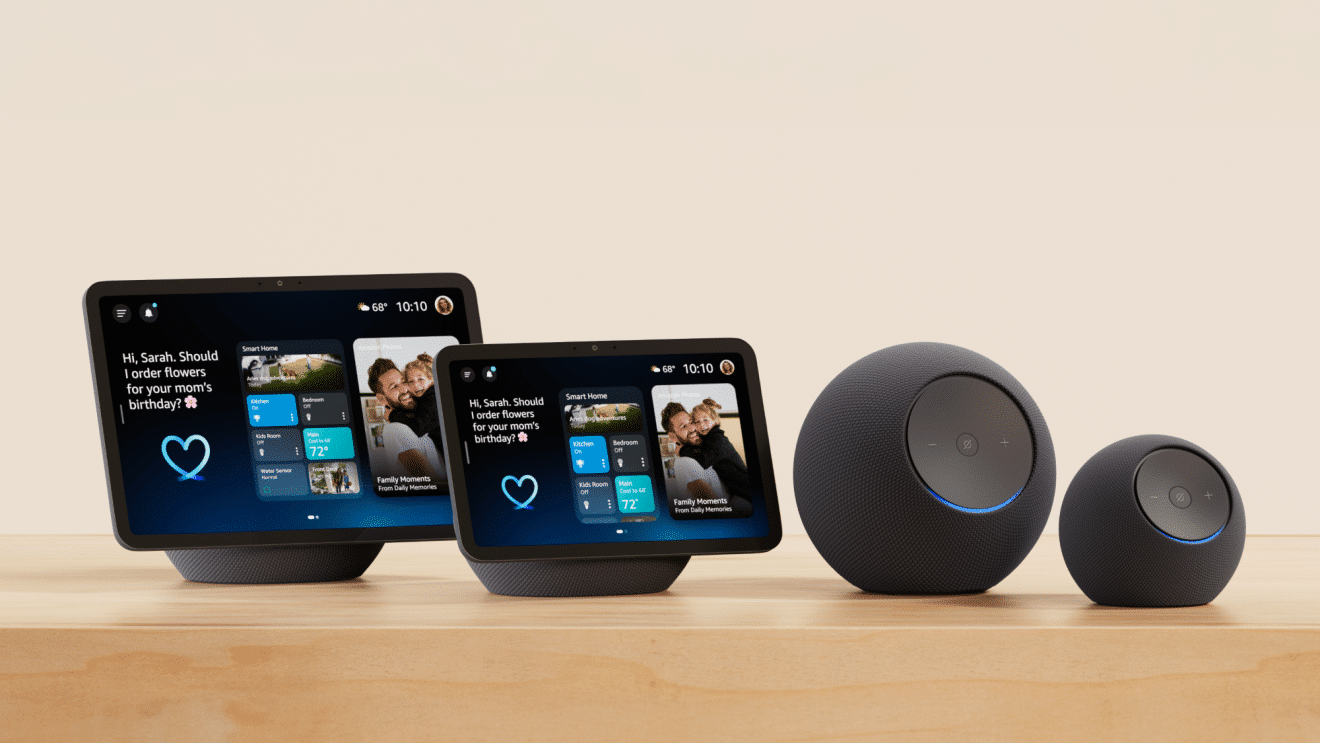
By 2026, smart home ecosystems will advance beyond basic voice commands and scheduling. Amazon’s integration of advanced AI across home devices marks a shift toward ambient intelligence, where technology anticipates and fulfills user needs autonomously. The global deployment of Alexa Plus introduces generative AI capabilities, enabling users to interact naturally and benefit from more sophisticated, proactive automation.
For tech professionals, this shift means smarter models are now built right into our home devices. Whether it is the new Echo Show 21 or the updated Fire TV, the aim is simple. This will make everyday control easier by creating a form that automatically responds to your needs.
The Rise of Alexa Plus and the Generative Home
Alexa Plus is central to this change. After leaving early access in early 2024, it reached almost 97% of Echo devices by mid-2026. Unlike the first Alexa, which used intent matching, responding only to commands that match expected phrases, Alexa Plus runs on a mix of large language models, computer programs trained to understand and generate human-like language, including Amazon’s Nova and Anthropic’s Claude.
This advancement supports what engineers term ‘multi-turn reasoning,’ enabling AI to comprehend and respond to complex, multi-step interactions rather than isolated directives. Instead of issuing specific commands such as “Alexa, set the lights to 50%,” users may request, “Alexa, make the living room resemble a comfortable jazz club.” The AI interprets intent, assesses connected devices, adjusts audio and lighting accordingly, and proposes relevant playlists without predefined routines.
Ambient Experience And Fire TV Evaluation
Entertainment is where these smarter automations are being tested first. The 2026 TV OS update, now available for the Omni Mini LED and Fire TV Stick 4K Max, brings a 30% faster interface and works closely with Alexa Plus.
One highlight is the expected ambient experience. The new Amazon Ember Artline A4K OLED TV with a matte screen uses AI to show artwork that fits your room’s style and lighting. Fire TV also now supports conversational search. You can ask, “Find that movie where the main character goes to Mars, but it turns out to be a dream,” and the system will search among several streaming services to find it.
Proactive Security: Ring and Retinal Vision
Artificial intelligence is also improving residential security systems. The 2026 Ring 4K cameras incorporate retinal vision technology, utilizing AI to evaluate images in a manner analogous to human vision. This innovation yields clearer visuals even under challenging lighting conditions, where traditional sensors are less effective. New features like Search Party on Ring cameras let neighbors join a temporary private network, enabling collaborative searching for a lost pet. The AI analyzes footage from multiple cameras for specific breeds and colors, then generates a heat map pinpointing the pet’s last location. Firewatch, available on compatible Ring and Echo devices, uses AI to detect visible smoke or flames in video feeds, providing early fire alerts ahead of standard heat sensors.cy.
Omnisense And The Hardware Backbone
To keep automation fast, Amazon now uses custom AZ-3 chips, special-purpose processors built by Amazon, and the Omnisense Sensor Platform, a system for detecting motion, presence, and distance, in its latest devices. Omnisense lets products like the Echo Show 11 sense not just movement but also presence and proximity.
When an individual enters a room, the display automatically presents the morning briefing, and as the individual departs, it transitions to a minimalist clock interface to conserve energy. This on-device processing enables core smart home functions, such as switching off lights or securing doors, to operate 40% faster by eliminating reliance on cloud infrastructure. Adopting this local-first model also addresses privacy considerations by ensuring that sensitive interaction data remains within the physical residence.
Matter, Thread, and Interoperability
Smarter automation is only possible if devices can speak the same language. Amazon’s 2026 lineup doubles down on the Matter and Thread standards, acting as a universal translator for the home. The Echo Hub valve-mountable panel now serves as a multi-protocol bridge, letting users integrate third-party devices from Apple, Google, and Samsung into a single cohesive Alexa Plus routine.
The capability to interconnect various devices is integral for predictive automation. If the system detects that blinds remain open or an oven is left on after the user departs, it will proactively inquire whether the user wishes to secure the home, rather than simply issuing a notification.
Conclusion- The Invisible Concierge
As we enter this new era, smart homes are increasingly seen as less like a bunch of gadgets and more like an active part of our lives. Soon, your walls might remember your routines, and your coffee could start brewing when sensors pick up the sound of you waking up. In this future, our homes will quietly organize our daily lives, adjusting light, temperature, and sound to fit our habits. Over time, the technology will fade into the background, leaving us with a space that genuinely understands us.
To upgrade your automation capabilities from standard Alexa routines to Alexa Plus, request a personalized migration guide to facilitate seamless adoption of enhanced multi-device functionality.








