






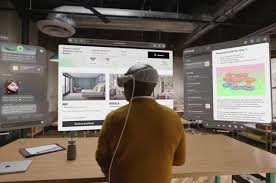
Many stop using immersive systems after a few minutes, not because the visuals are lacking, but because the interactions feel awkward. Air tapping is imprecise, and grabbing virtual objects doesn’t feel real. Apple Vision Pro addresses this. Recent Apple patents show ways to add haptic feedback into spatial computing to create more natural experiences.
The Missing Layer in Spatial Interfaces
Why Touch Still Matters
While visuals have advanced, people still need physical cues when using computers. Touch confirms actions, senses pressure, and guides movement. Without touch, even great systems feel unfinished.
Apple’s patents signal a return to touch in digital spaces. By adding haptic feedback to wearables, Apple aims to give users a physical response when interacting with virtual objects. This could shift how spatial computing handles precise tasks.
Apple Vision Pro and the Evolution of Interaction
Beyond Gesture Control
Today’s gesture controls use cameras and motion tracking. They perform well with simple commands but lack precision on detailed tasks. Selecting a button is easy; adjusting a 3D model is hard.
Apple Vision Pro‘s next version could solve this. Recent patents suggest adding haptic feedback to gestures. For example, turning a virtual dial would produce resistance, adding precision.
This approach blends verbal cues and physical feedback, making interaction intuitive. Users can trust their instincts rather than constantly checking screens.
Haptic Feedback As A Core Layer
Simulating Physical Reality
Haptic feedback in immersive systems isn’t new, but Apple’s approach targets precision and scalability. Instead of simple vibrations, the patents mention feedback matching virtual textures, edges, and forces.
Consider a surgeon practicing a simulation. With advanced haptics, it becomes possible to distinguish between tissue types or sense tool resistance. Such realistic feedback enhances immersive computing.
These features require tight synergy between hardware and software. Sensors detect small movements, and actuators respond instantly, creating real-time feedback.
AR/VR Input Systems and Precision Challenges
Bridging the Gap Between Vision and Action
Modern AR and VR scenes track movement well but lack touch accuracy. Users may miss targets or misjudge distances, especially professionals.
Apps add haptic signals to guide users. A virtual button, for example, could push back as a finger nears, signaling proximity before contact. This speeds up and improves accuracy.
Touch feedback in gesture controls lets AR and VR handle complex tasks. This helps in precision-focused fields like engineering and healthcare.
Enterprise Design Tools and Practical Applications
From Concept to Execution
These innovations aren’t limited to consumers. Enterprise design tools benefit from improved interaction. For example, architects can adjust models more accurately and feel structural limits.
Imagine a product design team working on a prototype. With haptics, they can test how a product feels without physical models, saving time and money, and enabling faster changes.
User-friendly interfaces improve enterprise design tools. Users spend less time on controls and more time achieving results, boosting productivity and cutting training costs.
Apple Patents And Strategic Direction
Building A Cohesive Ecosystem
Apple’s patents reveal plans to unite hardware, software, and user interaction rather than extra Apple treats haptics as essential to immersive computing.
This aligns with Apple’s history of integrating technology through control of devices and interfaces. Apple ensures consistent performance.
A focus on spatial computing signals long-term investment in blended digital-physical worlds. Haptics bridges these, making interactions more natural and effective.
The Competitive Landscape
Differentiation Through Interaction
Other market players have explored haptics, but many remain experimental or limited. Apple stands out for prioritizing usability and integration.
Embedding haptics in Apple Vision Pro creates a unique experience. Users need no extra peripherals or new interaction models. This approach could shape industry trends. As expectations rise, competitors may follow to stay relevant.
Looking Ahead: The Future of Spatial Interfaces
Spatial computing‘s future depends less on visuals and more on user interaction. Apple’s haptics exploration shifts focus to systems that feel as real as they look. Meanwhile, with mature input systems and refined gesture control, tactile feedback will drive the next stage of immersive computing. Enterprises can redesign tools and workflows to align with natural interactions. Meanwhile, success now depends on execution; delivering reliable, high-quality haptics at scale requires advances in hardware, software, and design. If done well, this won’t just enhance systems, but could reshape digital engagement.
Source: PRESS RELEASE Tim Cook to become Apple Executive Chairman John Ternus to become Apple CEO








