






The laboratory at Google’s Sycamore processor facility is no longer just the hum of dilution refrigerators; it is the sound of a structural shift in the physics of information. For decades, the primary problem in commercializing subatomic logic has been decoherence, the tendency of quantum states to collapse at the slightest thermal or electromagnetic touch. In early 2026, Google’s quantum computing efforts reached a pivotal inflection point by demonstrating a sustained reduction in logical error rates even as the physical chip scaled. This breakthrough suggests that we are moving past the era of noisy intermediate-scale quantum devices and toward the first generation of reliable error-corrected machines.
The Engineering of Qubits Stability
The heart of this milestone lies in the precision of qubit special stability, where researchers managed to suppress the noise that typically scrambles calculations. Unlike classical bits, which are either zero or one, qubits exist in a state of superposition. Maintaining this state requires temperatures colder than those of deep space and shielding that pushes the limits of materials science. By implementing a new grid-based architecture for their superconducting circuits, the research team achieved a ten percent improvement in the lifetime of their logical qubits. The progress shows that larger systems can become more stable when the right geometric controls are in place.
This achievement is not merely a laboratory curiosity. It provides the necessary foundation for quantum research to move into complex chemical simulations that were previously impossible. For a pharmaceutical executive or a materials scientist, this means the timeframe for simulating molecular bonds at an atomic level has just contracted. We are seeing the transition from theoretical proofs to the conception of a programmable microscope for the subatomic world.
Implementing Advanced Error Correction Systems
The Achilles’ heel of quantum hardware has always been its fragility. To solve this, Google has deployed sophisticated error correction systems that distribute a single piece of information across multiple physical qubits. This redundancy allows the system to detect and flip a qubit’s state without actually measuring it, which would collapse the calculation. The latest data indicates that for the first time, adding more physical qubits actually reduced the logical error rate, a phenomenon known as crossing the breaking threshold.
- Surface code efficiency: The use of two-dimensional lattices enables the system to isolate errors locally, preventing them from cascading through the processor
- Real-time feedback loops: custom-built classical controllers now process error signals in nanoseconds, adjusting the quantum gates before decoherence can set in
- Thermal management: innovations in cryogenic wiring have reduced heat leakage into the processor, enabling longer gate sequences without a thermal reset.
Managing the Quantum Security Risk
As hardware matures, the conversation in C-suites is rapidly shifting toward quantum security risks. A stable, large-scale quantum machine could crack the RSA and ECC encryption standards that currently protect 95% of global internet traffic. While a cryptographically relevant quantum computer is still years away, the data intercepted today could be decrypted tomorrow. This harvest-now-decrypt-later strategy by adversarial actors makes the current focus on stability a double-edged sword for global finance.
To mitigate this, the focus on post-quantum cryptography (PQC) has intensified. Government agencies and financial institutions are now racing to replace classical algorithms with lattice-based mathematics that are resistant to quantum attacks. This transition is a massive logistical undertaking. It requires updating every digital certificate, VPN gateway, and encrypted database in the corporate estate. Organizations that wait for the first crack to occur will find themselves irrevocably exposed.
The Convergence of Quantum AI and Cloud
The most immediate commercial application of these milestones is the acceleration of quantum AI. By offloading specific linear algebra tasks to a quantum processor, machine learning models can find optimal patterns in massive data sets with far fewer iterations. This hybrid approach, using classical CPUs for data ingestion and quantum units for complex optimization, is the new blueprint for high-performance computing. It turns out that Google quantum computing is not an island, but a specialized accelerator for the existing AI stack.
Integration of these systems into the cloud integration strategy is already underway. Through the Vertex AI and Google Cloud platforms, developers can now access quantum-simulated environments that mirror the behavior of the latest Sycamore chips. This allows firms to write and test their code today, ensuring they are quantum-ready the moment the hardware scales. This cloud integration ensures that the power of subatomic logic remains accessible to more than just a handful of elite physicists.
The Path to Commercial Cloud Quantum
The availability of cloud quantum services represents the final stage of democratizing this technology. By offering access via standard APIs, the barrier to entry for a logistics firm or an energy company drops from $100 million in R&D to a manageable monthly subscription. This as-a-service model is essential for testing quantum advantage, the point where a quantum machine solves a real-world problem faster or cheaper than any classical supercomputer. Google’s quantum computing is positioning its infrastructure as the primary gateway for this transition.
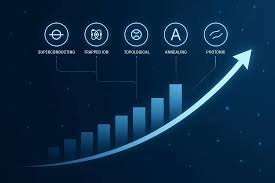
Furthermore, quantum research is increasingly focusing on cross-platform compatibility. As stability improves, the industry is moving toward a standard operating system for quantum gates. This would allow a researcher to write an algorithm once and run it on superconducting, trapped ion, or photonic hardware. This interoperability will be a catalyst for the surge in third-party software development, creating a quantum app store for specialized industrial problems.
The stability milestones achieved this year indicate that the era of quantum theory has officially ended, and the era of quantum engineering has begun. The challenge for the modern executive is no longer understanding the physics, but preparing the organizational infrastructure for the arrival of non-binary logic. As we move toward the late 2020s, the quantum divide will separate those who can simulate reality from those who merely observe it. The focus must now shift toward crypto-agility and the aggressive adoption of hybrid workflows to stay ahead of the coming computational surge.
Source: AI & Machine Learning








