






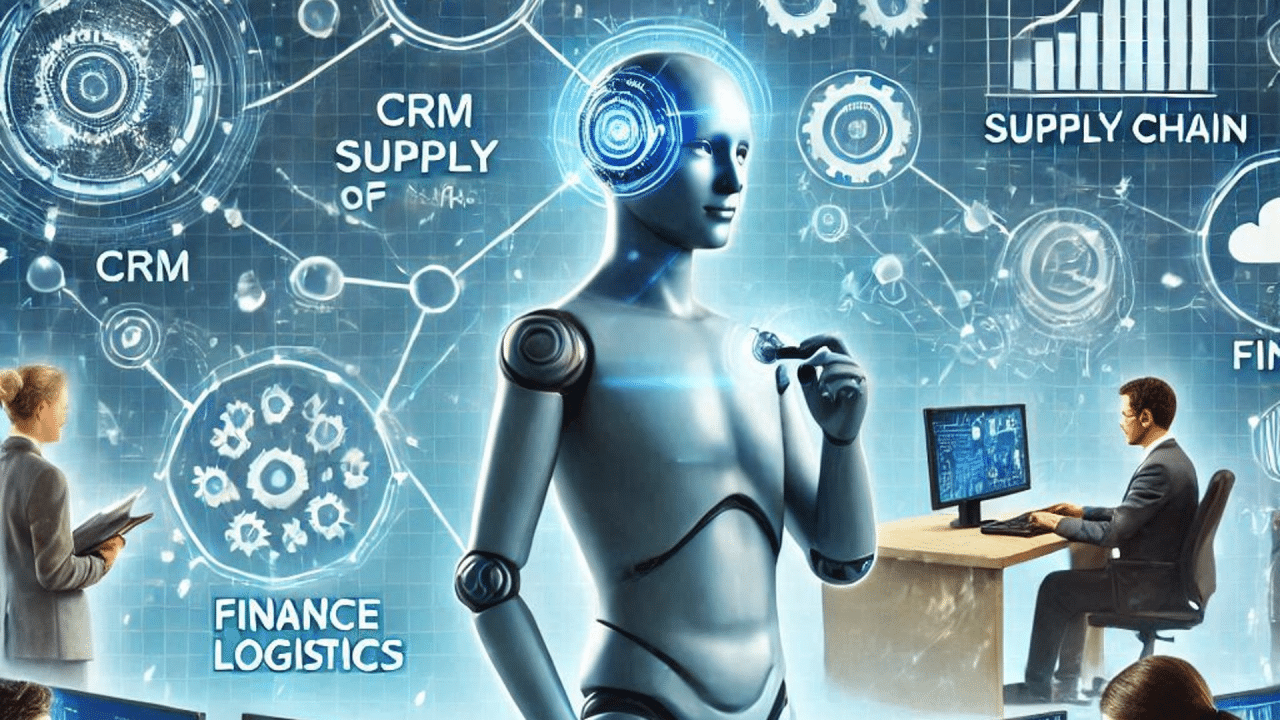
The software-as-a-service model is losing ground as enterprise AI agents begin to connect disparate parts of the workplace. For years, businesses have juggled many subscriptions, with people linking various data sources. Now, this “SaaS fatigue” is leading to a new way of working where self-directed systems handle tasks through various apps. Instead of logging into dashboards and entering data manually, employees are passing complex work to AI agents that run throughout the software stack. This marks the end of the “human-in-the-middle” era and the start of a better-connected, self-managing digital environment.
The Structural Development From Static SaaS To Enterprise AI Agents.
The first step in digital transformation was moving local software to the cloud, fueling SaaS growth. This made software more accessible and enabled data to be dispersed across specialized platforms. Organizations now manage numerous CRM, HR, and marketing tools, but each still requires manual operation tools, not partners. Enterprise AI agents address this by acting as a single intelligence layer above these tools.
AI agent systems go beyond a single interface or limited tasks: they can understand, reason, and act within digital environments to help businesses reach their goals. For example, an agent might find a lead in a CRM, check the contact on a professional network, and write a personalized email. Unlike older software that only responded to direct input, agents now handle workflows independently, so people no longer need to monitor every step.
This shift occurs because much business value is hidden across various applications. Traditional SaaS platforms store data but struggle to share it without complicated integrations. AI agent systems use natural language and APIs to connect tools without custom code, making software more adaptive and flexible. Companies adopting this approach operate leaner and respond faster.
Why Enterprise AI Automation Is Dismantling Subscription Silos
SaaS providers often charge per user and use tactics that trap customers, leading businesses to pay for features they rarely use. Enterprise AI agents shift their focus from user counts to the value of completed tasks. For example, rather than buying 50 marketing tool licenses, a company could employ a single agent for all tasks, reducing subscription hassles and costs.
Enterprise AI automation equips organizations with comprehensive visibility across their software platforms’ capabilities. Traditional SaaS lacks agents that systematically monitor supply chain data points, autonomously manage inventory, and proactively resolve issues in accordance with company protocols. This action-oriented intelligence elevates digital networks into strategic business assets, transcending positive dashboard reporting.
Switching to these systems also resolves the knowledge silo problem common in large organizations. When data is trapped in a single SaaS platform, other departments can’t easily use it. AI agents act as a central source, collecting company-wide information to support decision-making. This ensures that departments share updated data, reducing delays and errors caused by manual syncing and duplicates.
Analyzing Enterprise AI Automation Examples In Modern Logistics
In logistics, those autonomous systems are already making a difference in busy distribution centers. Traditional warehouse management systems require manual assignment of pickup tasks and management of shipping lanes. Modern agentic systems now handle these intralogistics jobs through analyzing live traffic data, weather, and order priorities. They can reroute delivery vehicles in seconds to avoid sudden traffic jams. This is a clear example of how the “software-as-a-tool” model is turning into “software as an operator.”
These systems also manage the procurement cycle by negotiating with suppliers using past prices and current market conditions. An agent can send thousands of RFIs, review responses, and finalize contracts without manually sending emails. This cuts procurement timelines from weeks to hours, enabling faster responses. Human supervisors step in only for final approvals or major disputes, freeing teams to focus on strategic sourcing instead of paperwork.
For quality control, enterprise AI agents use computer vision and sensor analytics not only to observe but also to analyze production-line data for irregularities. When anomalies are detected, agents can diagnose the problem, immediately pause operations, trigger recalibration routines on machinery, and restart the process as soon as tolerances return to normal executing “self-correcting production” to minimize waste and downtime. This deep operational capability bridges digital intelligence and physical systems.
How Enterprises Use AI Agents to Secure the Software Supply Chain
Cybersecurity is another area where the shift from static tools to active agents is accelerating. Traditional security software relies on “signature-driven detection” to detect known threats, but this approach is often too slow to keep up with today’s attacks. Agentic systems use “behavioral analysis” to watch the network for unusual activity that may indicate a zero-day exploit. If an agent detects an unauthorized data transfer, it can quickly isolate the affected server and block the malicious IP address. This “automated containment” happens faster than a human analyst could read the first alert.
Enterprises are also using these attempts to manage “vulnerability remediation” across their entire software stack. An agent can scan the company’s code repositories, identify a vulnerability library, and automatically apply a patch. This reduces the “window of exposure” that attackers commonly exploit between the announcement of a vulnerability and its fix. The agent also tests the patch in a sandbox environment to ensure it doesn’t break any existing functionality. This level of AI in enterprise workflows ensures the organization stays secure without slowing down the development cycle.
Agents are also being used to manage “identity and access governance” for the many human plus machine identities in a company. They can spot “overprivileged accounts” and automatically remove permissions that are no longer needed. This follows the “principle of least privilege” and lowers the risk of internal breaches. By managing their own “identity perimeter,” organizations can grow their workforce without increasing security costs. This gives the company a stronger, more flexible defense that keeps pace with new threats.
Transforming Customer Service through Agentic Systems
Customer service was the primary area for automated communication testing, but early chatbots relied on strict logic, often frustrating users. Enterprise AI agents now use semantic understanding, enabling complex, multi-step conversations. Instead of just linking to FAQs, agents can process refunds or change flights, shifting service from a search to a resolution task.
Organizations are reporting significant improvements in deflection rates as agents excel at managing complex customer inquiries. When issues arise, agents access comprehensive purchase histories to deliver tailored solutions that demonstrate contextual awareness, enhancing the user experience. Escalations become seamless as agents provide full conversation context to human representatives, substantially improving net promoter scores and customer retention.
Beyond just solving problems, agents are now used for “active interaction” to keep customers from leaving. For example, an agent might see that a user hasn’t logged in for a week and send them a personalized video tutorial about a new feature. Agents can also spot upsell opportunities by looking at how customers use the product and suggesting better plans. This “customer success autonomy” helps businesses keep more customers with a smaller support team. It turns customer service from a “cost center” into a “revenue-generating engine.”
Leveraging SaaS Platforms in HR and Talent Management.
Human resources often suffers from administrative friction. Tasks like onboarding and performance reviews leave teams with spreadsheet overload. Enterprise AI agents are replacing legacy HR SaaS by automating the entire recruitment-to-retirement process—screening resumes, scheduling interviews, and even conducting initial behavioral assessments. This frees talent teams to focus on high-touch recruiting for senior roles.
Embrace the self-service journey by leveraging the autonomous assistant for onboarding. Ensure all new hires use this agent to receive hardware, access software, and complete training promptly. Encourage employees to ask the system questions about policies and benefits, reducing HR’s burden. Let the digital mentor provide every new team member with a consistent, high-quality experience wherever they are. Start empowering a stronger company culture in today’s highly remote and hybrid work environments. Take the next step now.
In “performance management,” agents now receive “continuous feedback,” rather than waiting for yearly reviews. They can track an employee’s work throughout different projects and provide real-time coaching for improvement. This analytics-based method removes the manager bias that can affect traditional reviews. It provides a clearer, more objective view of an employee’s value. By automating “career development”, companies can boost worker satisfaction and reduce turnover.
Optimizing AI Enterprise Workflows in Finance Functions
Financial departments are usually cautious, but they are starting to use agentic systems to manage “accounts payable and receivable”. An agent can automatically match invoices with purchase orders and make payments without human help. If there’s a problem, the agent can contact the vendor directly to fix it. This “zero-touch accounting” model reduces errors and helps the company secure early payment discounts. It lets the financial team focus on “financial planning and analysis” instead of data entry.
Agents are also used for “real-time audit and compliance” across all financial transactions. They can spot ‘anomalous spending patterns’ that may signal fraud or a policy violation. Instead of waiting for quarterly audits, companies now have “constant supervision” of their finances. This ‘proactive compliance’ lowers the risk of fines and makes the organization more transparent. It gives the ‘chief financial officer’ a real-time view of cash flow and liabilities.
In “treasury management”, agents are optimizing the company’s “currency exposure” and investments. They can move funds between accounts and currencies to take advantage of interest rate changes. This “automated cash management” keeps the company’s capital working efficiently. By letting agents handle these “macro adjustments,” the treasury team can focus on “macroeconomic strategy.” This leads to a stronger, more profitable financial operation that can withstand global market ups and downs.
The Technical Foundation Of Enterprise AI Agents
For these systems to work, organizations need to adopt an “API-first architecture” that enables data to flow seamlessly. Traditional “legacy systems” without good connections are the biggest barriers to adopting agentic technology. Many companies are now modernizing the stack to ensure their data is available to autonomous systems. This entails moving from “monolithic applications” to “microservices” that agents can easily manage. This “modular foundation” is needed for any successful enterprise AI automation strategy.
Using “vector databases” and “knowledge graphs” is also key for giving agents the context they need. These tools let the agent see the “relationships between data points,” not just the numbers. For example, an agent can see that a drop in sales in one area is linked to a logistics delay in another. This “contextual intelligence” lets the agent make “higher order decisions” that regular SaaS platforms can’t. It acts as the brain of the autonomous enterprise.
Security and “data privacy” needed to be built into the system from the start. Since agents have wide access to sensitive data, they must work in a secure execution environment. This often means using confidential computing to protect the agency’s logic and data from external threats. Organizations also need to set up “fine-grained permissions” to control what an agent can and cannot do. This “governed autonomy” is key to building trust between people and these systems.
Preparing The Workforce For The Agentic Shift
Moving from SaaS to agents will mean a big “reskilling” effort for the workforce. Employees who now focus on “interface management” will need to learn how to become “agent orchestrators.” This means learning to set “outcome-based prompts” and manage the “feedback loops” that guide agent behavior. The job of the future is less about “operating the software” and more about “directing the intelligence.” This shift needs changes in both mindset and technical skills.
Managers also need to adjust to leading a “mixed workforce” of people and agents. They must learn how to assign tasks to the right “type of labor” based on speed, accuracy, and cost. This “hybrid leadership” model means understanding what independent systems can and can’t do. It also means focusing on “human-centric value,” so employees feel encouraged and empowered by technology. The most successful organizations will see agents as “force multipliers”for their teams.
Finally, businesses need to build a “culture of experimentation” to find the best ways to use AI agents in their field. The agentic landscape is changing so fast that there’s no “standard playbook” for success. Companies should run “pilot programs” and learn from both wins and mistakes. This “iterative approach” is the only way to remain ahead in a market that’s being disrupted. The aim is to create an “adaptive organization” that can thrive as technology continues to change.
The Critical Imperative Of Agentic Systems
Businesses that stick with traditional SaaS models should face more stock “operational drive.” Managing hundreds of disconnected platforms will become a real disadvantage. Enterprise AI agents offer a way to a more streamlined, efficient, and smart future. This isn’t simply a tech upgrade. It’s a “fundamental reimagining” of what it means to be a digital business. The “agentic shift” has already started, and the time to prepare is running out.
Executive leaders need to make the move to enterprise AI agents a key part of their “strategic roadmap.” This means setting aside budget and talent to build “agentic capability” in every business unit. It also means focusing on “data quality” and “model governance” to keep systems reliable and fair. The companies that lead this change will shape the next era of industry. Those who wait will struggle to catch up in a world where software already runs itself.
The Unseen Architecture of the Future Enterprise.
As digital systems become more reliable, we are seeing the rise of the “self-operating company”. Workplaces are becoming more dynamic, with technology quietly working alongside business needs. Soon, old software dashboards will look outdated, replaced by seamless integrations. Over time, the line between software and business will fade, creating a single unified system that operates seamlessly and effectively.
In the future, much of our work may be managed by reliable automated machines that help us reach our goals. Our business environment is becoming increasingly responsive and constantly ready to assist. Clear, logical systems will make the enterprise more transparent and productive. We are building a realm where technology keeps pace with human thinking.
The Unseen Architecture of Perpetual Time
The result of this shift to emphasize AI agents is the creation of the “autonomous corporation.” In this world, system errors are fixed before they become problems. Machines manage themselves, providing steady, reliable service. Outages will be rare, replaced by continuous, uninterrupted operations. The goal of the “agentic shift” is an organization that is always active, always improving, and always ready to serve its customers. The future will not just be automated. It will be supported by many smart, dependable systems.








