





Palo Alto, California
A law firm partner in Chicago recently discovered that every question her team entered into a popular cloud-based AI assistant was being logged, analyzed, and possibly used to train external models. Her clients’ confidential merger details were no longer private. Instead of panicking, her IT department ordered the HP ZGX Nano G1n.
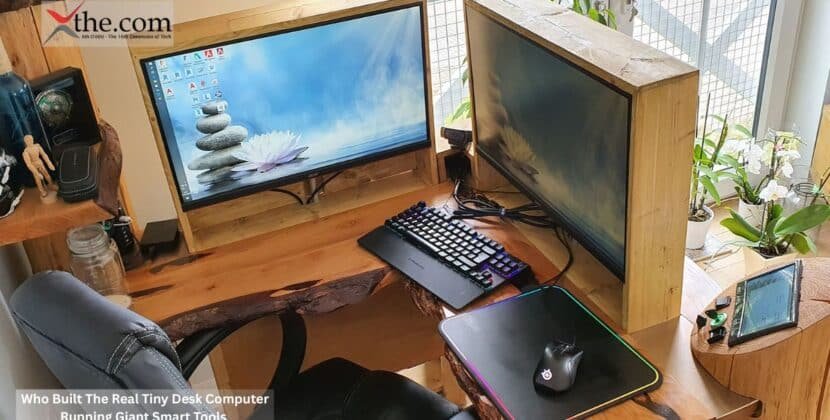
The Tiny Desk Computer, capable of running giant smart tools without touching the public internet, is no longer a theoretical ask. HP has built it, Nvidia has powered it, and enterprises are quietly lining up.
What the HP ZGX Nano G1n Actually Is
The HP ZGX Nano G1n is just 150mm by 150mm by 51mm, making it smaller than a hardback book. It fits next to a keyboard, runs on a single USB-C cable, and doesn’t require anything from a corporate data center. Its small size is intentional. This machine is designed to blend in.
Inside, it uses the Nvidia GB10 Blackwell Grace Superchip and 128GB of unified LPDDR5x memory, offering up to 1,000 TOPS of FP4 AI performance. Just five years ago, this kind of computing power needed a whole server rack. Now, it fits under your monitor.
HP’s main design choice is to use 20 Arm v8 cores—10 Cortex-X925 and 10 Cortex-A725—along with 48 Blackwell Shader Modules, all sharing the same memory. There’s no separate GPU memory bus to slow things down, and no PCIe bottleneck. The Nvidia GB10 Blackwell chip allows the CPU and GPU memory to be treated as a single resource, which is exactly the design required for local LLM processing of large-parameter models.
The Storage Architecture That Makes It Enterprise-Ready
Hardware engineers will spot the storage choice immediately. HP ships the HP ZGX Nano mini workstation hardware specifications manual with either a 2TB or 4TB PCIe Gen5 NVMe SED OPAL Value TLC M.2 SSD as the standard drive. SED OPAL, which stands for Self-Encrypting Drive with the Open Platform Alliance specification, means the encryption engine is built into the drive controller. There’s no need for a software key manager or OS-level BitLocker.Data is encrypted as soon as it’s written.
With the OPAL standard, an Authorization Key unlocks the Drive Encryption Key when the machine powers on. Without the right credentials, the drive stays locked and its contents remain encrypted. For developers who take their machines to client sites or leave them in open offices, this is a real security feature rather than a mere formality.
HP has gone further with security than most competitors in the DGX Spark category. The ZGX Nano G1n includes TPM 2.0 in FIPS 140-2 mode, Common Criteria EAL4+ certification, and SED OPAL storage. This level of security is enough to pass procurement reviews in regulated markets such as healthcare, defense contracting, and financial services.
Edge Station Architecture: Why the Network Ports Matter
Most articles about this machine focus on the Nvidia GB10 Blackwell chip and overlook the networking features. That’s a big oversight.
The HP ZGX Nano G1n comes with two 200GbE QSFP112 ports powered by a ConnectX-7 NIC, plus a 10GbE RJ-45 jack. One 200 GbE connection can transfer data at about 25 gigabytes per second. This means two ZGX Nano units can share model weights across their combined 256GB of unified memory with very little delay. According to HP’s datasheet, pairing two units lets you run inference on models up to 405 billion parameters, all within your local setup.
This is what edge station architecture looks like in practice. The machine doesn’t need the cloud for any heavy work. It only uses the cloud for optional model downloads, which can be done once on a secure network and never repeated. A legal team, pharmaceutical researchers, or defense contractors can run a 200-billion-parameter language model on a secure, isolated network, with data stored on encrypted NVMe drives and computation occurring right at the analyst’s desk.
Local LLM Processing and the Real Enterprise Risk Equation
Most cloud AI services used by businesses today don’t handle data in a legal vacuum. Major providers often reserve the right to use submitted data to improve their models unless you pay for enterprise tiers or negotiate opt-outs. Even then, your data travels over the public internet and ends up on third-party infrastructure. For organizations under HIPAA, SOC 2, or export-control rules, this isn’t just a theoretical issue—it’s a real compliance risk.
Running large language models locally on a machine like the HP ZGX Nano G1n eliminates that risk at the hardware level. The model, training data, fine-tuning, and results all stay on the device. HP’s ZGX Toolkit, included for free, offers open-source frameworks, MLflow tracking, and Ollama testing so you can prototype, fine-tune, and run models entirely on the device.
Now, a software developer who wants to fine-tune a 70-billion-parameter coding assistant using private internal documents doesn’t have to choose between powerful features and keeping data confidential.
Who Actually Needs This Tiny Desk Computer Running Giant Smart Tools
HP designed the ZGX Nano G1n primarily for developers, with a focus on standardization and repeatability. It features a GB10 SoC, 128GB of LPDDR5x memory, an M.2 SSD, and a ConnectX-7 NIC, all packed into a case just over one liter in size.
But the HP ZGX Nano mini workstation hardware specifications tell a second story. The chassis is constructed from up to 75% recycled aluminum and 20% recycled steel, and the packaging is up to 93% recycledIt also runs quietly, with noise levels at 22 dBA when idle and just 27.6 dBA under full AI load, so it won’t disturb people in a shared workspace.
This mix of enterprise security, quiet operation, recycled materials, and server-level AI power makes the ZGX Nano G1n ideal for organizations where the IT director, legal team, and sustainability officer must all approve the purchase.
The Shift This Hardware Represents
For the past two years, the main question in enterprise AI has been whether companies can trust public cloud providers with sensitive workloads. But the bigger question, which the HP ZGX Nano G1n answers with real hardware instead of contracts, is whether serious AI computing can be small enough for a desk, secure enough for compliance, and powerful enough to handle important models.
Being able to prototype, fine-tune, and run inference on models with up to 200 billion parameters on a desktop device that delivers 1,000 TOPS shows that the answer is yes. The data center’s hold on serious AI work is ending, one small, recycled machine at a time. These machines are now shipping. The real question is how soon regulated industries will move their most sensitive workloads from the cloud to the desktop.
Source: HP ZGX Nano AI Station