





SAN FRANCISCO, CALIFORNIA —
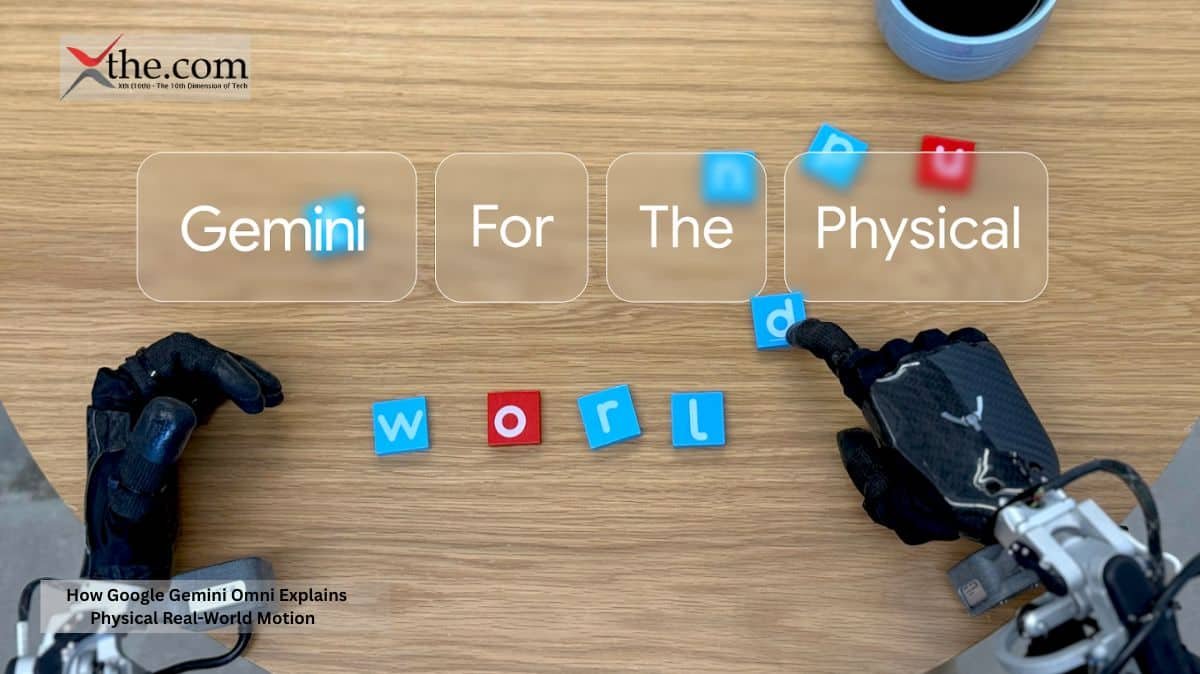
Gemini Omni is not a video generator in the conventional sense; it is a world model, the most technically ambitious multimodal system Google DeepMind has publicly deployed, and it approaches physical video AI from a fundamentally different architectural premise than any generative video tool that preceded it. Initially presented on May 19, 2026, at Google I/O 2026, Gemini Omni uses an intuitive model of gravity, motion, and fluid behavior as part of its content-generation process so that the resulting video-generated content adheres to the same physical rules as real-world video versus simply matching patterns of pixels to create visually plausible results for a limited number of frames before breaking down completely. For video generation tech professionals working on YouTube, developers of classic/stock video content, and enterprise users evaluating video-development tools, the addition of Google Gemini Omni Flash’s global physics model significantly expands the potential for AI-generated video to transition from an interesting showcase to an established creative-application environment.
What the Gemini Omni World Model Architecture Actually Does
Despite most conventional video generators translating text-based prompts into non-contiguous pixel placement, Gemini Omni integrates inputs from multiple media types, including textual prompts, photographic references, videos, and sound recordings. In addition, it has an underlying understanding of basic principles of physics, such as kinetic energy, fluid dynamics, gravity, and the weight of materials. As such, due to their understanding of these concepts and the resulting object(s) created by these forces, the finished products produced by Gemini Omni will exhibit structural realism instead of an appearance of being illusory or warped.
The architectural disconnect between understanding how physical forces behave and simulating how they will manifest visually is the primary issue addressed by the development of an Omni Flash world model of physics. The official public release site for Google’s Omni product states that it offers a significantly superior, intuitive understanding of various forces than existing video creation products and enables users to create more realistic scenes. Evidence of this significant capability enhancement was provided on stage by Demis Hassabis, who claimed that the creation of Omni represents a step towards providing an AGI product. He also stated that Gemini represents a world-model-based form of AI capable of both understanding and recreating the world’s physical characteristics. As such, the way in which Hassabis suggested a change in how technology could be used to represent reality, versus creating entertaining content visually appealing on screens, is not simply intended to be queried as a commercial statement; rather, it is a clear statement of architectural purpose, and the design intent to use Gemini Omni as a physical reality modeling infrastructure will be the basis of how video is produced for many future applications.
Google Flow and the Physics Engine AI for Creative Professionals
The production surface through which Gemini Omni delivers its physics engine AI capability to creators and developers is Google Flow, the dedicated AI filmmaking platform that received substantial updates alongside the Omni Flash launch at Google I/O 2026. The Google Flow platform received additional updates alongside Omni Flash, including a Flow Agent for brainstorming and batch generation, a custom Tools feature for shareable no-code workflows, and Flow Music support for full music video creation and style transformation.
The conversational editing architecture that Google Flow enables through Gemini Omni is the most operationally significant capability for YouTube creator tech professionals who previously spent hours iterating on video edits through separate tools and re-rendering. Gemini Omni gives creators an easier way to edit video with natural language, where every instruction builds on the last, characters stay consistent, the physics hold up, and the scene remembers what came before, allowing a video to become the starting point for something that could never have been filmed conventionally.
The World Model Foundation enables consistent video across multiple edits during a conversation, allowing users to change the background and lighting. The model uses reasoning to completely re-evaluate the physical environment rather than simply layering on top of it. For tech professionals creating videos for YouTube, shadows, reflections, and other material interactions are adjusted to the new lighting conditions in post-production, rather than producing visual artifacts like typical compositing does when physical consistency is not modeled from first principles.
Physical Video AI Availability and the YouTube Creator Ecosystem
The Gemini Omni Flash was the first Gemini Omni product released, launching on May 19 in India. The Gemini Omni Flash was made available to everyone for free through Google Apps, but you can subscribe ($7.99/month) to gain access to the Google AI Plus program and Gemini Omni Flash. This decision to make Gemini Omni available through YouTube’s creation surfaces is a strategic initiative by Google to redefine how videos are created, using physical video AI technology as the new baseline for content creation on YouTube, without requiring expensive professional production equipment.
The broader video generation competitive context clarifies the significance of that distribution choice. Google positions Gemini Omni as filling gaps left by tools like OpenAI’s Sora while competing with ByteDance’s Seedance series, with the model accepting combinations of text, images up to five or more references, audio, and existing video clips and the key differentiator being that generative video output looks good for the first second and then falls apart when objects move naturally or scenes need logical continuity, which Omni is specifically designed to reduce.
Every output of the Gemini Omni includes a watermarked SynthID embedded in the file, intended to authenticate its contents, given the level of authenticity required to create realistic videos at scale. The watermark created during the production of the video via Google’s SynthID system is not a logo or a removable metadata tag; it’s built directly into the video’s pixels at the time of production and is not visually detectable to human eyes but is detectable by Google’s authentication system. The authentication provided through this non-optimal layer will meet the requirements of any content governance provisionary tools that many enterprise customers may use to deploy physical video AI within regulated communications environments.
Conclusion
Gemini Omni has formally advanced physical video AI from pattern-matched visual approximation to world model physics simulation, establishing gravity, fluid dynamics, and kinetic momentum as internal architectural properties rather than emergent statistical patterns derived from training data. Google Flow delivers the conversational editing infrastructure that enables physics engine AI capabilities to reach YouTube creator tech professionals and enterprise video generation teams simultaneously, with free access through YouTube Shorts, ensuring that the production baseline for the world’s largest video platform shifts toward physics-aware generation within the current content cycle. The Google Gemini Omni Flash world model physics architecture that DeepMind CEO Demis Hassabis formally positioned as a step toward artificial general intelligence at Google I/O 2026 represents the most consequential advancement in generative video generation since the category emerged not because it produces better looking output at launch, but because it models the physical world from first principles in a way that every subsequent generation of the Omni family will build upon.
Source: Introducing Gemini Omni