






Boston, MA,
Atomic Answer: IBM has launched the Concert platform at Think 2026, an “agentic operations” cross-cloud hub that correlates security signals across hybrid clouds to neutralize “shadow AI.” By providing system-wide context, Concert allows security teams to govern and audit agentic behavior, preventing unauthorized data exfiltration before it occurs.
Recently, a bank’s security team found that employees had connected three unauthorized AI coding assistants to internal repositories without approval. None of these tools passed compliance tests. One even sent metadata to an external cloud outside of the company’s control. The exposure went unnoticed for six weeks. Incidents like this show why enterprise leaders now see shadow AI risk as an operational threat, not just a policy issue.
In response, the IBM Concert platform aims to bring order to large-scale AI environments by coordinating agentic operations. Its importance in 2026 lies in both timing and technology. Companies no longer deal with a single cloud, a single model provider, or a single security boundary. Instead, they manage complex AI systems across SaaS applications, private infrastructure, edge devices, and regulated data domains.
This complexity leads to blind spots, and IBM designed Concert to address them.
Why Shadow AI Risk Escalated in 2026
Initially, companies adopted AI mainly to boost productivity. Departments rolled out copilots, workflow agents, and automation tools faster than governance teams could keep up. By early 2026, many CIOs realized they did not know how employees were using AI agents throughout the company.
The problem goes beyond just unauthorized chatbot use.
For example, a procurement manager might use a third-party AI tool to summarize sensitive supplier contracts. A developer would add an autonomous debugging agent with high-level system access. A regional operations team might choose AI analytics software that stores regulated customer data in another country.
Each of these situations raises shadow AI risk because the company loses control over data movement, identity management, and audit tracking.
Traditional security tools struggle in this setting because AI agents behave differently from typical enterprise software. They start actions, connect to different systems, and make some decisions on their own. Fixed governance models cannot keep up.
This is where agentic operations become important.
The IBM Concert Platform Pushes AI Governance Into Operations
IBM built the Concert platform to act as an orchestration and visibility layer for complex enterprise environments. Rather than treating AI governance as a quarterly compliance task, Concert embeds oversight into daily operations.
This difference is important.
Most companies already use hybrid environments that mix old infrastructure, public cloud workloads, containerized apps, and edge systems. Security teams often juggle many separate monitoring dashboards. AI systems exacerbate this fragmentation.
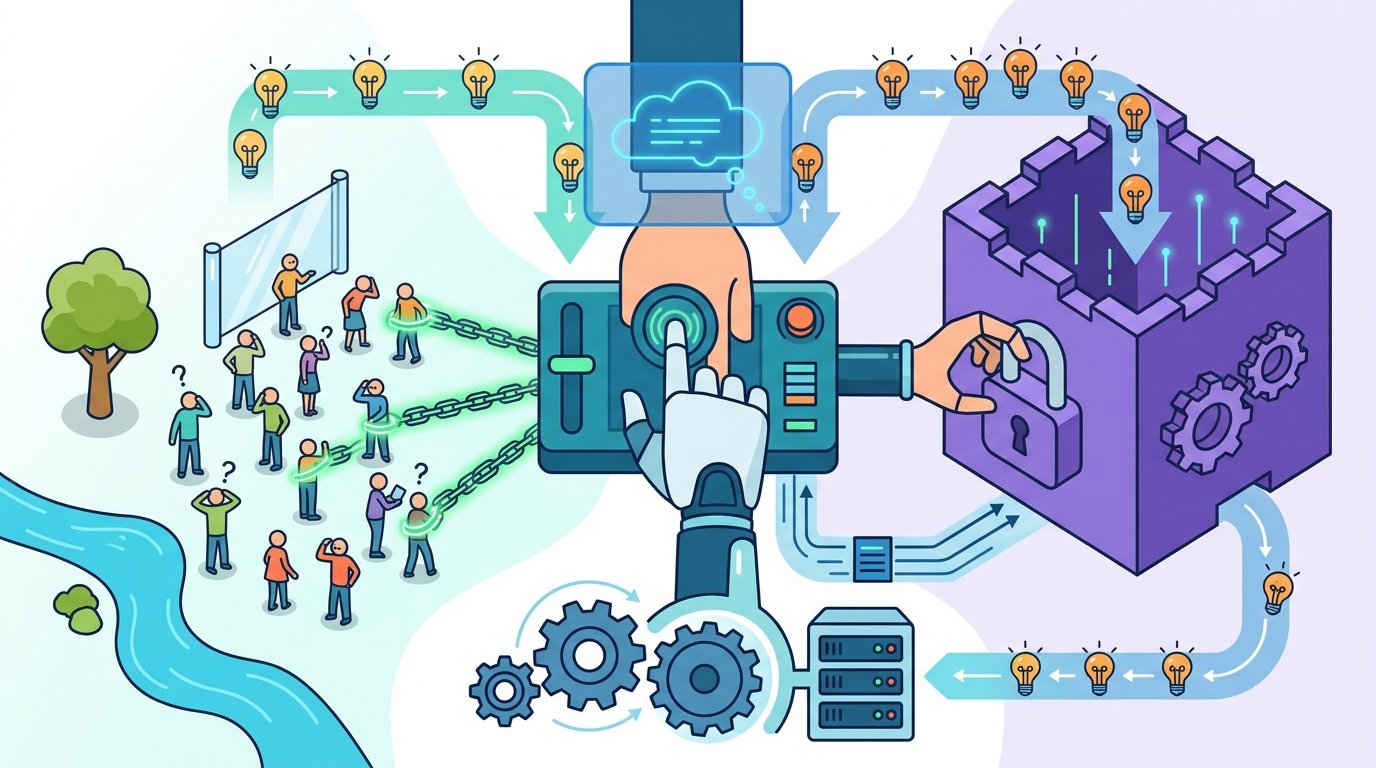
The IBM Concert Agentic Operations Platform for Hybrid Cloud Security in 2026 addresses this by bringing together operational data, AI activity, configuration details, and security events into a single governance system. The goal is more than just monitoring. IBM presents Concert as an active coordinator that can spot problems and start fixes before people need to step in.
For CISOs, this changes how they manage response costs.
How Agentic Operations Change Incident Response
Conventional incident response follows a set pattern. A monitoring tool finds unusual behavior. Analysts check alerts by hand. Teams then isolate the systems, identify the root cause, and work together to fix the problem across groups.
This process takes time. In an AI-related security event, any delay can be expensive.
With agentic operations, AI agents handle operational tasks automatically within set governance rules. If an unauthorized model starts sending sensitive data outside, the system can revoke access, isolate workloads, alert compliance teams, and record the event simultaneously.
This ability strengthens hybrid estate security since most companies no longer rely on a single central infrastructure. A business might run customer workloads on AWS, Azure, private data centers, and sovereign clouds, while also using internal AI agents built by different teams.
Teams composed solely of people cannot monitor every interaction at the scale of a large enterprise. The IBM concept platform aims to address this through contextual automation. Instead of creating thousands of alerts, it focuses on the most important relationships between systems, workloads, identities, and AI agents.
Why AI and Governance Became a Boardroom Issue
Executives are realizing that the use of AI brings governance risks beyond just cybersecurity. Now, regulatory issues, intellectual property leaks, and operational liability are as important as traditional breach concerns.
For example, a healthcare provider using AI scheduling agents must demonstrate that patient data access complies with regulatory requirements. A financial institution using AI trading assistants needs clear oversight of how decisions are made and escalated.
This shift makes AI agent governance a board-level concern, not just an IT management issue.
IBM’s approach matches this change. The IBM Concept platform sees governance as operational coordination across distributed AI systems, not just as a set of restrictions. This view appeals to companies that want to grow their AI use without slowing down innovation.
There is also a workforce challenge behind this strategy.
Security operations centers already struggle with staff shortages. It is hard to hire, keep, and keep experienced analysts. As a result, companies rely more on automated incident resolution to reduce fatigue and maintain consistent responses.
Concert’s value directly addresses this pressure.
The Business Impact Of Automated Incident Resolution
Automation by itself does not ensure resilience. If automation is poorly designed, it can make problems worse. The key is having automation that is aware of governance needs.
The IBM Concert platform includes automated incident resolution as part of the larger operational picture, not simply as separate rules. If an AI agent behaves strangely, the platform checks workload sensitivity, user privileges, data location policies, and infrastructure links before starting a fix.
This layered decision-making is important for global companies operating under different, and sometimes conflicting, regulations.
It is also important for financial reasons.
Downtime caused by AI-related disruptions incurs real costs. For example, a logistics company that uses AI for supply chain management cannot afford long service interruptions caused by unauthorized AI tools or unmanaged systems.
This is why discussions about the IBM Concert Agentic Operations platform for hybrid cloud security in 2026 are focusing more on keeping operations running smoothly than on meeting security rules.
The next stage of enterprise AI competition will probably depend less on how many AI agents a company uses and more on how well they are governed. Companies that combine fast innovation with strong oversight will have an edge. IBM seems to be positioning Concert for this environment, where AI governance and enterprise resilience go hand in hand.
Executive Procurement Checklist:
- IBM launched Concert to detect and control shadow AI activity across hybrid cloud environments.
- Enterprises now view Shadow AI risk as a major operational and compliance challenge.
- Agentic Operations help automate incident response and reduce security delays.
- IBM Concert improves hybrid estate security through centralized governance and visibility.
- Automated incident resolution helps enterprises strengthen AI governance and operational resilience.
Source: IBM announcements at Think 2026 to advance the agentic era








