






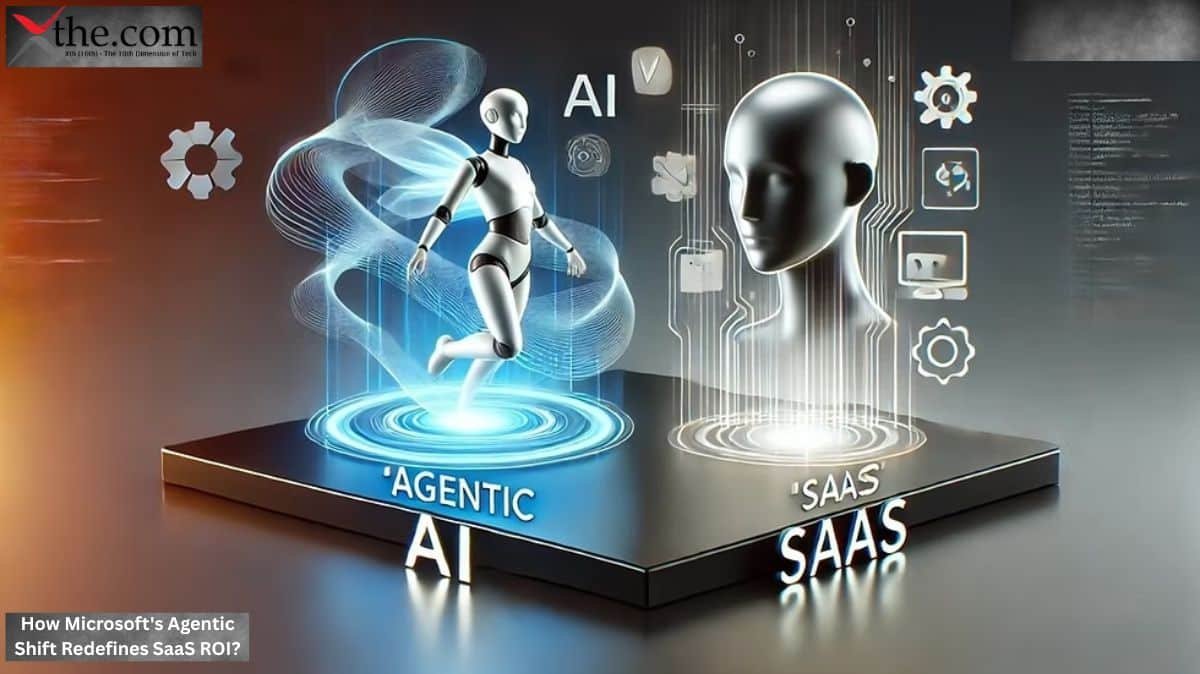
Redmond, Wash., Microsoft (MSFT) is signaling a shift from AI assistant to agent-first software architectures, prioritizing agents that interact with systems rather than humans. This technical transition requires enterprises to move away from manual dashboards toward autonomous reasoning loops that operate at machine speed, fundamentally altering the ROI calculation for SaaS engagements.
A Fortune 500 retailer banked almost $40 million to bring together SaaS subscriptions for HR, logistics, and finance. A year later, leaders found that employees were still copying data back and forth between dashboards. The company had more software, but productivity stayed the same. The gap is why boardrooms now focus less on software licenses and more on measurable enterprise AI ROI.
Microsoft believes the next step for enterprise technology goes beyond just cloud software. Now, the company is focusing on AI agents that handle tasks, manage workflows, and work with little human oversight. With programs like Microsoft for Startups, Azure AI Services, and Copilot, Microsoft aims to make agent-driven infrastructure the core of enterprise operations, not just an extra productivity tool.
This shift affects more than just buying software. Companies are starting to examine how autonomous decision-making affects staffing costs, IT budgets, and who is responsible for operations.
Microsoft’s Agentic Model Moves Beyond Traditional SaaS
Traditional SaaS platforms used dashboards and workflows to organize work, but employees still made most decisions themselves. Microsoft’s new approach introduces AI agents that can handle procurement approvals, customer issues, compliance checks, and reporting without constant human involvement.
This change relies on agentic data clouds, which enable AI systems to access enterprise data in real time rather than storing data in separate databases for each app. Microsoft’s setup connects intelligence layers across Azure, Dynamics 365, Microsoft Fabric, and Copilot Studio.
This new structure changes the way companies measure enterprise AI ROI. Leaders now look at how quickly tasks get done, how much operations improve, and how accurate decisions are, instead of counting user or app usage.
For example, a logistics company could cut freight planning time from six hours to just fifteen minutes if AI agents handle inventory forecasts, shipping schedules, and supplier updates automatically. The real savings come not from swapping out software, but from removing the need for people to coordinate these tasks by hand.
Why Workflow Automation Alone No Longer Satisfies CIOs
For years, companies have spent heavily on robotic process automation and low-code tools. These help with repetitive tasks, but they struggle with unclear situations. AI agents work differently. They understand context, learn from experience, and adjust workflows as needed.
That evolution has accelerated demand for advanced workflow orchestration systems.
Microsoft’s ecosystem now includes orchestration layers that can assign tasks to AI agents, employees, APIs, and databases simultaneously. Instead of fixed process chains, companies are building flexible systems that can adapt as needed.
A healthcare provider shows how this works in practice. An AI agent reviewing insurance claims might spot missing documents, request additional records, flag suspicious patterns for compliance, and automatically alert billing teams. The workflow changes based on each claim’s details.
This type of orchestration directly affects how companies think about staffing. Instead of asking how many employees software can help, they now ask how many bottlenecks autonomous systems can remove.
That question sits at the center of Microsoft 2026 enterprise trends for AI agent procurement discussions now happening across enterprise IT leadership teams.
The Economic Argument Behind Autonomous Enterprise Systems
In the past, adopting AI in enterprises often ran into a major problem: the cost of implementing it exceeded the benefits. AI pilot projects got attention but rarely delivered results that could scale.
Microsoft’s new approach addresses this issue more effectively by integrating infrastructure, data management, and AI systems. The goal is for companies to use AI agents without having to build their whole IT setup.
This is important because the costs and benefits of AI deployment economies are closely watched.
Executives now want clear financial results before approving major AI investments. They need proof that AI agents make operations smoother, not more complicated.
Microsoft’s all-in-one ecosystem makes its case stronger. Azure handles infrastructure, Fabric manages data pipelines, Copilot provides conversational tools, and Power Platform enables customization. Working together, these systems lower system integration costs that previously made enterprise AI expensive.
Startups in the Microsoft for Startups program see even bigger benefits. They get access to powerful AI tools without needing large infrastructure teams. This helps them compete with bigger companies while keeping their operations lean.
So the discussion about enterprise AI ROI is now more about just cutting costs. It’s also about making decisions faster, being more flexible, and growing revenue.
IT Modernization Is Becoming an AI Governance Issue
Many companies still use old, disconnected systems built up over the years. Their ERP platforms, databases, CRM, and compliance tools often don’t work well together. AI agents quickly reveal these gaps.
An autonomous procurement agent can’t work well if supplier data is spread across separate systems with different access rules.
Because of this, IT modernization isn’t just about technology anymore. It’s now also about governance and keeping operators’ operations running smoothly.
Microsoft suggests that companies modernize step by step instead of replacing everything at once. They can add AI services to their current systems and gradually migrate their infrastructure to Azure.
This flexibility is important for industries such as banking, healthcare, and manufacturing, where downtime can lead to significant financial and legal problems.
At the same time, governance becomes more challenging as autonomous systems assume greater responsibility. Companies need to decide who is accountable when AI agents make procurement decisions, approve transactions, or handle customer interactions independently.
These governance questions may shape the next stage of enterprise AI adoption even more than the technology itself.
The Competitive Pressure Facing SaaS Vendors
Microsoft’s strategy is putting pressure on the wider SaaS market. Traditional software companies made money from subscriptions based on human users, but AI agents are changing that model.
If one AI agent can do the work that used to take dozens of employees using different apps, companies may start to wonder why they keep paying for so many SaaS licenses.
That’s why more competitors are updating their products to include built-in AI features and automation tools.
Still, Microsoft has some major advantages. It already owns productivity software, enterprise infrastructure, developer tools, and cloud channels. This mix allows Microsoft to integrate AI agents more deeply within daily business operations.
The growth of agentic data clouds further strengthens Microsoft‘s position, as centralizing data is key to scaling AI. Companies with scattered systems may struggle to achieve real automation results. Meanwhile, the demand for sophisticated workflow orchestration capabilities will continue to grow as organizations attempt to coordinate multiple AI agents across finance, operations, legal, and customer service environments.
This probably won’t mean the end of SaaS. Instead, SaaS will likely become an orchestration layer that intelligent agents manage more and more, rather than people.
Microsoft seems set on leading this shift.
The next two years will show if companies really trust AI systems to run operations. If adoption grows as expected, Microsoft’s 2026 enterprise trends for AI agent procurement could become a major story in corporate tech. Companies that modernize wisely may find that autonomous systems do more than boost efficiency. They could change how businesses use people, money, and their competitive edge.
Checklist of Main Points:
✔ Microsoft shifts from AI assistants to agent-first architectures
✔ Agentic data clouds improve enterprise workflow efficiency
✔ Workflow orchestration reduces operational bottlenecks
✔ Autonomous systems reshape SaaS economics and IT spending
✔ AI governance and IT modernization drive future enterprise strategy
Source: 2026 enterprise trends: What founders should prepare for








