Redmond, Washington —
The introduction of Windows 365 for agents occurs during a critical time in enterprise cybersecurity operations. Firms are increasingly turning to AI agents to perform tasks such as document analysis, customer service, software testing, information retrieval, and the orchestration of their own tasks within the firm.
Unlike ordinary software automation tools, autonomous agents can make independent decisions, run scripts, alter workflows, and interact with the organization’s infrastructure without real-time human control. Autonomous agents pose a challenge for security firms by requiring them to keep track of any activity in the enterprise conducted by autonomous AI.
Security personnel believe that if left unchecked, such agents may attract the attention of hackers seeking to gain access to their network to commit acts such as network movement, credential theft, and data theft.
Microsoft Offers Virtualized Agent Isolation
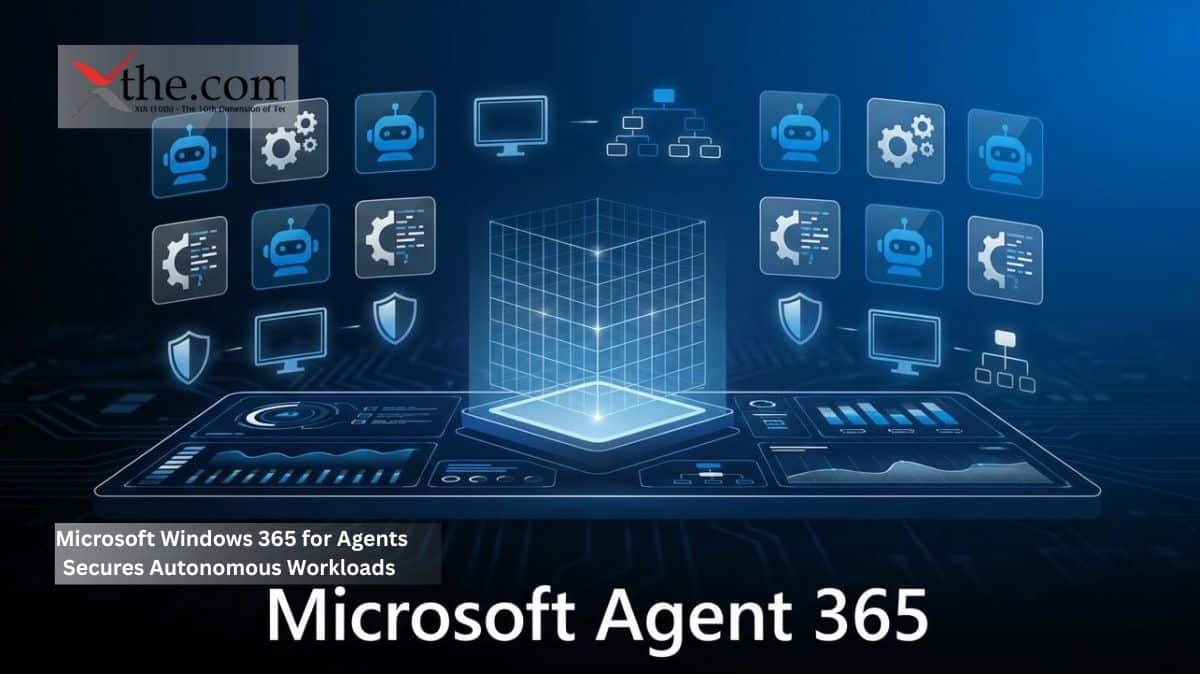
The Microsoft virtualized cloud PC framework aims to leverage virtualized cloud PCs to enable AI agent execution. Rather than letting autonomous software run directly on enterprise servers and employee workstations, Microsoft aims to isolate those processes in secure containers.
Such an approach greatly improves cloud PC agent sandboxing by separating the execution process from the enterprise IT infrastructure. In other words, each AI workload is executed in a limited environment where access to specific files, network connections, and system calls is tightly controlled. This model strongly aligns with Agent 365 cloud PC sandboxing autonomous AI security strategies that focus on limiting operational exposure from AI-driven workloads.
In addition, the company enables enterprise organizations to set policies that limit what agents can access and send outside their virtual environments. Should any agent attempt to access unauthorized data or run unauthorized scripts, Enterprises implementing Windows 365 agent sandboxing data exfiltration prevention policies are expected to gain stronger visibility and tighter governance over autonomous AI activities.
Identity Governance Key to Securing Autonomous AI
The greatest challenge in autonomous AI deployment is identity expansion. Agents need access tokens, app credentials, and permissions to access specific enterprise data. Without control over identity expansion, those privileges could quickly go out of hand.
Advanced policy-based management enables companies to define policies that specify access limitations for agents.
That way, the risk of identity expansion and abuse by agents can be minimized, thereby improving Microsoft 365 security. Rather than treating agents as open automation systems, companies can leverage governed identities with continuous permission oversight.
There are numerous benefits for enterprises when it comes to implementing such an approach:
- Less risk of unauthorized data access
- Greater workload segregation capabilities
- Visibility into agent actions
- Greater governance of AI operations
- Fast response to abnormal agent behavior
- Minimized risk of privilege escalation attacks
The second reference to Microsoft 365 security concerns Microsoft’s strategic move to position identity management as the cornerstone of the enterprise AI security architecture. Microsoft CISO autonomous agent identity token policy frameworks to monitor how AI agents use credentials, tokens, and access permissions.
Data Exfiltration Prevention and Script Abuse
Yet another problem on the horizon for CISOs is that of autonomous agents running infinite loops with unmanaged scripts or sending enterprise information to third parties. Nowadays, AI-driven systems work with cloud storage, company documents, software pipelines, and communication systems.
Without additional protection, compromised agents may end up automating data exfiltration or wasting significant IT resources through uncontrolled script execution.
To address such problems, Microsoft introduces restrictions on organizational policies based on script behavior and execution environments. Agents operating in virtual environments cannot violate these restrictions or run infinite script sequences.
The increased adoption of identity governance policy by organizations across markets is another sign that more businesses are centralizing access management in response to greater AI integration.
Forensic analysis is also easier, as security administrators can observe the entire workflow of AI-based agents through centralized logging and session management platforms.
Cloud PC Agent Sandboxing Redefines How Enterprises Adopt AI
The arrival of enterprise-class virtualization technology for use by AI agents could have a profound impact on how autonomous systems are deployed in the future. Historically, automated software tended to have access to the production environment due to efficiency gains.
However, modern advances in developing AI agents that can make their own decisions and act accordingly have led to significant increases in organizational risks. Enhanced cloud PC agent sandboxing enables enterprises to safely expand their use of AI without risking sensitive systems.
Additionally, enterprises would no longer place an excessive burden on security operations centers to address consequences arising from uncontrolled actions by AI programs.
Organizations operating in industries that handle extremely confidential information should embrace this model in droves.
AI Enterprise Governance Evolves Beyond Infrastructure Needs
As autonomous AI solutions become widely adopted, enterprises have begun to regard AI governance as a comprehensive operational process rather than merely a matter of deploying AI within their infrastructure.
To understand how does Microsoft Windows 365 for Agents isolate autonomous AI software execution inside virtualized cloud PC environments to prevent data privilege escalation in enterprise networks, one should pay attention to recent developments at Microsoft and to how virtualization and identity governance are integrated into the enterprise AI infrastructure.
The second occurrence of autonomous AI orchestration in an enterprise illustrates the deep integration of AI agents into companies’ operational processes. As sensitive activities are automated, the security infrastructure must evolve continuously.
Finally, the third mention of Windows 365 for agents shows how Microsoft aims to create an intermediary layer of operational activities to integrate autonomous AI agents into enterprises.
Conclusion
The emergence of autonomous AI agents is revolutionizing corporate cybersecurity. Old-school security protocols were never built to protect software agents capable of operating independently and making decisions consistently within business organizations.
This new Microsoft framework employs a different approach, relying on virtualization, identity governance, and workload isolation for software deployment. Increasing adoption of Microsoft CISO autonomous agent identity token policy strategies further demonstrates how enterprises are prioritizing identity oversight for AI-driven systems.
As AI agents continue to integrate into business operations, tools such as Microsoft Windows 365 for Agents enterprise AI 2026 may be instrumental in shaping the future of secure computing in business organizations.
Source- Azure AI apps and agents