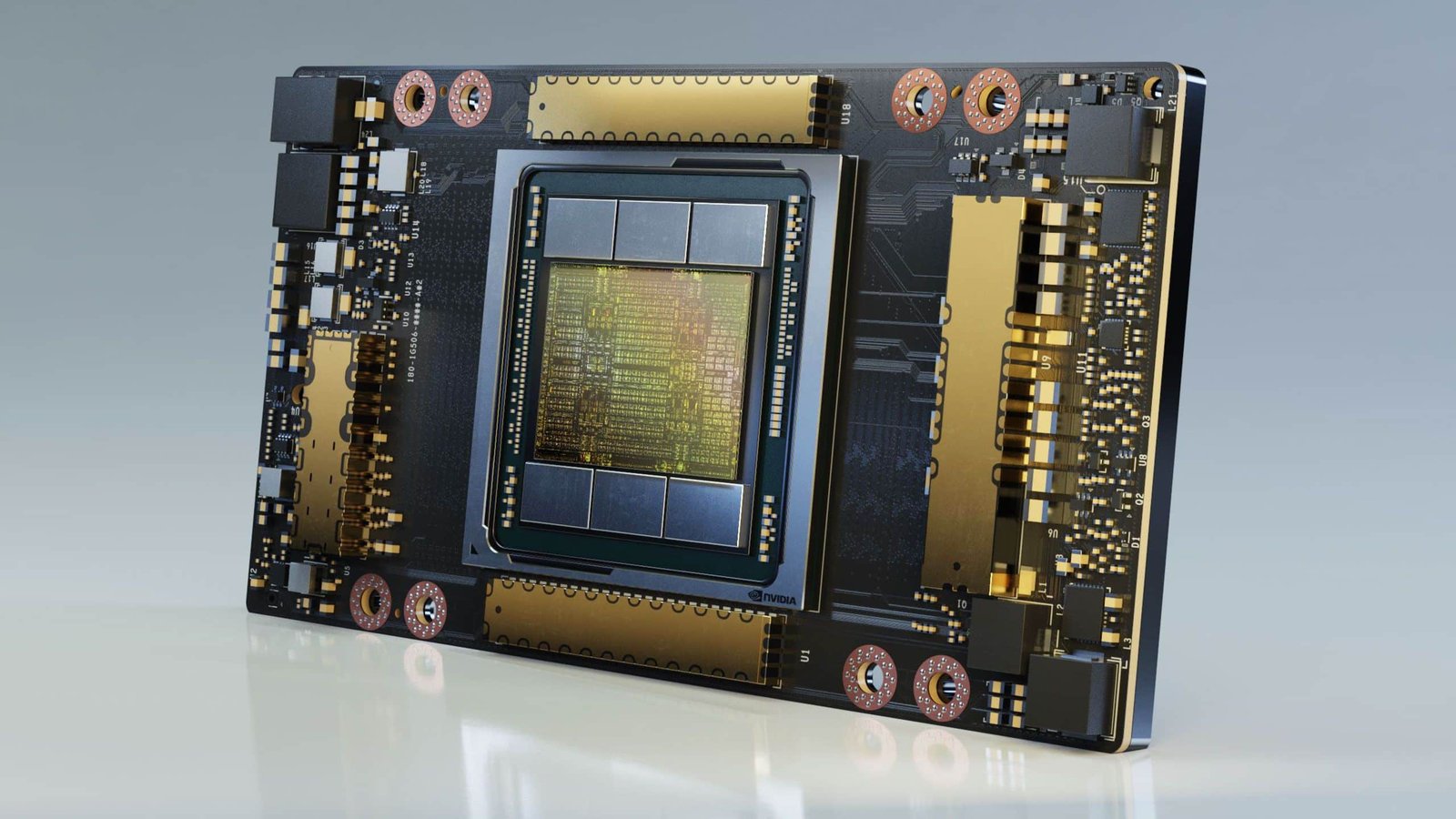
New filings show that Nvidia patents tend to change how digital visual creations and processing are handled. This is not to say that Nvidia is abandoning graphics pipelines, but the company is also developing intelligent systems that generate and improve visuals using machine learning. This change in focus is pushing the development of AI rendering in which images are not just drawn but predicted, refined, and optimized in real time. That results in a new wave of graphics that are faster, more realistic, and optimized for computational use.
What the New Patents Indicate
However, from recent filings, there is a clear direction Nvidia is taking: creating a layered, AI-driven rendering ecosystem tightly integrated with its hardware.
Notable highlights include:
- Neural networks for boosting image quality in real time
- AI-based upscaling and frame generation
- intelligent lighting and texture prediction
- hybrid pipelines with traditional and AI
Those developments show how Nvidia patents are “redefining the boundaries of visual computing”.
From Traditional Graphics to Neural Rendering
For decades, rendering depended on deterministic processes – lighting calculations, texture mapping, and geometric transformations. Though effective, these are computationally expensive and limited in realism.
Nvidia’s approach is a departure from this model. Instead of calculating everything from scratch, the trained neural networks predict how the scene should appear. This has the dual effect of easing computational strain and increasing visual quality standards.
This transformation is central to AI rendering where efficiency and realism are combined. It allows devices to produce quality graphics despite hardware limitations.
Core Technologies Behind Nvidia’s Strategy
These patents point out a few basic innovations that drive this transformation.
- Neural Upscaling -AI models enable higher image resolution without additional rendering power, thereby improving performance in games and applications.
- 2. Frame Generation – Instead of rendering all frames, AI predicts intermediate frames, resulting in a smoother output with less processing power.
- Intelligent Lighting Systems – Machine learning models simulate realistic lighting effects, eliminating the need for elaborate calculations.
- 4. Hybrid Rendering Pipelines -The combination of traditional rendering strategies and AI-enhanced methods guarantees accuracy and efficiency.
These advancements showcase how patents are constructing a full AI-driven graphics stack.
Traditional vs AI-Driven Rendering
To understand the impact, here’s a comparison:
| Processing Method | Rule-based calculations | Neural network predictions |
| Performance | Hardware-intensive | Optimized with AI |
| Visual Quality | High but costly | High with efficiency |
| Scalability | Limited by hardware | Scales with models |
| Real-Time Capability | Challenging | Strongly improved |
This comparison highlights why AI rendering is becoming central to the future of graphics technology.
Impact on Gaming and Simulation
The implications of these innovations in the gaming and simulation industries are of significant concern.
- Gaming- More realistic environments and lighting; Higher frame rates at fewer hardware requirements. More immersive experiences.
- Simulation-For training and research, real-time rendering, enhanced visualization in healthcare, engineering, etc. Testing in virtual environments of varying scale.
The increasing number of Nvidia patents makes it clear that the industries under discussion will be greatly changed in the coming years.
Enterprise and Industrial Applications
Beyond entertainment, Nvidia’s rendering innovations are branching into enterprise use cases.
Core areas include;
- Industrial modeling of digital twins
- AI-powered design and prototyping
- Visualization (Advanced) for data analytics
These applications depend on AI rendering to alleviate the burden of rendering visual elements, making them more accessible and scalable.
Market Signals and Growth Opportunities
Patent activity is typically a leading indicator, and Nvidia’s patents certainly indicate a strategic emphasis on AI-powered graphics. Positions Nvidia as a leader in next-gen rendering. Broadens the relevance of GPUs beyond gaming. Generates new revenues in enterprise markets.
Growth in cloud-based rendering services. Growth of AI-based creative tools. High demand for simulation platforms.
The steady rise in Nvidia patents reflects a long-term vision that goes beyond traditional graphics processing.
Challenges and Limitations
Nevertheless, neural rendering has its challenges;
- High cost of training AI models.
- Dependence on big data.
- Potential artifacts or inaccuracies in generated visuals.
- Integration difficulties with existing systems.
It will be important to address those issues to enable the scalability of AI rendering in industry.
Conclusion
NVIDIA’s latest filings show a significant change in how graphics are made and experienced. By adding AI into every part of the rendering process, the company is changing what visual computing can do. The increasing number of Nvidia patents suggests a future where rendering is quicker, smarter, and more flexible. As AI rendering develops, it will be vital in shaping industries from gaming to industrial simulation. The message is straightforward: rendering is not just about graphics; it’s about intelligence.