




San Francisco, California | July 5, 2026
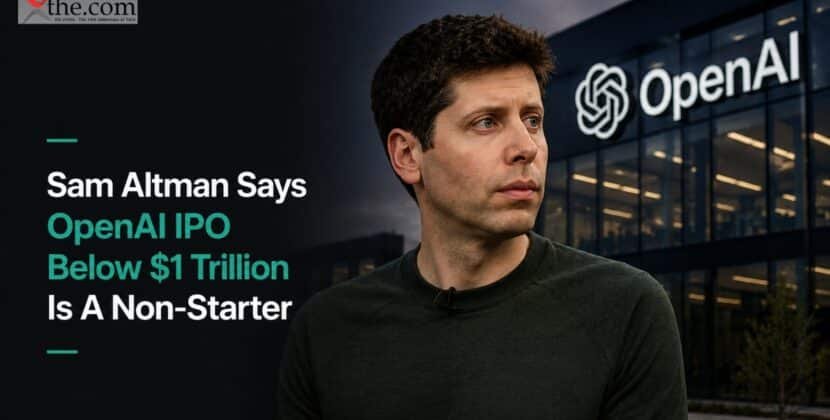
Forty-two point six billion dollars. That is about what a 5% stake in OpenAI would be worth today, and it is also the amount Sam Altman is reportedly asking Washington to accept as a gift. It is an unusual move for a company that has not gone public. But Altman does not do modest asks, and the same appetite for scale is now defining the biggest question looming over the AI industry: OpenAI IPO valuation: $1 trillion, or nothing at all.
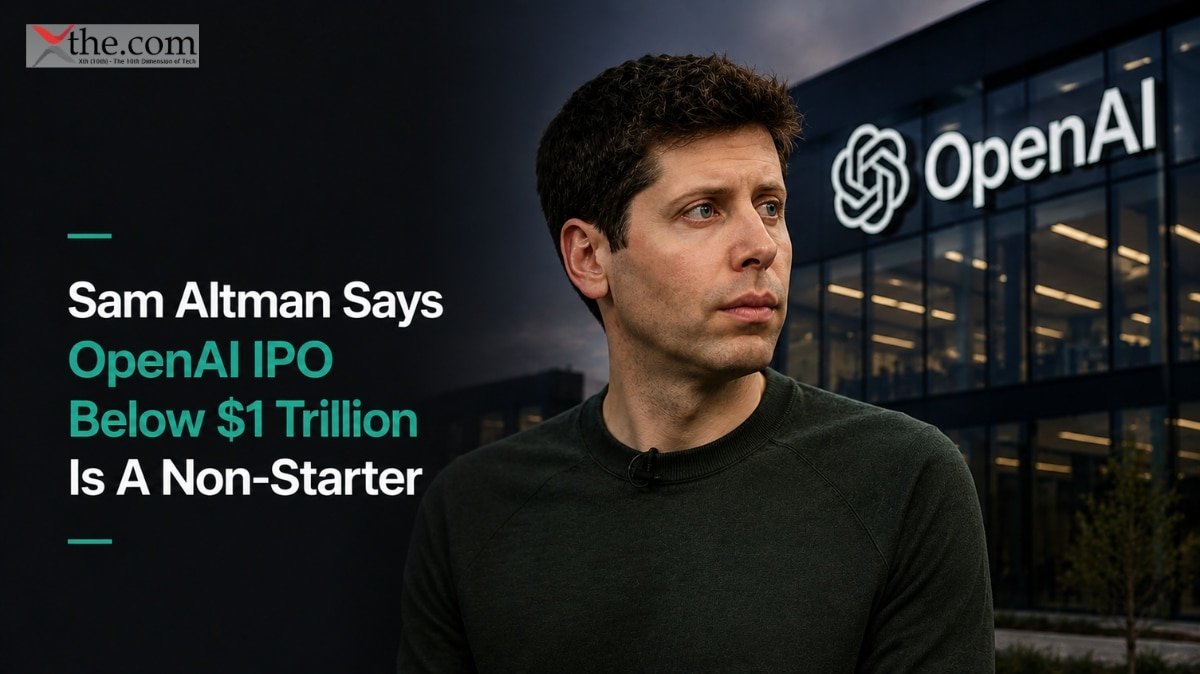
That is not hyperbole. According to the Motley Fool analysis published July 5, Altman has told advisers that any listing priced below the trillion-dollar mark is a Sam Altman IPO nonstarter. The comment reframes an entire IPO calendar built around one man’s refusal to negotiate, and it forces a comparison that most retail investors have not had to make before: OpenAI vs SpaceX IPO positioning, and which of the two AI-adjacent giants actually earns a spot in a long-term portfolio.
Why $1 Trillion Is the Number Altman Won’t Move Off
OpenAI’s most recent private valuation stands at $852 billion, set in March when the company closed a $122 billion funding round co-led by SoftBank, Amazon, and Nvidia. Getting from there to Altman’s floor requires public-market investors to pay a premium of roughly 17% above that private mark on day one of trading. That is the essence of the OpenAI $852 billion valuation IPO premium problem: it is not a small gap to close, and it assumes a level of investor conviction that few technology listings have commanded at this scale.
According to the New York Times, advisers gave Altman two options: accept a lower valuation and go public before the end of 2026, or insist on the $1 trillion mark and wait until next year. Altman chose to wait. This decision has already modified the OpenAI IPO timeline 2027, pushing what was once a late-quarter 2026 target into a window some bankers now see as more likely in spring 2027. Prediction markets on Kalshi currently give a 59% chance of an official IPO announcement by March 2027, rising to 73% by June.
The math behind Sam Altman investor demand is not arbitrary. Reaching $1 trillion would place OpenAI in the same public-market bracket as Nvidia, Microsoft, Apple, and Alphabet the only companies that have sustained that valuation threshold once listed. Altman wants OpenAI’s public debut to announce membership in that club on day one, not to work its way toward it over several quarters. Skeptics, including Bridgewater Associates co-chief investment officer Greg Jensen, have argued the implied 35x revenue multiple prices in a monopoly outcome that has not yet materialized. OpenAI is still burning an estimated $27 billion a year, a detail that tends to get lost in headline valuation figures.
The SpaceX Precedent Cuts Both Ways
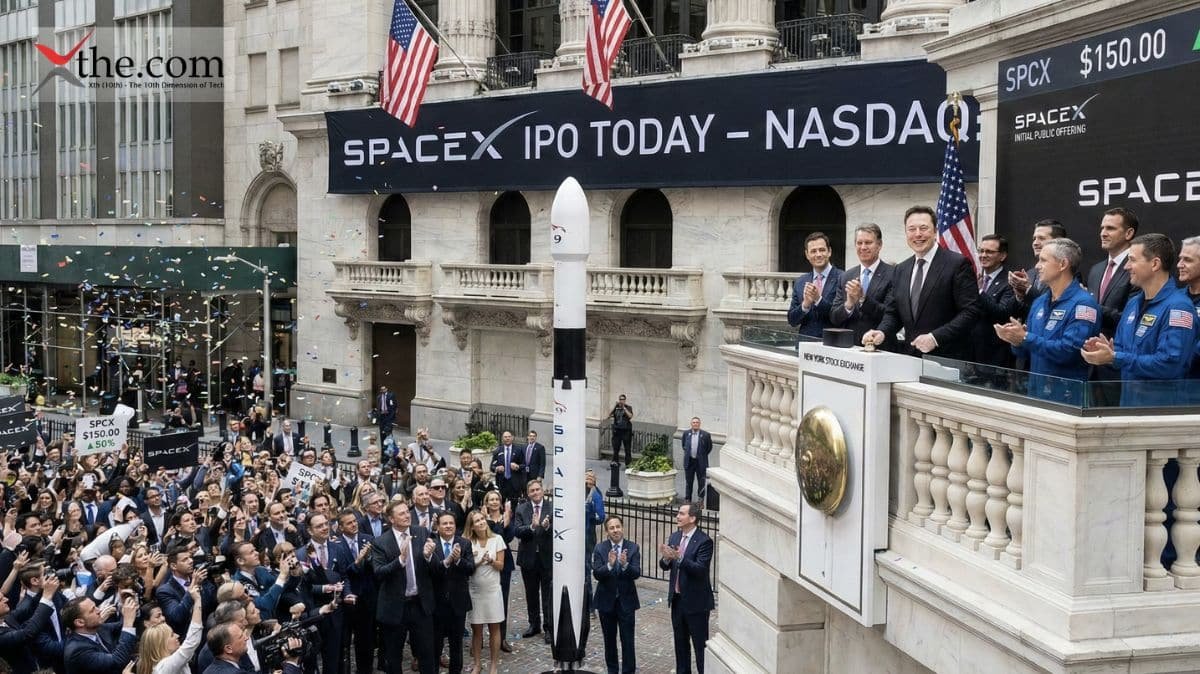
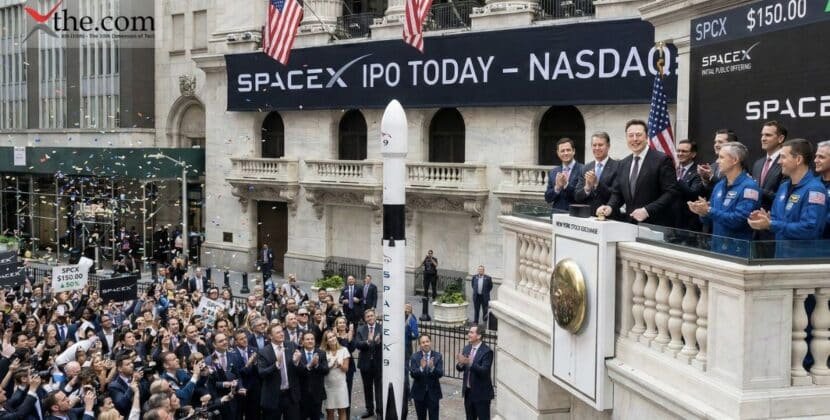
Elon Musk’s SpaceX went public on the Nasdaq on June 12, and at first, the debut seemed to support Altman’s goals. Shares started at about $150 and briefly reached $225, giving SpaceX a market value of around $1.77 trillion—more than twice Altman’s target for OpenAI. But the gains did not last. By late June, SpaceX shares had dropped back to about $153, losing roughly 32% from their peak in less than two weeks.
This volatility is now a key issue for anyone comparing OpenAI vs. SpaceX investor choice. SpaceX offers something OpenAI does not: a stock symbol and immediate trading. However, its share price has already swung sharply, and its business includes a profitable Starlink unit alongside a loss-making xAI division, which made up 76% of its capital spending in early 2026. This mix makes it hard to judge SpaceX’s true value. OpenAI, on the other hand, is not available to retail investors yet. The company filed a draft registration with the SEC on May 22 and made it public on June 9, but CFO Sarah Friar says there is no set timeline for going public.
Indirect Exposure and the Government Wildcard
Investors who do not want to wait can already get indirect exposure to OpenAI through SoftBank, which has invested about $65 billion and owns around 13% of the company. This investment is also volatile: SoftBank’s stock dropped over 12% in Tokyo in a single day after news of the 2027 IPO delay, wiping out about $38 billion in value. SoftBank also has a $40 billion bridge loan linked to its OpenAI investment, due in March 2027, which is close to the expected IPO window.
There is also a proposal that could complicate matters. OpenAI has reportedly offered the U.S. government a 5% equity stake, worth about $42.6 billion at today’s valuation, as part of a plan where other major AI companies would also give similar stakes through a public wealth fund. If this happens, Washington would become OpenAI’s second-largest outside investor after SoftBank, adding political and regulatory challenges that most IPOs do not face. Such a deal would likely require congressional approval, and it is unclear whether other companies like Anthropic, Google, or Meta would agree to similar terms.
Anthropic Changes the Comparison Entirely
Menlo Ventures shows that private AI investments can pay off. The firm invested about $500 million in Anthropic across several funding rounds, and that stake is now worth nearly $14 billion as Anthropic’s valuation has risen above $900 billion. This is important because Anthropic, not OpenAI, is now the most likely AI company to go public soon. Anthropic filed a confidential S-1 on June 1, and its October 2026 IPO target is still on track, even as OpenAI’s timeline has slipped.
Anyone looking up “Sam Altman says OpenAI IPO below $1 trillion valuation is a nonstarter July 2026 explained “should see the SpaceX example as a lesson, not a final answer. SpaceX shows that companies can debut at over a trillion dollars, but they can also lose a third of their value in just two weeks. For those comparing “OpenAI IPO versus SpaceX which is better investment Sam Altman $1 trillion demand July 2026,” the truth is that neither is a straightforward choice right now: SpaceX is public but volatile, while OpenAI is still private, delayed, and involved in a government stake deal with no precedent.
What happens next may not be decided by OpenAI’s boardroom. If Anthropic goes public in October at or above its $965 billion private valuation, it will create a benchmark that OpenAI’s bankers must match or justify in 2027. If Anthropic’s IPO falls short, Altman’s $1 trillion minimum will become harder to defend. Either way, the number Altman insists on is now the standard by which the whole AI IPO market will be measured.