





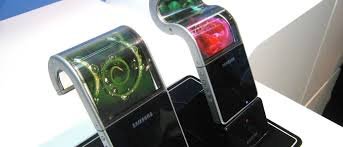
Samsung has recently submitted a patent for new stretchable display technologies that will take smartphones beyond current foldable phones, providing displays that can expand in size without hinge mechanisms or visible defined lines. The proposed design represents a significant milestone in display technology, allowing the size and shape of the device to be changed while preserving a complete image on the display without interruption from one device form to another.
The patent indicates that the proposed structure for the panel would use flexible materials to allow for the expansion of the display when required, thus increasing the total surface area of the display without the use of a folding mechanism, and can help to overcome many of the issues associated with existing folding devices, such as durability from repeated opening and closing of the device and visible folds appearing on the display. The implementation of these technologies will also enable the development of new styles and functions for mobile devices.
Moving Beyond Foldable Technology
Foldable phones have changed how people use their phones by providing larger screens while taking up less space in their pockets. Since these phones generally require hinges and foldable displays, they often face mechanical issues that increase the complexity of how the design can fail.
Samsung’s new display technology creates hingeless displays, enabling seamless transitions between displays of different sizes. Instead of folding, the display will stretch and grow.
This development is creating an entirely different design process for creating flexible displays, using advances in materials science rather than mechanical design.
How Stretchable Displays Work
A flexible display system is disclosed in the information, which leverages elastic construction materials, high-performance pixels, and optical architectures to maintain visual quality during deformation. The flexibility of the pixels allows the display to be deformed across multiple planes, unlike standard displays, which can only be bent or deformed along a single plane.
Developing this type of display requires a combination of massive advances in both hardware and materials science. To provide consistent image resolution, brightness, and color fidelity during physical image deformation, the optical and pixel architectures used must exhibit the required physical properties.
Samsung has been researching methods to incorporate these materials into practical device designs, ensuring that devices remain functional through multiple uses and do not fail.
Advantages Over Foldable Screens
One of the primary advantages of using stretchy screens is that they don’t create any unsightly permanent lines when the panel is stretched; therefore, a flat surface enhances how things look and how they are used, making your content appear much more realistic and immersive.
Not only that, there won’t be any hinges, reducing mechanical complexity, potentially improving the device’s durability, and alleviating concerns about repairs. Samsung’s approach could address some of the major issues that have prevented wider adoption of foldable smartphones.
Expanding Screen Real Estate Dynamically
Dynamic screen size expansion is possible with a stretchable display. For example, a smartphone can remain portable for daily use but expand to a much larger size for activities like gaming, watching videos, or working productively.
This level of versatility allows for multiple uses from the same device, so that there are fewer devices needed, for example, tablets or secondary displays. Users will be able to easily switch between modes, making device use easier and more useful.
This is part of Samsung’s push to develop technologies that will enable a new way of building more flexible, responsive devices.
Challenges in Material and Engineering
Stretchable display technology has great prospects; however, it poses many difficult engineering challenges. To create a stretchable display that withstands repeated stretching without degrading, manufacturers must develop a combination of flexible, durable materials.
Another key challenge in developing stretchable display technologies will be ensuring that electrical connectivity across the screen remains constant as it deforms during use. All of the circuitry and components that comprise the screen must also work properly as the screen deforms.
Samsung has begun research to develop both materials that support the long-term use of stretchable displays and new designs that leverage these materials.
Potential Applications Beyond Smartphones
The patent mainly covers mobile phone use. However, stretchable displays also have potential in many applications, such as wearables that can take different shapes and sizes.
Beyond the automotive sector, smart homes and large-scale displays can also use stretching technology to create more flexible interfaces across many markets.
Additional examples of how stretchable displays have the potential to extend well beyond consumer electronics, as indicated by Samsung’s research.
From Patent to Product Reality
Like all patents, this elastic display idea may or may not be manufactured. But it does offer a preview of Samsung’s ongoing research plans and their vision for product design many years into the future. To get this type of technology to market, many technical hurdles must be overcome, production ramped up, and production made economical. All these things will determine when elastic displays become available.
The Future of Adaptive Devices
Stretchable displays are part of an overall trend in developing adaptive devices that can alter their shapes and characteristics as needed. These advancements mark a shift from fixed hardware to more dynamic, responsive devices.
In the future, devices may also offer multiple forms of flexibility folding, rolling, and stretching creating new product categories that did not exist before.
Samsung’s patent anticipates that the next major wave of device innovation will emphasize maximizing flexibility in device design without sacrificing performance.
Conclusion: Redefining Screen Flexibility
Samsung’s patent for a stretchable display suggests that cell phones and other devices may soon be able to change shape without the limitations of current folding-screen designs. The potential of this technology to eliminate all hinges and enable continuous movement away from the display itself opens the door to new ways we use devices.
The advantages of this technology could create new ways for users to interact with devices, offering greater flexibility, longevity, and immersion.
Source: Display device