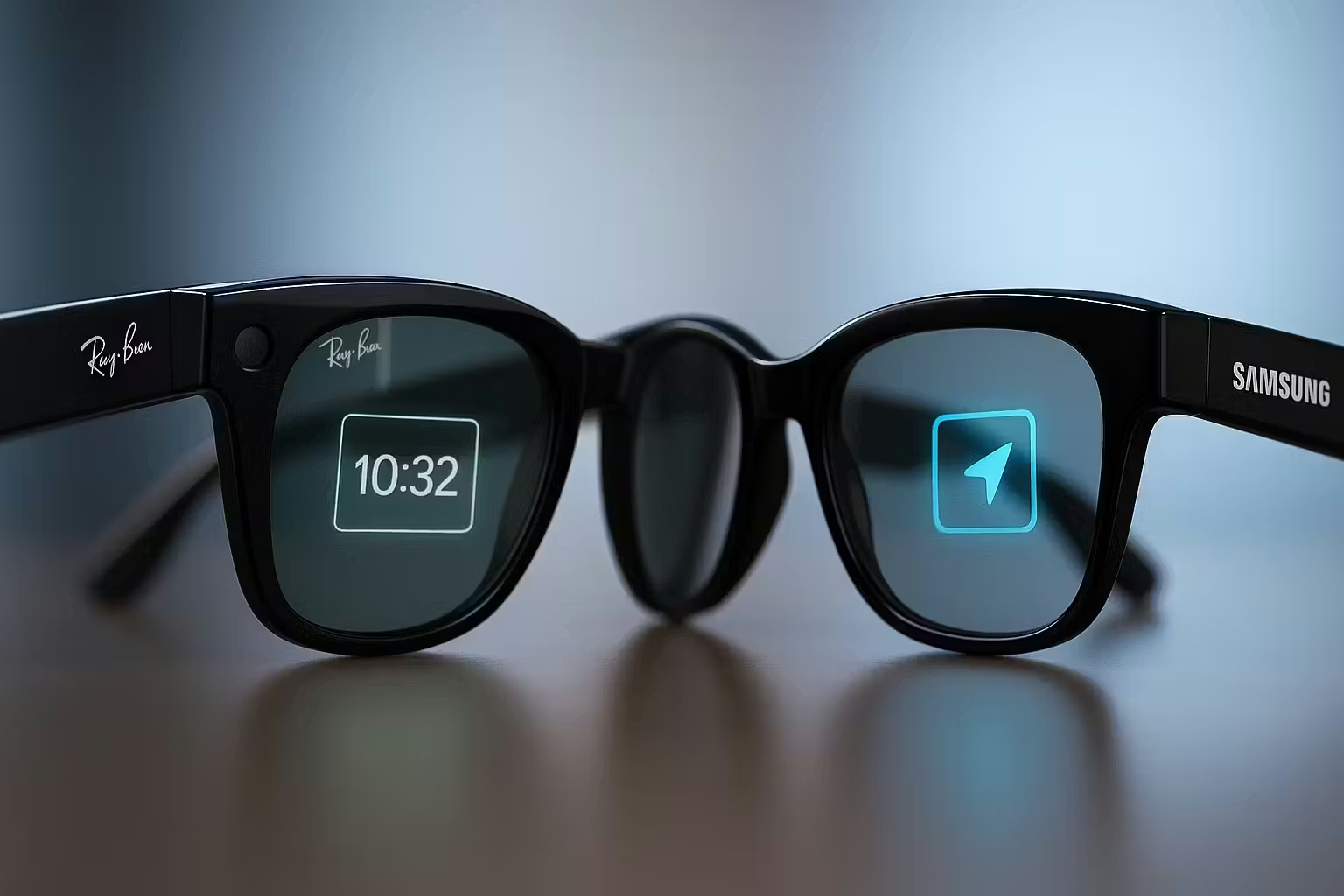
The future of computing will reach human bodies in a physical way. Through its current research, Samsung is developing AR smart lenses that enable users to interact with digital content in new ways. The innovation introduces a significant advancement in wearable AI technology, but it brings immediate issues about protecting personal information, monitoring activities, and managing data security.
This shift represents more than just another hardware upgrade. It introduces a new computing paradigm that makes screens vanish, enabling users to experience invisible interfaces and interact with computers using their eyesight.
From Wearables to Embedded Intelligence
Smart technology development has progressed from its first external device applications to achieve full system integration. The evolution from smartphones to smartwatches has now reached a new stage with the introduction of AR smart lenses. The lenses designed for eyeball placement enable users to view immediate visual content without needing large equipment.
Samsung research shows that the lenses can project notifications, navigation details, and contextual information directly into users’ field of view. The technology’s advanced integration shows a significant milestone for wearable AI, which now operates as a complete body system.
The product attracts customers because it provides quick, easy access to its features. Users would no longer need to check screens or interact with devices physically. The system would display information as needed, creating a smoother experience for users during their regular activities.
This transformation will redefine how people access information, communicate, and interact with the world around them.
How AR Smart Lenses Work
The technology behind AR smart lenses combines micro-display systems, sensors, and wireless connectivity. The system uses its components to project images onto the retina while allowing viewers to see through the display.
Samsung is working on eye-tracking technology that enables users to control their system with their eyes. The system creates an intuitive interface that allows users to control it by looking at it rather than by hand.
The system connects to external devices, which include smartphones and cloud services, to process data in real time. The lenses use this system to provide current information because they do not need extensive processing capabilities to function.
Expanding the Scope of Wearable AI
The introduction of advanced lenses significantly expands the scope of wearable AI applications. The systems provide more than basic notification functions because they enable users to perform multiple complex tasks, which include live translation, health monitoring, and professional workflows.
The system enables users to receive immediate language translations during conversations while they access detailed technical instructions. The healthcare system allows patients and medical professionals to view real-time biometric data through direct displays.
The complete Samsung ecosystem functions as an essential component in this situation. The company intends to establish a unified system that enables data to move effortlessly between its devices and services by integrating these lenses with its current product offerings.
Privacy Risks and Surveillance Concerns
The development of AR smart lenses raises significant privacy concerns stemming from their advanced technological capabilities. Through direct eye contact, devices can obtain extensive confidential information, including the user’s visual environment, behavioral patterns, and unique biometric data.
People can use smart lenses without others noticing, unlike smartphones, which show their active status. This creates security risks because people can record and monitor others without their consent, as they do not know when their information will be recorded.
The effects of this situation stretch beyond single-person security. When people start using this technology, companies will develop new methods to monitor users, as they will have detailed information about user activity.
Samsung must develop protective measures because it recognizes these issues. The success of these security solutions requires people to accept security weaknesses, accept certain rules, and maintain their confidence.
Ethical and Regulatory Challenges
The deployment of AR smart lenses will require robust ethical frameworks and regulatory oversight. Governments and policymakers need to address questions about consent, data ownership, and accountability.
For example, should users be required to disclose when they are using such devices? The collected data needs protection through established storage methods that safeguard its security. The responsible party must be identified to handle cases of improper use.
The questions demonstrate how difficult it is to find a middle ground between responsible development and technological progress. The development of wearable AI technology leads to a situation where people can no longer distinguish between helpful features and unwanted interference.
Impact on User Behavior
The use of smart lenses will transform the way people use technology and their physical environments. Users obtain immediate information, creating a situation in which they depend on digital tools for assistance, thereby reducing their capacity to make decisions on their own.
The AR smart lenses offer convenience, leading to better productivity and efficiency. The system now enables users to finish their work with instant access to contextual prompts and real-time guidance, eliminating the multiple steps required for previous tasks.
The new development will create problems because people will depend too much on technology, leading them to prefer digital information over experiencing the real world.
The Competitive Landscape
Samsung has company in this research area because multiple technology firms are developing similar immersive computing technologies.
Samsung stands out from its competitors because it can unify its hardware, software, and service offerings into a single, complete system. The company can provide users with a better-integrated experience, increasing the likelihood that they will adopt its products.
The success of these lenses will depend on both their technological capabilities and public acceptance. To achieve widespread adoption, it is essential to address privacy concerns while delivering demonstrable benefits.
The Future of Invisible Computing
The development of AR smart lenses represents a step toward what many experts describe as “invisible computing.” In this future, technology fades into the background, becoming an integral part of human perception rather than a separate tool.
Samsung’s research indicates that such systems could eventually replace traditional devices altogether. Direct body interfaces will make both smartphones and wearable devices unnecessary.
The new system will transform all human activities by creating different methods for information retrieval, communication, and social interaction.
Conclusion: Innovation Meets Responsibility
Samsung has developed new AR smart lenses that show how its augmented reality technology can transform digital spaces. The company develops better wearable AI technology by advancing new ways to deliver immersive computing experiences.
The technology creates important problems that need solutions regarding privacy protection, ethical standards, and user system control. The success of this innovation will depend on how effectively these concerns are addressed.
The new development creates problems because users will start depending too much on technology when they choose to interact with virtual content rather than experience the real world.
As the line between humans and machines continues to blur, the challenge will be ensuring that technological progress enhances human life without compromising fundamental rights.
Sources: Research News