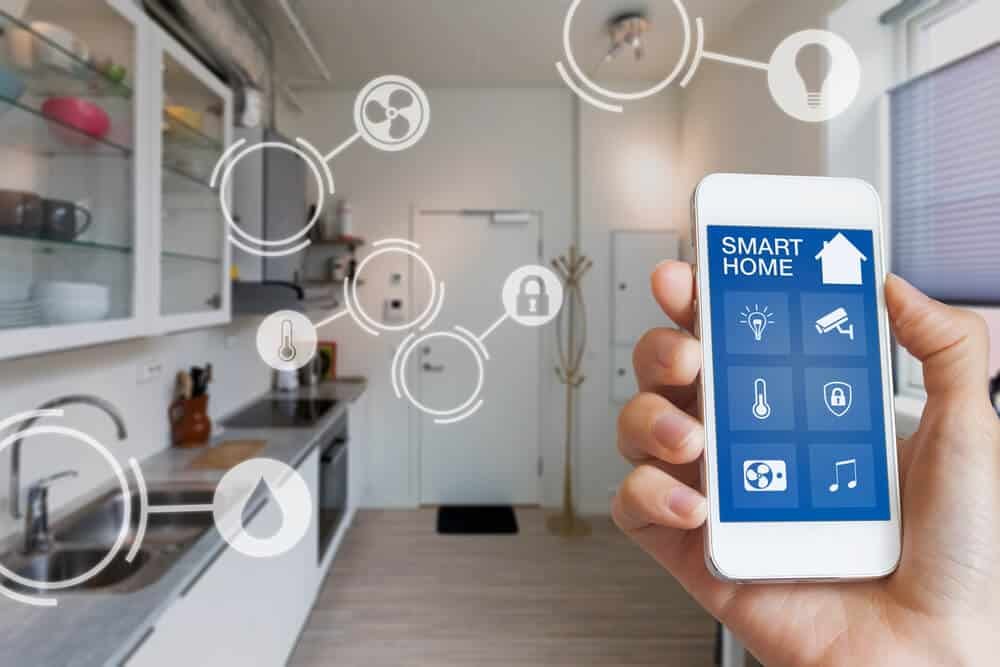
For many years, smart homes were thought to be the “next big thing” – homes that learn about how you live, can adapt to you, and are able to anticipate what you might need. From voice assistants to predictive thermostats, AI-enabled devices and self-scheduling routines promise a level of convenience unlike anything else. But as we move closer to 2026, we are seeing very different behaviour from users: they are actually turning off the AI features that were once considered the hallmark of a smart home!
This is not to say users are abandoning the purchase of smart devices; it is to say there is greater concern about how users’ private data is collected, processed, and used by smart devices. What was originally considered “smart” has now been redefined as “intrusive!”
Privacy Concerns Are Causing Users to Opt Out
The issue at the heart of this is not functionality, but rather that users are losing visibility and control over their private data. Consumers are becoming aware that AI-enabled smart device products rely on continuous collection of user data (voice recordings, device usage patterns, and geolocation tracking), which is raising alarm about the scale of the data being collected.
Below are some common issues that are contributing to this shift for users:
- Always-on listening: Smart speakers and smart assistants are perceived by users to always be “listening” to conversations, even when manufacturers say they are not.
- The ambiguity of data storage: Users often do not know where or for how long their data is stored, or who has access to it.
- The risk of third-party sharing of data: Smart device type products are, in most cases, integrated with many other third-party applications and/or services, which puts users at an increased risk of their data being shared without their knowledge or consent.
The Rise of Feature Opt-Out Trends
Trends are shifting toward consumers opting out of features.
One difference between opting out as a trend and just being disappointed is that people opt out daily rather than passively accept their disappointment.
Some examples of the features being opted out of by users are:
- Logging and storing voice recordings
- Personalized automation routines
- Recognizing a face with smart cameras
- Triggering with location-based triggers
- AI recommendations that are driven by automation
Younger, tech-savvy users are the ones who primarily use this trend to opt out, as they tend to be more aware of digital privacy. Ironically, the people who propelled smart home adoption are now also driving pushback.
The trend right now is that, instead of totally abandoning the devices, users are “downgrading” them to use them in manual mode or without all their capabilities. For example, a smart speaker may be used only as a Bluetooth speaker rather than as a smart speaker. A smart TV may be used only as a non-personalized TV, not as a smart TV with personalized suggestions.
Trust vs. Convenience: The Core Conflict
This fundamental shift in trends represents a basic trade-off between convenience (AI features) and control (of personal data). AI features (i.e., smarter products/feature use) are designed to reduce the friction between automation and routine. In addition, automation and routine provide users with greater convenience. The more data a user shares with AI and automation, the better the outcome will be; therefore, the more data the AI and automation have about the customer, the better the automated product and routine will perform.
However, consumers are now beginning to question whether the convenience of the product is worth the cost (of sharing their personal data)
Is it worth sharing your voice data for quicker command recognition?
Is it worth revealing to the system what it means to automate an everyday task without personal data?
Vendor Response on Rebuilding Trust for AI Ecosystems
Both Amazon and Google recognize this shift toward greater privacy interest and have taken steps to address some concerns.
Here are some key examples of their response:
1. Increased Transparency – Companies are launching new dashboards that enable users to view and manage their data more clearly; for example, how to collect, what to use, and how to delete.
2. On-Device Processing – As some AI functionalities are redesigned for on-device use rather than sending all the data to the cloud, this will lead to less data being exposed and thus increase privacy.
3. Granular Controls – Users will now have greater flexibility to choose which privacy settings identify and deactivate certain features instead of simply accepting “all or nothing”.
4. Shorter Data Retention Policies – Automatic deletion of voice audio recordings and activity logs will soon be commonplace.
5. Privacy-Centric Marketing – Companies are shifting their marketing messages from “smart and seamless” to “secure and private”, indicating a shift in priorities.
Although the above steps are an example of establishing trust within an AI ecosystem, the pace at which trust is being rebuilt has been much slower than that at which it was lost!
Trust Resetting in AI: A Larger Picture
Looking back at the opt-out activity indicates that there’s something much larger than just smart homes. There is a general recalibration of the user’s engagement with AI technology.
Users are becoming active participants in the AI ecosystem; they are questioning, customizing, and indeed rejecting AI-based features that don’t align with their personal standards.
This trend does not mean that AI is failing, but rather that it is changing perceptions.
Going forward, the next major phase of the smart homes growth and innovation cycle will be defined not by the total amount AI can accomplish, but by how effectively it operates.
Conclusion: Smart Homes Need Smarter Trust Models
Smart home technology isn’t disappearing—but blind adoption is. Users are becoming more intentional, more cautious, and more selective.
For companies, the message is clear:
Trust is no longer a byproduct of innovation—it is a prerequisite.
The brands that succeed will not be the ones with the most advanced AI, but the ones that make users feel safest using it.
Source: Amazon Alexa, Google Home top privacy risks in smart home devices: Study