






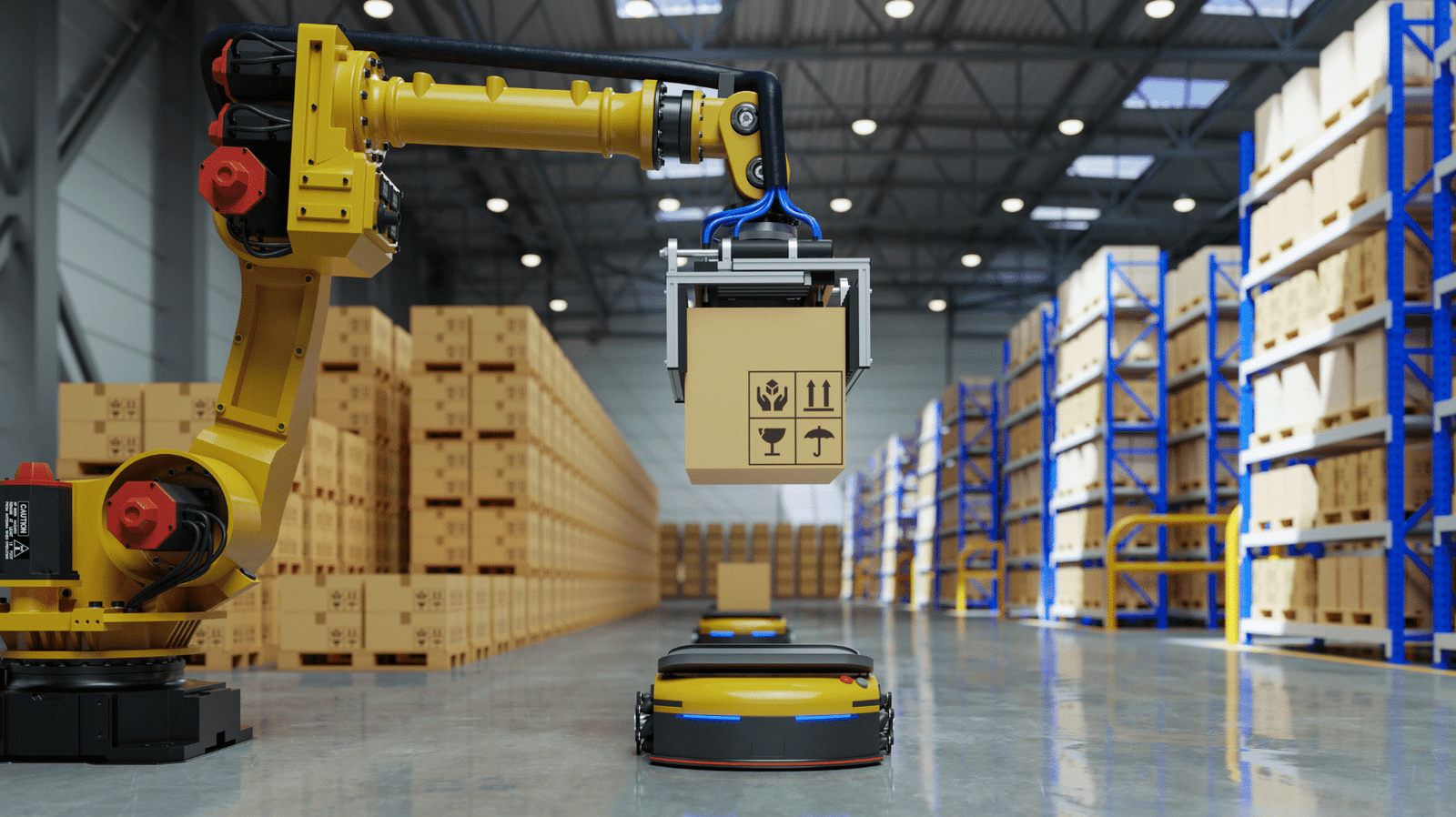
The fast move to automated logistics in 2026 has created a tricky financial situation for American supply chain operators. While autonomous fulfillment could help solve ongoing labor shortages, the high upfront costs and integration challenges are causing a noticeable drop in value. Companies are finding that reaching a fully automated facility requires costly infrastructure upgrades and unexpected technical debt. This pattern, known as warehouse robots raise costs before efficiency gains, is making organizations rethink how they use robotics in the industry.
The Hidden Capital Burden Of Robotic Integration
Setting up an automated fleet involves much more than just buying robots. It often means completely reworking the warehouse itself. Older warehouses may have uneven floors or tight aisles that disrupt navigation systems. To ensure automated guided vehicles (AGVs) operate smoothly, companies need to invest in precise flooring and specialized racks. These basic upgrades can double the original project budget before any packages are moved.
Furthermore, connecting new robotic systems with existing warehouse management systems (WMS) is also a major challenge. Many warehouses still use old software that cannot easily connect with modern robots. Fixing these issues often means paying for custom software and spending months on troubleshooting with experts. As a result, IT costs rise quickly during the early stabilization period, indicating that warehouse robots increase costs before efficiency gains. It’s much more costly than the upkeep of traditional conveyors or manual forklifts. A robotic fleet requires a dedicated team of mechatronics engineers and software specialists who command salaries well above those of standard warehouse technicians. The cost of proprietary replacement parts and annual software licensing fees adds a persistent layer of operational expense. These ongoing requirements can erode the savings gained from reduced headcount in the first two years of operation.
- Sensor calibration: continuous vibration and dust in industrial environments require frequent sensor calibration to maintain safety and accuracy.
- Battery degradation: lithium-ion batteries used in heavy-duty applications require extensive, expensive replacements every few years
- Software updates: regular firmware patches are required to protect against cybersecurity vulnerabilities in networked robotic fleets
- Edge compute infrastructure: high-performance wireless networks must be installed to support the low-latency communication needed for swarm intelligence.
Operational Friction During The Learning Curve
When a warehouse starts using robots, there is always a period where things slow down. Workers and robots must learn to move around each other safely, which can cause traffic jams in busy areas. During this time, supervisors must manage both manual and automated systems simultaneously. This overlap is a major reason warehouse robots raise costs before efficiency gains in the first 6 to 12 months.
Training the existing workforce to collaborate with machines also poses a significant soft-cost challenge. Employees must be upskilled to manage exceptions, such as when a robot drops an item or loses its pathing. This training time takes workers away from their primary fulfillment duties, leading to temporary productivity dips. Smart operators are now building buffer periods into their rollout schedules to account for these inevitable learning curves.
The Impact Of Customization On ROI
Many US enterprises make the mistake of over-customizing their robotic solutions for specific product dimensions or seasonal workflows. Custom grippers and specialized programming increase the initial price and make the system less adaptable to future inventory changes. Standardizing on off-the-shelf modular units often leads to a faster path to profitability, even if they are slightly less efficient in the short term. Flexibility is becoming a more valuable metric than peak speed for organizations facing volatile market demands.
Navigating the Hardware as a Service (HAAS) Model
To mitigate the massive upfront costs, some firms are turning to robotics-as-a-service (RaaS) or HaaS models. These subscription plans turn big purchases into ongoing operating expenses. While this makes it easier to get started, the total long-term costs can end up higher than buying the equipment outright. Still, this trade-off lets mid-sized companies compete with larger ones without incurring much debt. RY expects these costs to stabilize as standardized communication protocols like VDA 5050 gain wider adoption. These standards allow robots from different manufacturers to share the same floor space and traffic management software. This interoperability will reduce the need for custom middleware and lower the overall cost of ownership. Once the initial integration hurdles are cleared, the promised 30 to 40% efficiency gains finally begin to manifest in the bottom line.
In summary, automating American warehouses is a long-term effort, not a quick fix. Realizing that warehouse robots raise costs before efficiency gains is important for planning ahead. Companies that manage their technical debt and upgrade their infrastructure will lead the logistics industry. By viewing robotics as a major change rather than just a new tool, US businesses can build stronger, more flexible supply chains. The most successful warehouses in 2026 will balance the drive for automation with careful financial management. The high costs now are the price of much faster fulfillment in the future.
Source: Federal Government








