





Las Vegas, Nevada
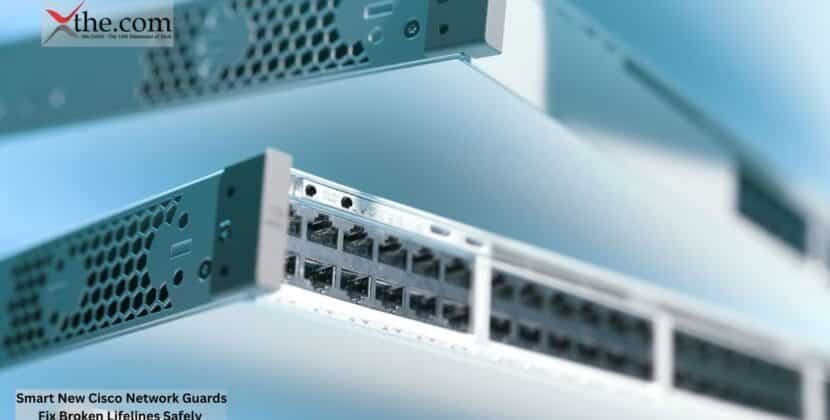
A single network outage costs the average US enterprise $5,600 per minute, according to Gartner. For a mid-market company with a hybrid workforce some in the office, others joining video calls from home in Atlanta or Austin the losses start as soon as a misconfigured routing table or a failing fiber link begins to slow bandwidth. No one notices until the online meeting freezes, the Salesforce dashboard won’t load, and the IT helpdesk gets thirty calls in ten minutes. Cisco Network Guards are designed to prevent this chain of events before it begins. They are built to find broken web lines situated deep within enterprise networks.
The Problem With Waiting for Humans to Notice
For decades, corporate network management has mostly been reactive. A fault appears. Monitoring software logs an alert. A technician checks the alert, looks up documentation, opens a ticket, and starts troubleshooting. According to Cisco’s operational data, this process takes between three and six hours for complex routing or configuration errors. During that time, the network either struggles or stops working completely.
The real issue is not the technician’s skill. It is the sheer size and complexity inherent in modern system infrastructure. A single enterprise campus network today can involve thousands of interdependent configuration parameters spanning switches, routers, firewalls, SD-WAN nodes, and cloud gateways. No engineer can keep the entire failure map in their head. The system is just too big, too complex, and changes too quickly for manual supervision to keep up.
That structural gap is exactly what Cisco Cloud Control targets.
What Cisco Cloud Control Actually Builds
Cisco Cloud Control isn’t only a new monitoring dashboard. It is a closed-loop remediation platform. This means it can detect, diagnose, and fix network faults automatically, without waiting for a person to step in. Fundamental to this system is the Deep Network Model, Cisco’s own AI engine. It has been trained on forty years of real-world telemetry data from enterprise networks in almost every industry, both in the US and around the world.
Forty years isn’t simply a marketing claim. It covers fault signatures, remediation logs, configuration drift patterns, and hardware issues dating back to when enterprise networks used coaxial cable. The Deep Network Model uses all this history to spot fault patterns that would take a human engineer hours to find. It does this in seconds.
When the model finds an anomaly, it does more than just send an alert. It sends out an automated troubleshooting bot that checks the fault against its historical database, selects the best fix, and applies it. Cisco’s internal benchmarks show that this automated process resolves about 88% of incidents without any human involvement.
Twelve percent of cases are sent to a technician. These are the unusual situations, such as new fault combinations or cases where the system is not confident enough to act automatically.
Cisco Network Guards and the Anatomy of a Self-Healing Fix
Imagine a regional healthcare network in Ohio with four hospital campuses connected by an SD-WAN overlay. During a scheduled maintenance window, a firmware update on a branch router causes a small error in the QoS policy that manages voice and video traffic. By 7 a.m., doctors using telemedicine software begin to experience dropped calls.
With the old approach, the network team would spend the first ninety minutes checking for ISP issues, firewall rules, and endpoint problems before finding that the QoS policy was the cause. With Cisco Cloud Control, the Deep Network Model detects the QoS issue within 40 seconds of the firmware update, matches it to a known misconfiguration in its records, and instructs the Cisco Network Guards to fix the policy. The telemedicine calls keep working. The doctors never notice a problem. The IT team gets a report at 7:02 a.m. explaining what happened and how it was fixed.
This process detect, match, fix, and document—is the way Cisco Cloud Control handles broken web lines at every level of the enterprise network.
Deploying the Platform: The Cisco Cloud Control Automated Network Telemetry Configuration Guide
For network administrators starting a deployment, the Cisco Cloud Control automated network telemetry configuration guide is the first document to use. It helps teams activate telemetry data streams from their current infrastructure, configure bot permission levels that control how much Cisco Network Guard can do without human approval, and connect the platform to ITSM workflows in ServiceNow, PagerDuty, or Jira.
The permission tier settings are especially important. Healthcare networks and financial institutions that must follow strict change-management rules, such as HIPAA, SOX, or PCI DSS, usually configure automated troubleshooting bots to document and flag every fix for audit review rather than act silently. The Cisco Cloud Control configuration guide includes ready-made compliance policy templates for these regulatory requirements, helping regulated industries deploy the system faster.
Where System Infrastructure Management Goes From Here
Automated troubleshooting at this level does not replace enterprise IT teams. Instead, it changes how their skills are used. Engineers who no longer have to respond to incidents can spend more time on architecture reviews, zero-trust security improvements, and capacity planning. These decisions still require human judgment because they involve business priorities, not merely technical details.
Organizations that adopt Cisco Cloud Control in the next two years will not just have fewer outages. They will have a different risk profile, in which broken web lines are fixed before users are affected, and the network’s forty years of experience works quietly in the background every minute of the business day.
Source: CISCO Newsroom