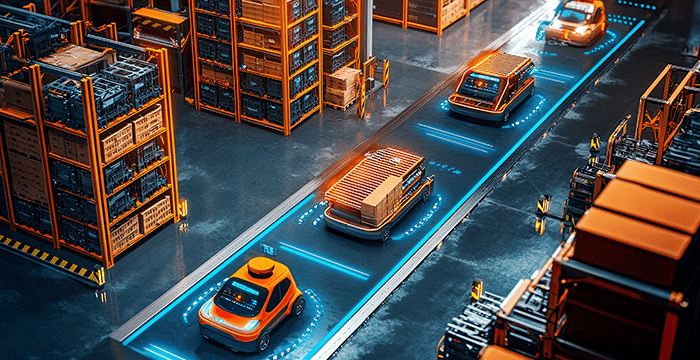
Boston Dynamics is developing new robotic technology through its research on multiple robots that coordinate their movements to operate in industrial settings. The company is currently conducting experiments with robot swarm AI technology, which enables multiple machines to work together rather than operate as separate entities, according to initial test results.
The development represents a fundamental transformation in logistics automation, as operational efficiency now depends on system intelligence rather than separate robot capabilities. Warehouses that use swarm-based coordination will reach new heights in operational speed, flexibility, and the ability to handle increased workloads.
From Individual Robots to Collective Intelligence
Traditional warehouse robots are typically programmed to perform specific tasks independently. While effective, these systems can struggle with coordination and adaptability in dynamic environments.
The introduction of robot swarm AI changes this paradigm by enabling robots to communicate and collaborate in real time. Instead of operating in isolation, each unit becomes part of a larger, interconnected network.
This shift represents a fundamental transformation in logistics automation, where decision-making is distributed across multiple agents rather than centralized in a single control system.
How Swarm AI Works in Warehouses
Swarm AI derives its fundamental principles from the study of natural systems, such as ant colonies and bird flocks, because these systems generate complex results from the combination of basic individual activities.
Robot swarm AI systems operate in a warehouse environment using sensors, communication protocols, and machine learning algorithms to coordinate their movement and task execution. The robot system maintains constant data sharing about its current location, operational tasks, and environmental conditions.
The system uses its capabilities to distribute work tasks while maintaining a safe distance between moving elements and finding the best travel paths. The automated logistics process reaches higher efficiency levels because it can maintain operations during unexpected events.
Enhancing Efficiency and Throughput
The main advantage of swarm-based systems leads to more efficient operations. The use of multiple robots to coordinate their activities enables warehouses to achieve greater operational efficiency by reducing idle time and eliminating workflow interruptions.
The robot swarm AI system enables the dynamic distribution of picking, sorting, and transportation tasks based on current operational conditions.
The system enables organizations to achieve higher productivity by completing customer orders more quickly, serving as a critical performance indicator for present-day automated logistics operations that require both swift and precise results.
Flexibility in Dynamic Environments
The nature of warehouses remains dynamic because inventory levels, demand patterns, and operational procedures continuously change. Traditional automation systems require manual reconfiguration to handle operational changes in their environment.
The flexibility of swarm-based systems exceeds that of other operational systems. Robot swarm AI enables robots to adjust their behavior automatically in response to new conditions, without requiring centralized intervention.
Logistics automation operations benefit from this adaptability because it enables them to expand their operations while maintaining continuous service without needing extensive system changes.
Reducing Single Points of Failure
Centralized control systems are points of failure that create bottlenecks in automated environments. The entire operation will be disrupted when the central system fails.
Swarm AI addresses this issue by distributing decision-making across multiple units. The system maintains operational effectiveness because all other robots remain functional after one robot malfunctions.
Robot swarm AI provides significant value to logistics automation by combining resilience with operational dependability.
Integration with Warehouse Management Systems
The operation of swarm AI requires integration with existing warehouse management systems (WMS) to achieve its intended purpose. The systems provide essential information on inventory levels, order processing status, and operational workflow requirements.
The robot swarm AI system achieves task execution through this integration by using operational goals to determine which tasks should be performed first.
The system establishes a direct link between planning activities and implementation work through its logistics automation, increasing operational efficiency.
Workforce Implications and Human Collaboration
The implementation of swarm robotics technology raises significant questions about how human employees will operate in warehouse environments. Automated systems reduce the need for human workers but create new job opportunities in system monitoring, operational maintenance, and performance optimization.
Humans will operate at higher strategic levels with robot swarm AI, as it handles system management and optimization, freeing them from repetitive tasks.
The logistics automation field requires organizations to prioritize worker training programs that teach employees how to use emerging technologies.
Challenges in Implementing Swarm Systems
The implementation of swarm AI in warehouses poses challenges stemming from its potential benefits. The development process requires both advanced engineering and extensive testing to achieve reliable communication protocols and accurate robot coordination.
The system faces two main challenges: maintaining operational performance during scaling and sustaining system stability. Robot swarm AI must be capable of handling large numbers of units without degradation in efficiency.
Integrating swarm systems into existing logistics automation systems requires organizations to invest substantial resources in new infrastructure and software development.
Competitive Impact on the Logistics Industry
Boston Dynamics’ research on swarm AI will have significant effects on the logistics sector. The companies that implement these technologies will attain a competitive advantage through improved operational efficiency and adaptable business processes.
The implementation of robot swarm AI systems will set new standards for warehouse operations, shaping future logistics automation practices.
The competitive market forces other companies to increase their spending on swarm technology to keep pace with these developments.
Conclusion: Collective Intelligence Redefines Automation
Boston Dynamics’ testing of swarm-based systems marks a significant transformation in warehouse technology. The company developed a robot swarm AI that enables machines to operate as a single unit beyond their existing automation capabilities. The development will create a new logistics automation system that operates more efficiently, with better operations and improved efficiency.
Swarm robotics will become an essential element of contemporary supply chains as the technology advances, establishing new standards for operational excellence and industry progress.
Sources: Blogs